<img src="https://events.xg4ken.com/pixel/v2?tid=KT-N2BAB-3ED&amp;noscript=1" width="1" height="1" style="display:none">
Skip to the main content.

6 min read

Maximize Your Rewards: Do's and Don'ts of Rewards Credit Cards

Maximize Your Rewards: Do's and Don'ts of Rewards Credit Cards

Rewards credit cards can feel a little magical, earning points just for buying things you already need. But getting the most out of a rewards card means being intentional. Used well, the points add up fast and can improve your finances. Used the wrong way, the interest and fees can outweigh the benefits, just as quickly.

In a recent episode of the Good Money Moves podcast, First Alliance Credit Union's Account Services Manager, Nate Finney, shared some incredibly helpful insights on how to use rewards credit cards to boost your finances. Below, we’ve turned that conversation into a practical guide to help you maximize your rewards, protect your credit, and feel confident using your card.

What You Should Do to Maximize Your Rewards

To truly make your rewards credit card work for you, it pays to be proactive and strategic. Here are some expert ways to ensure you’re getting the maximum benefit for every purchase:

Use your card for predictable, budgeted expenses

One of the best ways to rack up points without overspending is to use your rewards card for purchases you already plan to make every month. That might include:

  • Weekly groceries
  • Gas or EV charging
  • Streaming subscriptions
  • Cell phone or internet bills
  • Household essentials
  • Kids’ activities or school supplies

These kinds of expenses help you build points consistently, and they’re easy to budget for. It’s all about sticking to purchases you can comfortably pay off each month. 

Pay your balance in full every month

This is the #1 rule for making a rewards card truly beneficial. If you allow even a small balance to roll over, the interest can quickly add up fast. Even if you’re earning points, the extra cost of interest often cancels out any reward value you gained.

A good practice for paying down your balances is to:

  • Set up automatic payments (at least for the statement balance)
  • Check your balance weekly to stay on top of spending
  • Move money into a “credit card payment” line in your budget so you’re ready on or before due day

If something unexpected happens and you can’t pay the full balance, create a payoff plan and stop using the card until you’re caught up. On the podcast, Nate explained a key ratio to stick to:

“You wanna stay below 30% of your utilization rate...if I have a $10,000 card, I really don’t want over $3,000 on that card at any given time, because then it starts to affect your credit score.”
Nate Finney, Good Money Moves

Dos and donts of rewards credit cards 1

Pay attention to bonus categories and promotions

Rewards programs often include special earning opportunities. By staying informed about these offers you can tailor your spending to take full advantage of these perks. This proactive approach helps you maximize your rewards without increasing your overall expenses.

Rewards card bonuses can include promotions, such as:

  • Anniversary or birthday bonus points
  • Higher points on specific categories (gas, dining, travel, groceries)
  • Bonus points after spending a certain amount in the first few months
  • Extra points for using your card in certain locations or ZIP codes
  • Introductory APR or balance transfer offers

These bonuses can really multiply your point earnings, especially when you pair them with purchases you already planned to make.

For example, First Alliance offers six months of 0% APR on new rewards card balance transfers. For someone consolidating high-interest debt, that can free up additional room in your budget and make a rewards program more meaningful.

Check your points and expiration dates regularly

Not all rewards programs keep points forever, many expire after 24–36 months. The last thing you want is to save for a big reward only to discover half your points have vanished due to inactivity or missed expiration dates.

It’s a good idea to:

  • Review your points every month or two
  • Redeem points regularly instead of waiting years
  • Set a reminder on your phone to check points before big spending seasons

That way, you never miss out on the rewards you’ve worked hard to accumulate, and every point or dollar earned stays available for you to use toward something meaningful. Staying on top of your points and expiration dates ensures you’re making the most of your card’s benefits and maximizing every purchase.

Choose rewards that genuinely fit your life

Not all rewards are created equal. It’s important to take a step back and think critically about which card benefits would truly make a difference in your everyday life. Instead of chasing after flashy perks that sound appealing at first glance, consider how each reward option would actually benefit you and your unique financial situation. 

  • Travel perks if you travel frequently
  • Gift cards for everyday needs
  • Cashback or statement credits for budgeting flexibility
  • Merchandise for holidays, birthdays, or home upgrades

On the podcast, Nate gave a great example of how he used rewards for back-to-school shopping:

“Every year, I’d get three $100 Target gift cards and we were able to go get school supplies for our kids.”

This is a great example of using rewards to eliminate normal yearly costs can feel like getting a bonus for simply managing your card responsibly.

Watch & Learn: Tips for Using a Reward Credit Card

Press play to dig deeper into the pro and cons of rewards credit cards with experts from First Alliance Credit Union.


What NOT Do With a Rewards Card

Don’t just be willy-nilly with your rewards card and use it all the time. Know what you can do, and have a plan to pay it down quick.
Nate Finney, Good Money Moves

Don’t use your card for purchases you can’t repay quickly

Rewards can be exciting, sometimes too exciting. It’s easy to fall into the idea that every swipe equals “free money.” But if you spend beyond your budget, you’re borrowing money and paying interest for points that often aren’t worth it.

Try to avoid using your rewards card for:

  • “Just because” spending on fast food, takeout, or coffee 
  • Impulse or boredom shopping
  • Online purchases you didn’t plan for
  • Emergencies you don’t have savings to cover

A simple rule to follow is: If you wouldn’t pay cash for it, don’t charge it for the points.

Don’t carry a balance just to keep earning points

Your rewards don’t disappear if you pay your card off. You continue earning them every time you use the card, balance or no balance. But carrying a balance has downsides:

  • Increases your interest charges
  • Takes longer to pay off
  • Lowers your available credit
  • Can hurt your credit score

The healthiest long-term strategy is: Use it. Pay it off. Repeat.

Don’t ignore the fine print

Every rewards program is a little different, with unique terms and structures that can impact the value you get. Before you rely heavily on yours, take a few minutes to check the details specific to your card. 

Review your credit card rewards program for these key points: 

  • Does your card have an annual fee?
  • Do your points expire, and when?
  • Do you earn more points in certain spending categories?
  • Are there limitations on cashback (like only using it toward your balance)?
  • Are there blackout dates on travel?
  • Does your redemption site offer items you’d actually want?

Understanding the ins and outs can help you avoid surprises down the road and ensure you’re really maximizing what your program offers. The more you understand how your card works, the better decisions you’ll make with it.

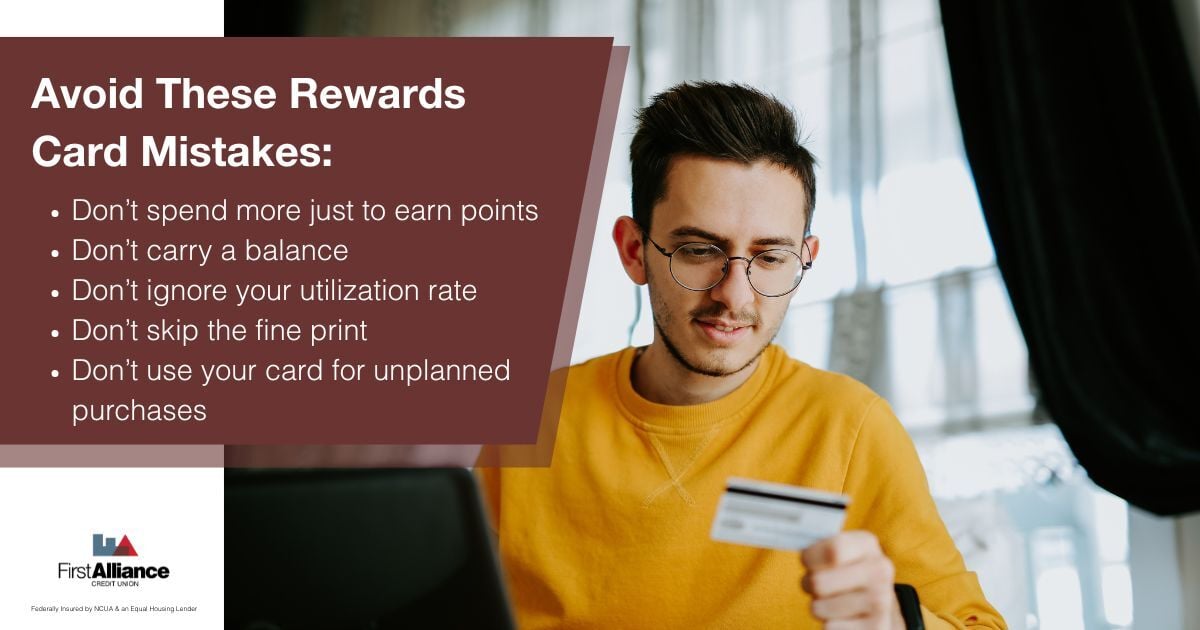
Dos and donts of rewards credit cards 2

How to Know if the Rewards Are Truly Worth It

A rewards card should be a helpful tool for your financial well-being, making your money work harder for you, not adding more stress or confusion. When managed carefully, a rewards card can streamline your spending, offer valuable benefits, and even simplify your budgeting process.

The ideal rewards card complements your existing financial habits, fits comfortably within your budget, and supports your goals, without creating extra hurdles or hidden complications.

To understand how your rewards card can add value to your financial life, ask yourself these three questions:

Can I pay my balance off monthly?

If yes: You’ll get the full benefit of your points, since you won’t be losing value to interest charges. This means every dollar you spend earns rewards that go directly back into your pocket, making your card a smart financial tool rather than a costly convenience.

If no: You may be better off with a low-rate credit card until you’re more comfortable managing revolving credit. That way, you can focus on building positive credit habits and avoid unnecessary interest costs, ensuring your financial goals stay on track while you gain confidence using credit responsibly.

Will I actually use the rewards I earn?

Rewards should improve your life, not collect dust in an account. Go for rewards you’ll actually use, whether that’s gift cards for everyday spending, cash back to boost your budget, travel perks for your next getaway, or merchandise that meets real needs.

Redeeming points for things that matter to you turns your hard-earned rewards into meaningful support for your goals, instead of letting them expire unused. Focus on ways your rewards can lighten your financial load, fund important moments, or simply bring a little extra joy to daily life.

Do I keep track of my spending?

Responsible credit use is the key to maximizing a rewards card and protecting your credit score. This means making thoughtful spending decisions, paying your balance in full each month, and using your card within your budget.

Consistently managing your card in this way not only helps you earn more rewards without added costs, but also helps maintain a healthy credit utilization ratio, which is a major factor in your overall credit score. Staying disciplined with your card ensures you’re enjoying all the benefits of your rewards program, while also building a stronger financial foundation for the future.

Make Your Rewards Work for You

A rewards credit card can deliver real value when it’s paired with an intentional spending strategy, smart budgeting, and consistent payoff habits. When you understand how points work, and how to manage your card responsibly, you can enjoy the perks without stress.

If you’re looking for personalized help choosing the best rewards card or want guidance on creating a payoff plan that helps you earn more and spend wisely, our team at First Alliance Credit Union is here for you.

Not sure which rewards card is right for you? Streamline your decision by using our free credit card comparison worksheet.

Selecting a Credit Card: Rewards or No Rewards?

Selecting a Credit Card: Rewards or No Rewards?

Before obtaining a credit card, it is wise to check all available options and select a credit card that fits your needs best. While there are many...

Read More
Choosing a Rewards Credit Card

Choosing a Rewards Credit Card

Just about every credit card issuer is offering rewards in one form or another these days. The issue is not whether you should be getting a reward...

Read More
Is a Rewards Credit Card Right for You?

Is a Rewards Credit Card Right for You?

Rewards credit cards are a popular financial tool that offer more than just a line of credit. The primary allure of rewards credit cards lies in the...

Read More