
1 min read
Recreation Boating: How to Afford It and Get a Loan
Recreational boating is a dream for many Minnesotans who yearn to enjoy the open water with friends and family. However, affording a boat,...

A lot of people assume buying a boat means paying for it in full, upfront. That's not how most boat purchases actually work. Like cars and homes, boats are commonly financed — and the process is more familiar than you might think. This guide breaks down how boat loans work, what they cost, and how to figure out if it's a realistic fit for your budget.
In most ways, yes. A boat loan is a type of installment loan, meaning you borrow a set amount, then pay it back in fixed monthly payments over an agreed-upon term. The lender holds a lien on the boat until the loan is paid off, which is the same basic structure as an auto loan.
There are a few differences worth knowing about:
That said, the core experience is familiar: apply for a loan, get approved, make monthly payments, own the boat.
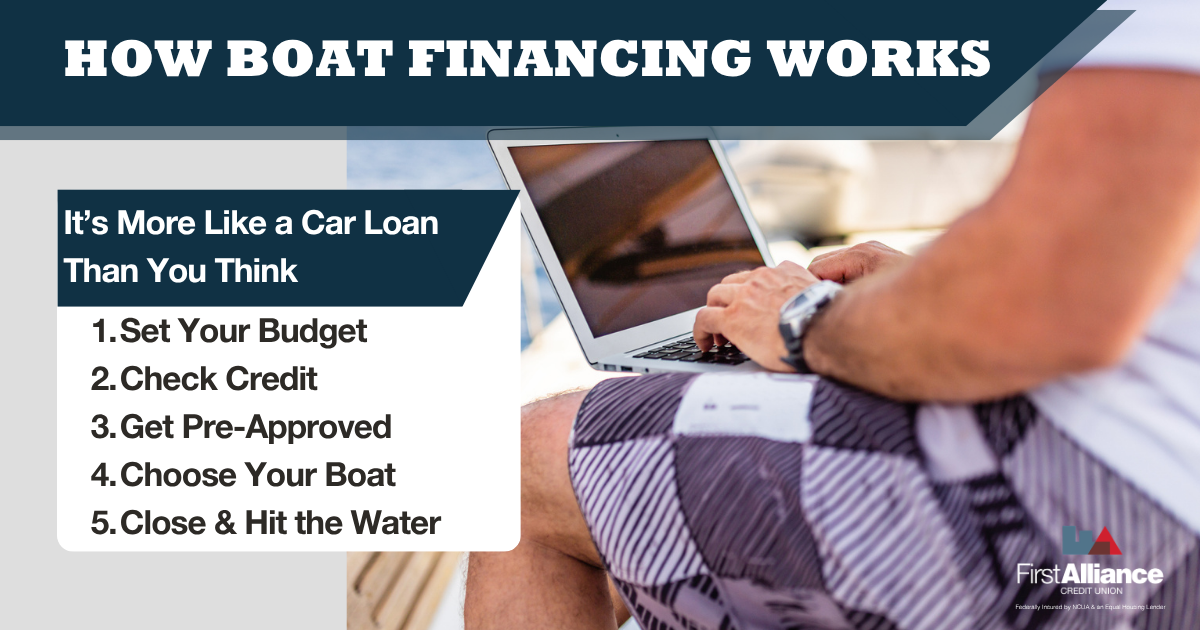
Here's a simple breakdown of what the process for financing a boat usually looks like:
First Alliance Credit Union offers free financial counseling and budgeting conversations before you apply — a step that can be especially helpful if this is your first major purchase.
The total cost of a boat loan depends on four main things: how much you borrow, your interest rate, your loan term, and your down payment.
Here's a boat loan payment example to make it concrete:
Change the term, the rate, or the down payment and those numbers shift. That's why using a loan calculator early (before you fall in love with a specific boat) can save you a lot of stress later.
Boat loan interest rates typically range from around 6% to 20% or higher, depending on your credit, the lender, and the loan structure. Credit unions are often on the lower end of that range, which is one reason so many boat buyers choose them over traditional banks.
Before you commit to any loan, it's worth thinking beyond just the monthly payment. Boats come with additional costs that don't show up on the sticker price.
Ask yourself:
None of this is meant to talk you out of buying a boat. It's just the kind of honest framing that helps you go in with your eyes open. If the numbers work and you're ready, great. If you need more time to save or pay down some debt first, that's a valid plan too.
If you have the cash and paying outright won't wipe out your savings or emergency fund, cash is simple: no interest, no monthly obligation. But for most people, financing is a practical and responsible way to make a purchase of this size without disrupting their financial stability.
Financing also lets you keep your cash liquid. If something unexpected comes up (a home repair, a medical bill, a job transition) you'll be glad you didn't sink your entire savings into a boat.
There's no universally right answer. It depends on your personal situation, your financial cushion, and how you feel about carrying a monthly payment. What matters most is that the decision is intentional and based on your actual numbers, not just enthusiasm about getting on the water.
Yes, you can absolutely finance a used boat, and many buyers do. A used boat can get you more boat for your money, which makes financing an even more attractive option.
A few things to keep in mind with used boat loans:
Ask your lender upfront what their requirements are for used boats. A good lender will walk you through it clearly.

First Alliance Credit Union is member-owned and not-for-profit, which means when you reach out to us, you're treated like a member, not a transaction. That kind of relationship makes a real difference when you're navigating a purchase this size.
For a boat loan specifically, that can mean:
If you've never financed through a credit union before, First Alliance is a good place to start. Reach out whenever you're ready and ask as many questions as you need.
Whether you're buying your first boat or upgrading to something bigger, financing can feel overwhelming. Here's what most buyers want to know before they apply.
There's no single cutoff, and requirements vary by lender. Generally, a score of 680 or higher will open up more options and better rates. That said, some lenders, including many credit unions, work with borrowers who have scores in the mid-600s or are actively rebuilding credit. It's always worth asking rather than assuming you won't qualify.
Boat loan terms usually range from 2 to 20 years. Shorter terms mean higher monthly payments but less interest paid overall. Longer terms lower your monthly payment but extend the time you're carrying the debt. The right term depends on what fits your monthly budget while keeping total cost manageable.
Most lenders look for somewhere between 10% and 20% down for boat loans, though this can vary. A larger down payment reduces the amount you need to finance, lowers your monthly payment, and can help you qualify for a better rate. If you're not quite there yet on savings, it may be worth waiting a few months to build up a stronger down payment.
Yes. If you've successfully managed other types of loans (auto loans, personal loans, a mortgage), that track record works in your favor. First-time boat buyers apply every day, and good lenders understand that everyone starts somewhere. Pre-approval is a good first step to understand what you qualify for before you start shopping.
For smaller purchases (say, under $15,000), a personal loan might be a simpler and more flexible option than a secured boat loan). Personal loans don't require collateral and can often be funded quickly. Ask your credit union what makes more sense based on the amount you're looking to borrow.
Buying a boat is a big decision, but it doesn't have to be a complicated one. Understanding how financing works, what it costs, and what questions to ask puts you in a much stronger position before you ever walk into a dealership or sit down with a lender.
If you have questions or just want to run through the numbers with someone who knows boat loans, First Alliance Credit Union is a good place to start. You can talk to a loan advisor or financial counselor before you apply, no commitment required.
1 min read
Recreational boating is a dream for many Minnesotans who yearn to enjoy the open water with friends and family. However, affording a boat,...
1 min read
Many businesses, no matter how big or small, sometimes face cash flow challenges. Whether it is a small business getting started or one that has been...
1 min read