
 Chris Gottschalk
3 Ways a Switch Kit Makes Switching Banks Easier
 Chris Gottschalk : Feb 17, 2022, 4:45:00 AM
How exactly does a switch kit help you switch financial institutions? Here's 3 ways a switch kit makes switching banks easier.

Out of all the steps you need to take to switch financial institutions, switching your direct deposit to your new bank or credit union is perhaps the most important. After all, you need money coming into your account if you’re going to pay your bills, transfer money to your friends or even build up your emergency fund.
Step 1: Locate Your Account Information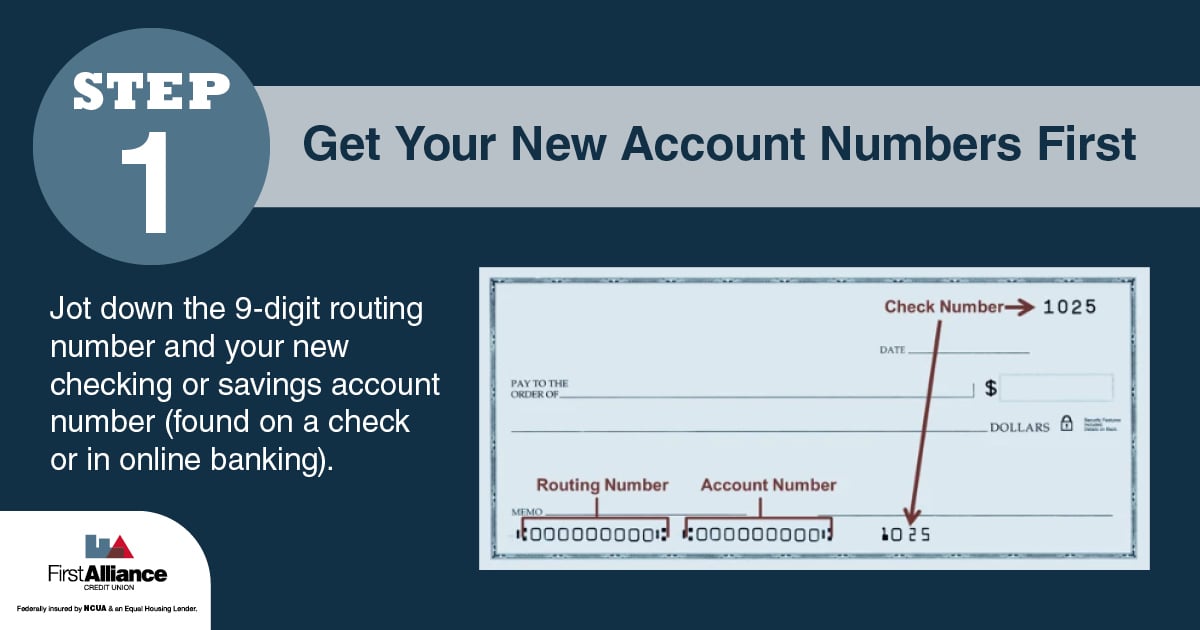
The first step in switching your direct deposit to a new financial institution is to locate the routing number of your new bank or credit union, as well as your account number. You can find this information in your checkbook—the first number, usually 9 digits, is the routing number, and the second number is your account number. (The final three digits are the check number.)
You can also call your new financial institution to get your routing number and account number, and most financial institutions also list their routing number on their website.
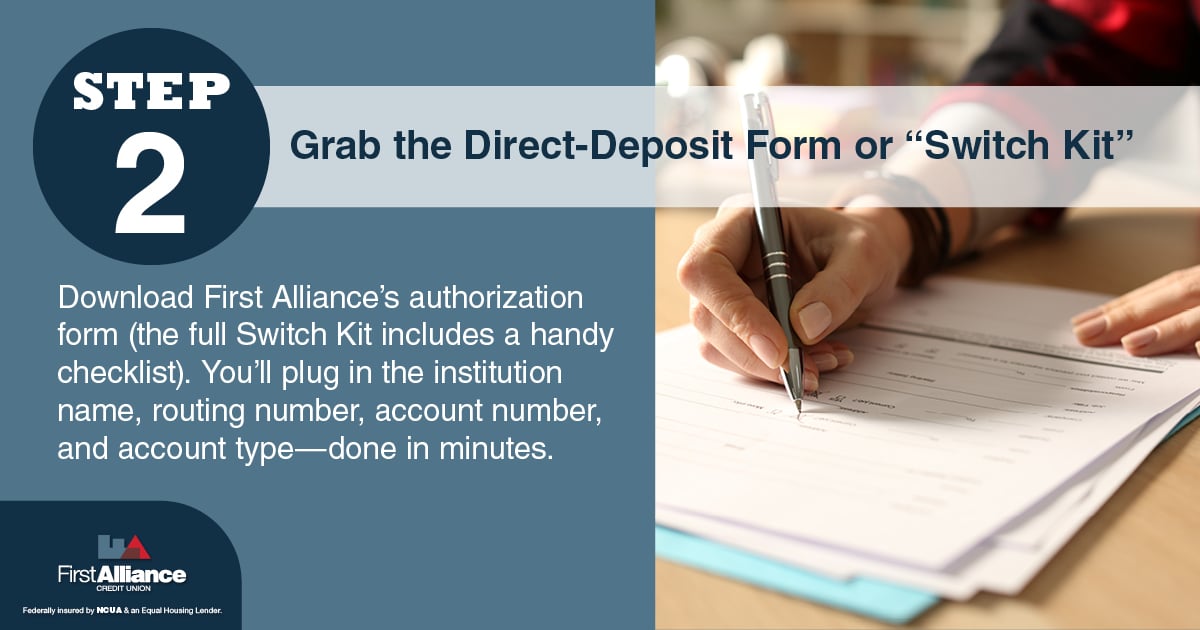
Once you have your account information in hand, you’ll need to compose a direct deposit authorization form. The form will need to have the following information:
It’s worth pointing out that you can download a direct deposit authorization form from First Alliance Credit Union. You can also get the direct deposit authorization form in our free downloadable Switch Kit, as well as a checklist to help you track your automatic payments and forms that will help you transfer automatic payments and close your old bank account.

After you’ve filled out your direct deposit authorization form, contact your human resources department and let them know you want to switch your direct deposit to a new financial institution. Every company has their own protocol for setting up direct deposits, and these may include filling out an online form, meeting directly with the person responsible for the payroll, or logging into your benefits website. Make sure you follow every step of your company’s process to avoid delays in switching your direct deposit.
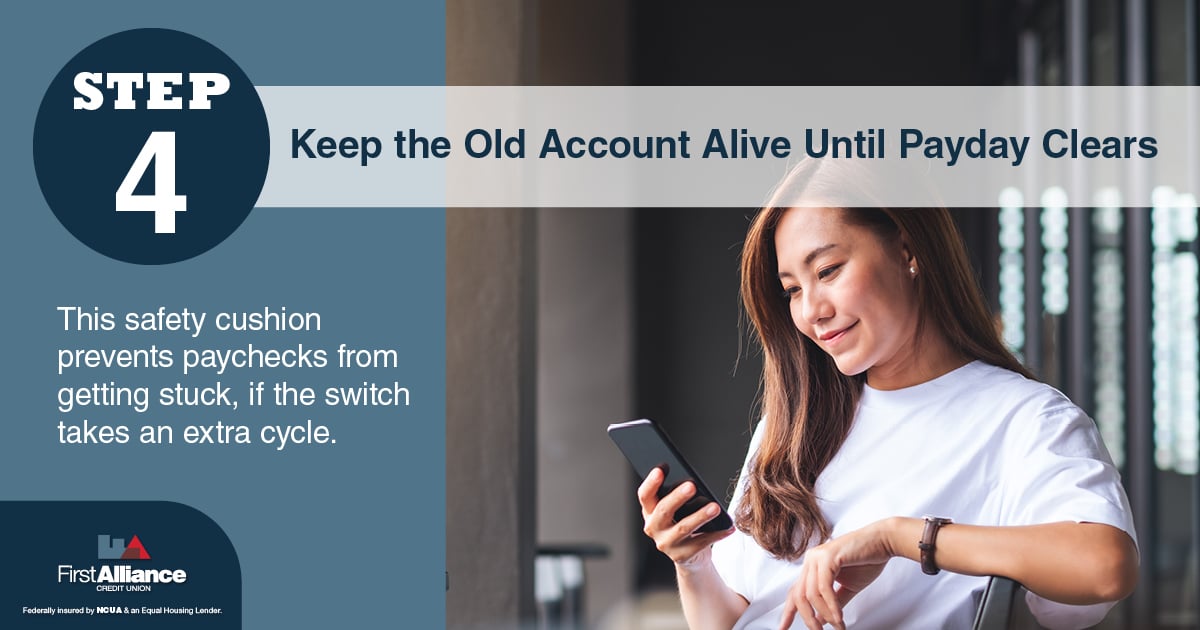
Once you’ve submitted the direct deposit form for your new financial institution, you might wonder how long does it take to switch direct deposits? In most cases, the answer is by your next pay period, but some companies may take longer. If your company will take more than one pay period to switch your direct deposit, you’ll need to keep you old checking or savings account open.
In fact, it’s a good idea to keep your old bank account open even if your company can complete the direct deposit switch in one pay period. If something goes wrong and your direct deposit goes to your old account, you’ll want your old account to be active to receive your funds. If you don’t, your paycheck will remain in limbo as your old financial institution will have to let your employer know you no longer have an account with them and your employer writing a new paycheck for you, a process which could take several weeks.
Switching your direct deposit isn’t hard. It just requires having access to your account information, providing it to your employer’s human resource department in a direct deposit authorization form, and keeping your old account open until you can confirm your new financial institution is receiving your direct deposit.
If you need help switching financial institutions, including becoming a member of First Alliance Credit Union, you can find a lot of helpful information in our resource center. Our guide to switching financial institutions will walk you through every stage of transferring accounts, and our free downloadable switch kit has fillable forms that will make the process much easier.

 Chris Gottschalk : Feb 17, 2022, 4:45:00 AM
How exactly does a switch kit help you switch financial institutions? Here's 3 ways a switch kit makes switching banks easier.
 Chris Gottschalk : May 27, 2021, 5:45:00 AM
Yes, you can direct deposit into a savings account. See when checking is the better choice, when savings makes sense, and how to split your paycheck...

 Kamel LoveJoy : Feb 20, 2025, 7:09:26 AM
Discover the benefits of direct deposit with First Alliance CU & how it helps you & your community thrive. Learn how easy it is to set up & start...