
 Jenna Taubel
New Year, New Money Habits
 First Alliance Credit Union : Jan 12, 2021, 5:15:00 AM
Learn how to cultivate healthy money habits for a secure financial future. Discover the best practices for managing your money effectively.

For many individuals and families, affordable health insurance isn’t always an option. Rising premiums, changing subsidies, or self-employment can force many people to make the difficult decision to go without traditional health coverage.
While being uninsured comes with real risk, there are practical steps you can take to protect yourself financially and reduce the long-term impact of unexpected medical expenses. Planning ahead won’t eliminate every cost, but it can significantly improve your financial stability when life throws you a curveball.
Instead of feeling stuck or hoping nothing goes wrong, you can build a simple, realistic plan to handle medical costs before they happen. By taking a few intentional steps now, like redirecting former premium payments into savings, asking for discounts, and exploring flexible payment options, you can create a financial safety net that helps you weather unexpected health issues with more confidence and less stress.
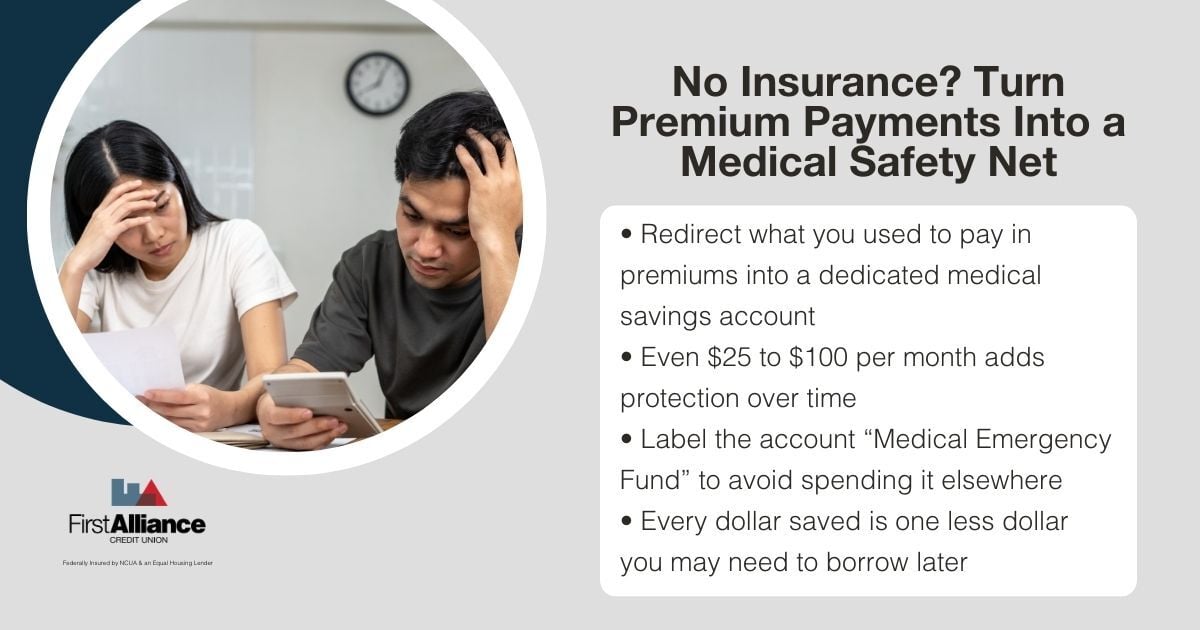
If you were previously enrolled in an ACA plan and had to opt out due to increased premiums, consider redirecting those monthly payments into a dedicated medical emergency savings account at your credit union. Treat this account as your personal safety net for doctor visits, prescriptions, lab work, and unexpected urgent care or ER charges.
For example: If you were paying $1,000 per month in premiums, automatically transfer that same amount into a “Medical Emergency Fund”. Ideally, you should open a dedicated savings account specifically labeled for medical expenses, so you’re not tempted to use it for other goals or day-to-day spending.
Even if that medical emergency fund savings won’t fully cover a major medical event, every dollar you save is one less dollar you may have to borrow later. Avoiding debt, especially high-interest credit cards or predatory loans, can make a huge difference in your long-term financial health.
It’s easy to feel discouraged by the high cost of medical care and think, “What’s the point if I can’t save enough?”
But savings doesn’t have to be all-or-nothing, even saving $25, $50, or $100 per month still builds a level of protection. Even a few thousand dollars can cover urgent care visits, prescriptions, or partial hospital bills.
Smaller balances can reduce how much you need to finance if a larger emergency occurs. Financial stability isn’t about eliminating all risk, it’s about reducing how hard a crisis hits when it happens.
Consistency matters more than complexity. Treat your medical emergency savings like a “non‑negotiable bill” you pay to yourself every month. Set up automatic transfers from your checking account to your dedicated medical savings so it happens on autopilot, even in smaller amounts.
Increase your contributions whenever your income allows, even if it’s just for a few months. The more you can put toward your medical emergency fund during stronger income periods, the easier it becomes to quietly build that cushion in the background of your everyday finances.
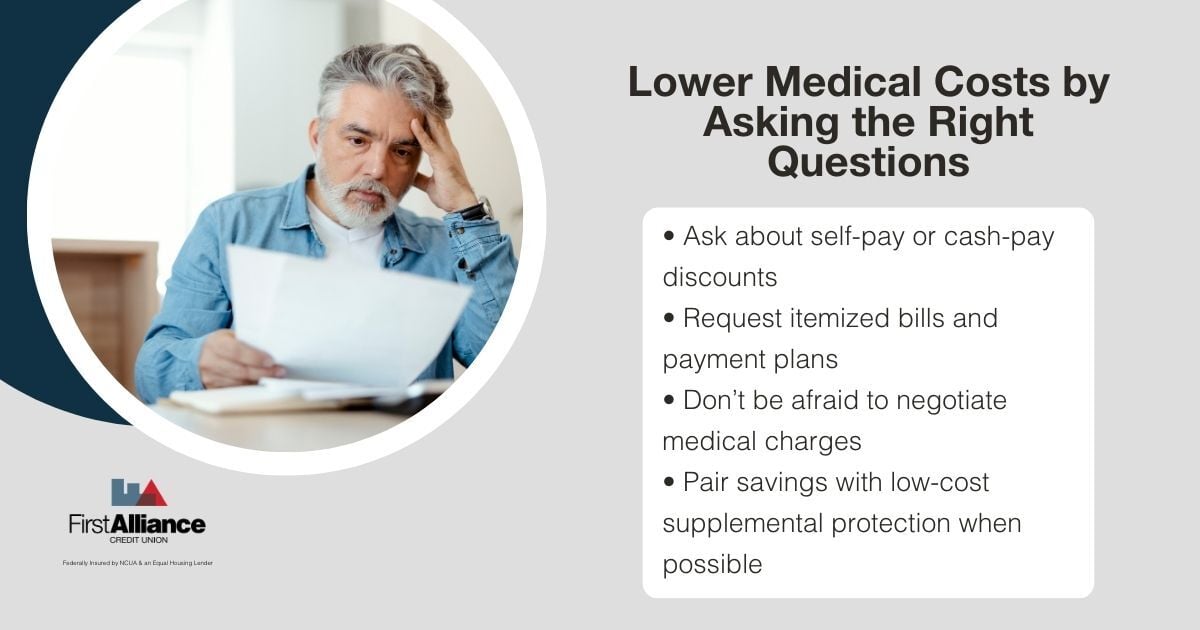
Many people don’t realize this, but many medical providers offer discounted pricing for patients without insurance. When scheduling care, or even after receiving a bill, ask:
Hospitals, clinics, labs, and imaging centers may have flat-rate pricing, sliding-scale fees, or reduced charges for uninsured patients. It never hurts to ask, and these conversations can result in significant savings.
Medical bills are often more flexible than people expect. If you receive a large bill make sure to request an itemized statement, ask if charges can be reduced or re-evaluated, inquire about interest-free payment plans. Many facilities would rather work with you than send an account to collections. Clear communication can go a long way toward protecting both your health and your finances.
While savings is a strong foundation, some people also choose to pair it with affordable supplemental coverage, such as accidental injury or life-related protections, to help offset certain risks. Depending on your situation, this might include:
These types of protections are often more budget-friendly than full health insurance and can sometimes be offered through an employer, professional association, directly from an insurer, or as a credit union member benefit.
These options aren’t replacements for comprehensive health insurance, but when combined with a solid savings plan, they could help protect your family from financial shock during unexpected life events, especially if you are uninsured or under‑insured.
Even a modest policy can help cover out‑of‑pocket medical costs, lost income for a short period of time, or final expenses, so your emergency savings doesn’t have to stretch as far all at once. The goal is to layer your protection, using savings, flexible payment options, and targeted coverage, so a single accident or illness is less likely to derail your long‑term financial goals.
Going without health insurance is never an easy choice, and often not a voluntary one. But planning for medical expenses ahead of time can give you more control, more options, and more peace of mind. By saving consistently, asking the right questions, and reducing how much you rely on borrowing during emergencies, you’re taking meaningful steps toward protecting your financial future, even in an imperfect system.
If you need help getting started, First Alliance Credit Union can help you explore savings options, automation tools, and financial guidance designed to support real life, not just ideal circumstances. Because when it comes to medical expenses, preparation isn’t about eliminating risk, it’s about building resilience.

 First Alliance Credit Union : Jan 12, 2021, 5:15:00 AM
Learn how to cultivate healthy money habits for a secure financial future. Discover the best practices for managing your money effectively.
 First Alliance Credit Union : Jul 1, 2021, 4:30:00 AM
Everyone's situations and goals are a little bit different, but these two financial health to-dos are a great place to start improving your finances...

 Chris Gottschalk : Jan 3, 2023, 4:45:00 AM
Want to get in shape but you've got expenses from credit card debt to health savings account deposits? Here's how to get healthy without breaking the...