
 Jenna Taubel
Do Home Equity Loans Have Closing Costs?
Wondering what fees come with a HELOC or home equity loan? This guide breaks down closing costs, what to expect, and how to find the right option for...

Debt traps are financial situations where it feels incredibly difficult to escape the cycle of debt and move toward your healthier money goals. They often show up as quick fixes in a moment of stress, but end up causing long-term financial strain and anxiety.
Common debt traps include:
Each of these can create a situation where you feel stuck, watching your paycheck disappear to interest and fees instead of building savings or paying down what you owe. Recognizing these traps early is an important first step toward protecting your financial well-being.
As Kristina Kovacevic, Assistant Vice President of Retail Experience at First Alliance Credit Union, mentioned in the Good Money Moves podcast,
"It's easy to get stuck in these cycles, and it's really hard to get out once you're in." ~ Kristina Kovacevic
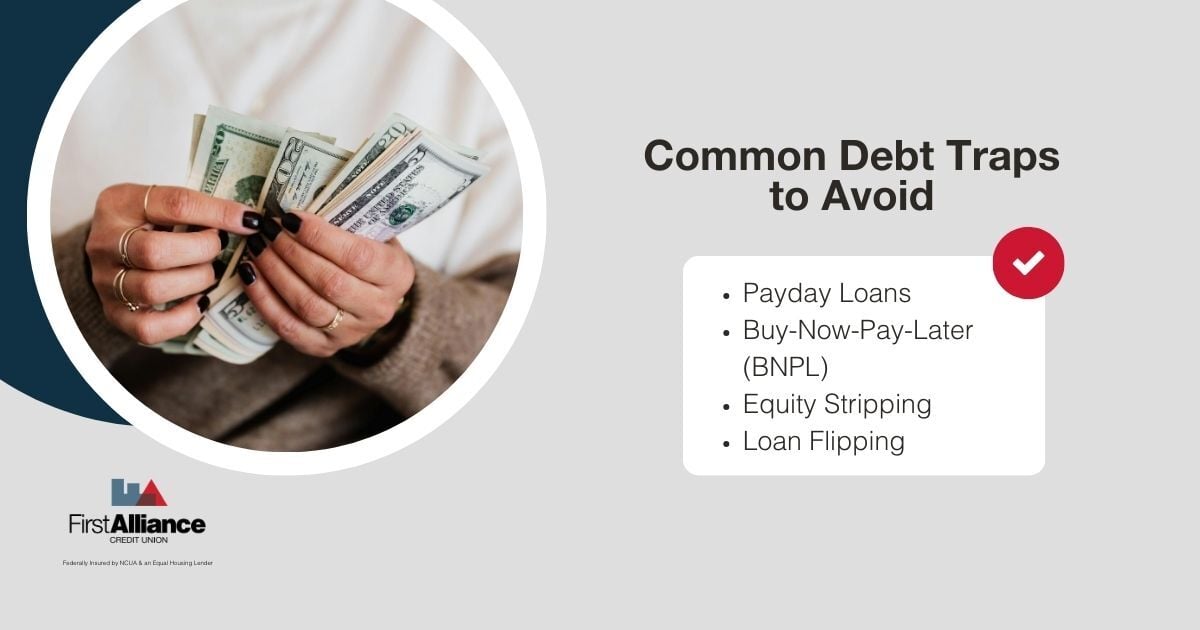
Payday loans are marketed as a way to get quick cash to cover immediate expenses. However, the high-interest rates, often ranging from 25% to 45%, make it nearly impossible to pay off the principal. Buy-now-pay-later schemes might seem convenient, but they can lead to overspending and accumulating debt that becomes difficult to manage. Equity stripping and loan flipping are other predatory practices that can drain your financial resources quickly.
Payday loans are one of the most common forms of predatory lending. They are designed to provide quick cash for immediate needs, but the high-interest rates and short repayment terms make them a dangerous option.
As Kristina shared on the podcast,
"Payday loans can have interest rates in the 20-40% range, trapping borrowers in a cycle of debt." ~ Kristina Kovacevic
These loans are especially harmful to individuals with low credit scores who may have been turned down by traditional banks. Because they’re marketed as “easy approval” options, people often feel like it’s their only choice in a crisis. The quick turnaround time for repayment, often aligned with your payday, means that a significant portion of your next paycheck will go toward repaying the loan, leaving you with little to cover other expenses like rent, groceries, or utilities. When that happens, many borrowers feel forced to take out another payday loan just to fill the gap, starting the cycle all over again.
Over time, you can find yourself juggling multiple payday loans, paying mostly interest and fees without ever really touching the principal. This can make it very difficult to catch up on other bills, build an emergency fund, or improve your credit. The stress of constantly owing money and never feeling “caught up” can also take a serious toll on your mental and emotional well-being. This cycle can continue indefinitely, making it very difficult to break free without changing course and exploring safer, more affordable options.
Buy-now-pay-later (BNPL) programs are increasingly popular, offering the allure of purchasing items without immediate payment and breaking those payments into smaller amounts, repaid over several months. While this might seem like a convenient option at online checkouts, it can lead to significant debt accumulation if you over rely on them for everyday spending or impulse buying.
BNPL schemes often come with hidden fees and high-interest rates if payments are not made on time. This can make it challenging to keep track of multiple repayment schedules, leading to missed payments and mounting debt.
As discussed in the podcast, these schemes often target people who are simply trying to get by and may not have had access to strong financial education or consistent budgeting support. "A lot of people that don't know about financial education can easily fall into these traps," Kristina pointed out. The convenience of BNPL can lead to overspending, making it difficult to manage your finances effectively.
Equity stripping is another predatory practice that can severely damage your financial health. Scammers often target distressed homeowners, such as those facing foreclosure, with false promises to “save” their home.
In an equity stripping scheme, you’re encouraged to take out loans against the equity in your home, usually with high fees, excessive interest rates, and unfair terms. Over time, this can quickly drain the value you’ve built, leaving you with little to no equity. These schemes often focus on vulnerable homeowners who may not fully understand the fine print or long-term consequences.
Usually, the real goal of the lender promoting this “solution” is to gain control of your property and its equity through deceptive agreements, which can ultimately result in you losing your home altogether.
The good news is that many states, including Minnesota, have laws designed to protect homeowners from these abusive foreclosure reconveyance schemes by requiring clear disclosures and fair practices.
Loan flipping, on the other hand, involves repeatedly refinancing a loan, often a mortgage, auto loan, or personal loan, each time adding new fees and extending the repayment period. On the surface, it might look like you’re getting a better deal because your monthly payment goes down, but in reality, each new loan often comes with closing costs, higher fees, and sometimes even a higher interest rate.
Initially, a lender persuades a homeowner to refinance, often by offering quick cash or a supposedly “better” loan. However, the new loan usually comes with high closing costs, added fees, and sometimes less favorable terms. The lender then pushes the borrower to refinance again and again, frequently dangling the promise of more cash or a lower payment. Each new loan adds more fees and points, increasing the total loan balance and often the interest rate.
In more extreme cases, these predatory loan flippers may rely on inflated appraisals or use “straw buyers” (people with strong credit who are not the true owners) to qualify for larger loans than the property is really worth, allowing them to pocket the excess funds. Seniors, homeowners with significant equity, and people with lower incomes are often targeted because they may be less familiar with complex loan products and more likely to trust promises of quick financial relief.
This practice can keep you in debt for much longer than necessary and can significantly increase the total amount you repay over time. Instead of building equity or paying down your balance, more and more of your money goes toward fees and interest, leaving you with fewer resources to put toward savings or other financial goals.
If you find yourself trapped in a cycle of debt, there are ways to escape. First Alliance Credit Union offers several solutions to help you regain financial stability, by taking the time to understand your unique financial situation and offering personalized solutions. Whether it's consolidating your debt into a lower-interest loan or providing financial education to help you make informed choices, the credit union is committed to helping you break free from predatory lending cycles.
Recognizing and understanding common debt traps is the first step in escaping them. By being aware of how payday loans, buy-now-pay-later schemes, equity stripping, and loan flipping work, you can make informed decisions to protect your financial health. If you find yourself trapped, don't hesitate to seek help from First Alliance Credit Union for safe and affordable lending options.


Wondering what fees come with a HELOC or home equity loan? This guide breaks down closing costs, what to expect, and how to find the right option for...

 Kamel LoveJoy : Oct 9, 2025, 8:19:34 AM
Manufactured Home Loans for park homes: learn loan types, park approval, documents, payments, and how to preapprove with First Alliance Credit Union.
 Kamel LoveJoy : Jul 15, 2025, 5:00:00 AM
Learn how to use home equity for upgrades, debt payoff, or a second home—plus tips to estimate HELOC payments and avoid costly mistakes.