<img src="https://events.xg4ken.com/pixel/v2?tid=KT-N2BAB-3ED&amp;noscript=1" width="1" height="1" style="display:none">
Skip to the main content.

5 min read

What to Do When You No Longer Qualify for Government Benefits Programs

What to Do When You No Longer Qualify for Government Benefits Programs

There’s a moment a lot of people don’t talk about. It’s the one where you open a letter, read it twice, and realize your benefits are ending. Maybe you got a raise at work. Maybe your household income shifted. Maybe your kids aged out of a program. Whatever the reason, finding out you no longer qualify for government benefits can feel like the rug just got pulled out from under you, even when the reason behind it is actually good news.

This is what’s sometimes called the benefit cliff, that frustrating gap between where your benefits end and where your finances can actually hold steady on their own. It’s real, it’s stressful, and you’re not alone in navigating it.

The good news? With the right steps and support, you can get through this transition without going backward. Here’s how to start.

First, Take a Breath, Then Take Stock

Before panic sets in, give yourself a moment. Losing benefits doesn’t mean you’ve failed. It often means something in your life improved enough to change your eligibility. That’s worth acknowledging.

Once you’ve done that, it’s time to get honest about where things stand. Knowing what to do when benefits end starts with understanding exactly what you’re losing and what that means for your monthly budget.

Make a simple list:

  • What benefits are ending, and when?
  • What were those benefits covering each month?
  • What’s your current take-home income?
  • What are your fixed monthly expenses (rent, utilities, car, phone)?

This isn’t meant to be overwhelming. It’s meant to give you a clear picture so you can make a plan instead of just reacting. If you’re losing SNAP benefits, that might mean budgeting an extra $200 to $400 or more per month for groceries. If you’re losing Medicaid coverage, that means figuring out health insurance, which may be one of your biggest adjustments.

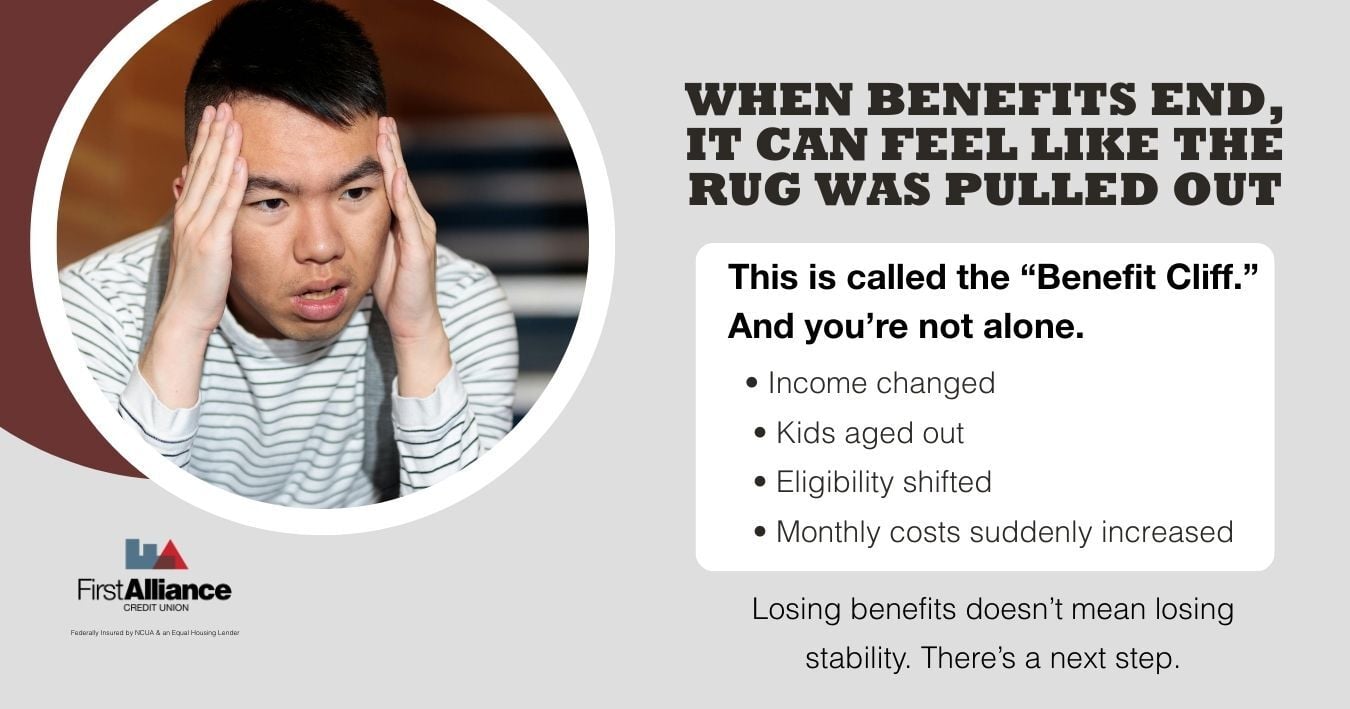
When Benefits End, It Can Feel Like the Rug Was Pulled Out

Build a New Budget Around Your Real Numbers

Once you know the gap, you can start closing it. A budget after losing benefits doesn’t have to be complicated. It just has to be realistic.

Start by listing every dollar coming in and every dollar going out. Be thorough: subscriptions, coffee runs, everything. Most people are surprised by what they find. Then look at where you can reduce monthly expenses without making life miserable.

Some places to start:

  • Groceries: Meal planning, store brands, and buying in bulk can stretch your dollars further than you’d expect.
  • Utilities: Small changes like turning off lights, adjusting the thermostat, and unplugging devices add up over a month.
  • Subscriptions: Cancel or pause what you’re not actively using.
  • Phone and internet: Call your provider and ask about lower-tier plans. Many will work with you.

If you’re not sure where to start, or you’ve tried budgeting before and it hasn’t stuck, working with a financial counselor can make a real difference. Having someone sit down with you, look at your actual numbers, and help you build a plan that fits your life can change everything. That’s not luxury. That’s exactly the kind of support this transition calls for. If you’re looking for financial help in Southeast Minnesota, including Rochester MN financial support, First Alliance Credit Union can connect you with someone who understands your community and your situation.

Don’t Let Debt Pile Up in the Gap

One of the biggest risks during a benefits transition is that people start leaning on credit cards or loans to fill the holes. Over time, that debt can quietly become its own problem.

If you’re already carrying some debt, now is a good time to look at debt consolidation. Consolidating can roll multiple payments into one, often with a lower interest rate, which means you can reduce your monthly payment and free up more breathing room in your budget. It’s not a magic fix, but it’s a tool that works, especially when you pair it with a solid budget.

Talk to a financial counselor before taking on any new debt or signing up for a consolidation program. They can help you decide what makes sense for your situation and understand the true long-term cost. At First Alliance Credit Union, we provide personalized, local financial guidance focused on your goals and long-term stability, so you can make informed decisions with confidence.

Curious how much you could save each month? Try our debt consolidation calculator to see what combining your payments might look like for your budget.

Start Building Your Safety Net, Even If It’s $5 at a Time

After losing benefits, your financial risk goes up overnight. There’s less margin for error. If your car breaks down, if you get sick, if your hours get cut, there isn’t a backup system catching you the way there used to be.

That’s why building even a small emergency fund becomes one of the most important next steps. It creates a buffer between a normal problem and a full blown crisis. Without savings, a $300 surprise can turn into credit card debt, late fees, overdrafts, or missed bills. With even a few hundred dollars set aside, you buy yourself time and options.

The goal is not to save thousands immediately. The goal is to reduce fragility. Even $5 at a time starts rebuilding that stability. Every small deposit is a way of taking back a little control.

Two tools worth knowing about if you're working with a local credit union:

1. WINcentive Savings: This program lets you save money while earning entries to win cash prizes. Every time you make a deposit, you get another shot at a prize. It's designed to make saving feel rewarding right away, not something you have to wait years to benefit from. For people who struggle to stay motivated about saving, this kind of positive reinforcement really works.

2. Round-Up Savings: Every time you use your debit card, purchases get rounded up to the nearest dollar and the difference goes straight into savings. A $4.60 coffee becomes $5.00, and that $0.40 goes into your account automatically. It's small, but it's consistent, and consistency is what builds a financial cushion over time.

These aren't get-rich strategies. They're practical ways to adjust when benefits stop in a way that's sustainable and doesn't require you to be perfect.

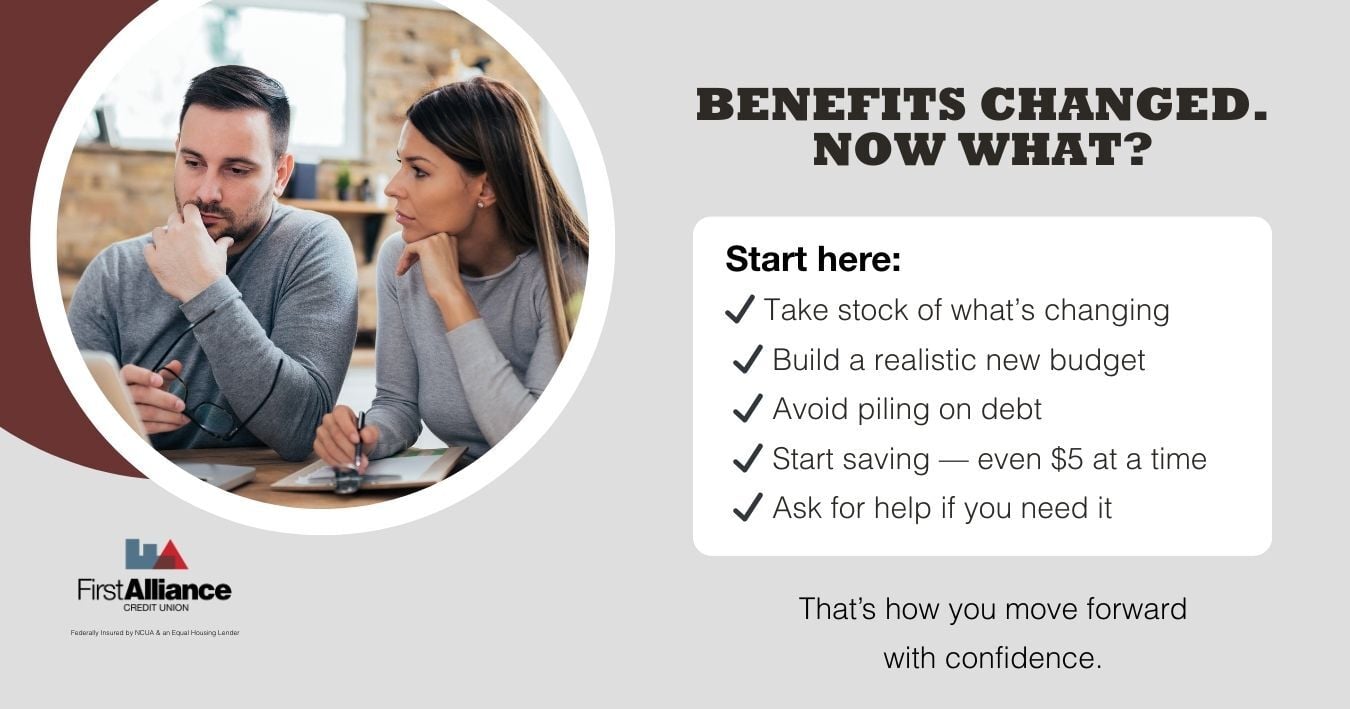
Benefits Changed. Now What?

Know That Help Exists, And It’s Okay to Ask For It

One of the hardest parts of how to adjust when benefits stop is the isolation of it. People often feel like they should just figure it out on their own. But that's not how it has to work.

Financial counseling and general support to navigate this kind of transition are exactly what community financial institutions are built for. Whether you need help understanding your new monthly budget, figuring out health insurance options, looking into debt consolidation to free up more money each month, or just getting a realistic picture of where you stand, these conversations happen every day, and there’s nothing to be embarrassed about.

If you're in the Rochester MN area or elsewhere in Southeast Minnesota, we'd love to help. Reach out to us at First Alliance Credit Union and ask about our financial counseling services, savings programs, and what options exist for people moving through a benefits transition. You don't have to have it all figured out to make the call.

You Can Get Through This

The benefits cliff is real, but it doesn’t have to define what happens next. With the right guidance, a realistic budget, and a plan built around your life, this transition can become a turning point instead of a setback.

If you’re navigating the loss of government benefits and aren’t sure what to do next, First Alliance Credit Union is here to help. Our team offers personalized financial counseling, practical budgeting support, savings programs, and solutions designed to help you regain stability and move forward with confidence.

You don’t have to figure this out alone. Reach out to First Alliance Credit Union today and take the first step toward building a stronger financial foundation.

Connect with First Alliance Credit Union and let’s talk through your next steps together.

Interview with an Expert: Budgeting and Saving Advice

Interview with an Expert: Budgeting and Saving Advice

Everyone says they want to save more money and be better at managing their finances. But if you don't know where to start or have questions along the...

Read More
Finding Hope in a Food Shelf Near Me: Where to Go if You Need Food

Finding Hope in a Food Shelf Near Me: Where to Go if You Need Food

Imagine you’re 20, working your first “real” job, sharing an apartment with two roommates, and suddenly your hours get cut. Or maybe you’re 35, fresh...

Read More
What is Financial Literacy?

What is Financial Literacy?

What is financial literacy and why is it important? Financial literacy is the ability to understand the important financial topics related to...

Read More