
 Allethea Faye Monfiel
What is a Checking Account?
 Jenna Taubel : Feb 5, 2019, 7:27:00 AM
Discover the benefits of checking accounts for everyday expenses and learn how they differ from savings accounts. Find the right option for you.
Finding a checking account sounds like it should be simple. You need a place to deposit your paycheck, pay your bills, and handle day-to-day spending without your bank working against you. But if you've ever been hit with a surprise overdraft fee, struggled to keep a minimum balance, or had an account closed due to financial hardship, you know it's not always that easy.
The good news is there are genuinely good checking account options out there, including ones designed with people in mind who just want fair, transparent banking.
Here's what to look for and what to watch out for.
A no-fee checking account is exactly what it sounds like: an account where you're not charged just for having it. No monthly maintenance fees, no minimum balance requirements, and no penalties for using your account the way it was intended to be used.
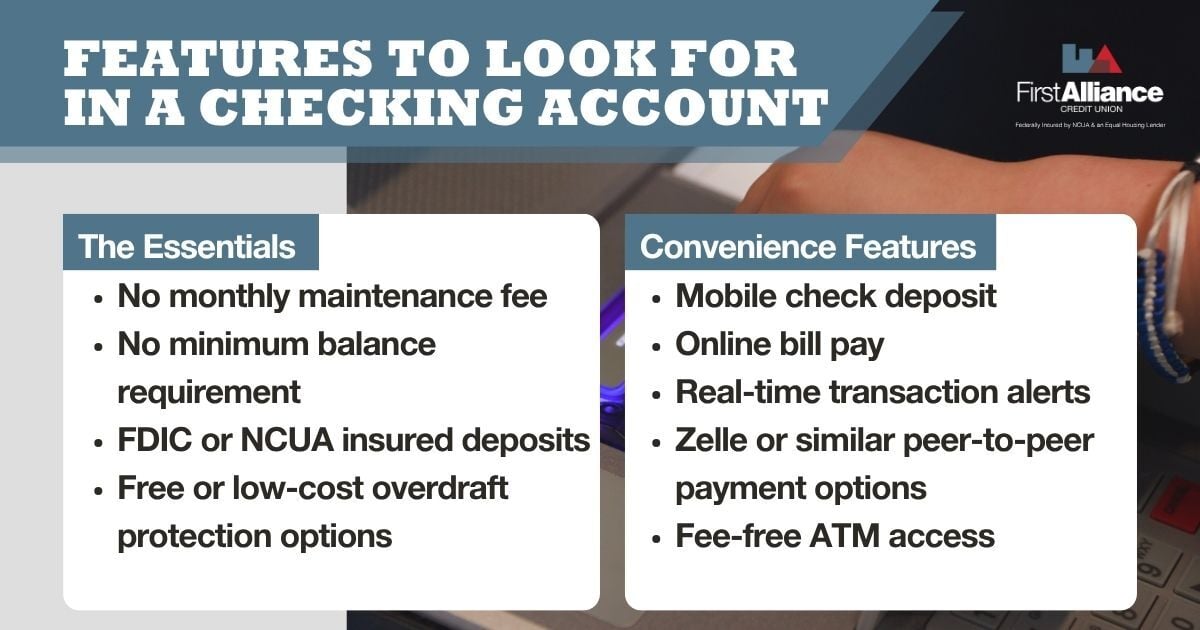
When comparing options, these are the features worth prioritizing:
At First Alliance Credit Union, our Free Checking account checks all of these boxes—no monthly fees, no minimum balance, and easy-to-use digital banking tools.
Overdraft protection is one of those features that's easy to overlook until you really need it.
When you spend more than what's in your checking account, an overdraft occurs. Without any protection in place, your bank might decline the transaction or charge you a fee, often anywhere from $27 to $35 per occurrence. Those fee can pile up fast, especially if multiple transactions hit in the same day.
Overdraft protection works by linking a backup funding source to your account. Depending on the institution, that might be a savings account, a line of credit, or a small overdraft coverage plan. When your balance dips below zero, funds are pulled from that source to cover the difference.
There are a few common types:
The most important thing to understand is that overdraft protection is optional in most cases, and you usually have to opt in. If you've struggled with overdraft fees in the past, it's worth asking your financial institution what options are available before you need them.
Yes, and this is worth saying clearly because a lot of people don't realize it's possible.
If you've had a checking account closed due to overdraft activity or other issues, you may show up in a database called ChexSystems, which many banks use when reviewing new applicants. A negative ChexSystems record can make it harder to open an account at traditional banks.
But credit unions and some other financial institutions offer what's often called a second chance checking account, an account designed specifically for people who are rebuilding their banking history. These accounts typically come with lower overdraft risk, spending guardrails, and sometimes a path to upgrade to a full checking account over time.
Worth knowing: some second chance accounts do charge a monthly fee (commonly $10-$25) and may have limited features, like no overdraft protection or check writing. It's worth comparing a few options before you commit.
If you've been turned down for a checking account before or you're not sure where you stand, it's worth reaching out to talk through your options. You may have more of them than you think.
Beyond the basics, here's a quick checklist you can use when comparing checking accounts:
The Essentials
Convenience Features
Support Features
That last point matters more than people give it credit for. A good financial institution should be able to tell you, without hesitation, exactly what you'll be charged and when. If the fee schedule is buried in small print or hard to understand, that's a signal worth paying attention to. For example, First Alliance Credit Union's fee schedule can be found anytime in their online Resource Center.
The most effective strategies are simple ones that are easy to build into your routine:
Most banking apps let you choose a threshold, say $50 or $100, and send you a notification when your balance drops below it. That small heads-up gives you time to transfer funds or pause spending before a problem happens.
Even a small savings cushion linked to your checking account can prevent an overdraft from becoming a fee.
Checking in on your balance a few times a week takes less than a minute and keeps you aware of where you stand
Subscriptions and automatic payments are common culprits in unexpected overdrafts. Knowing what hits your account and when helps you plan around it.
If you're regularly close to over-drafting, that's worth a conversation. A member advisor can help you look at your full financial picture and find solutions that work for your situation, whether that's adjusting your overdraft settings, exploring a savings plan, or something else entirely.
Banking shouldn't feel like something you're trying to survive. The right checking account gives you a stable place to manage your money without unexpected fees pulling you back.
At First Alliance Credit Union, our Free Checking account is built to be simple, transparent, and supportive, especially if you've had challenges with banking in the past. You'll find no monthly fees, no minimum balance, and access to real people who can help you work through your options.
You'll want to explore our checking account options to see what fits your situation, or if you have questions, you can connect with a member advisor who can walk you through everything.

If you still have questions, you're not alone. Here are a few questions about checking accounts that come up often when we talk with members.
A free checking account is one with no monthly maintenance fee and typically no minimum balance requirement. You're not charged simply for having the account open and using it
Overdraft protection usually refers to a linked backup account or credit line that automatically covers shortfalls. Overdraft coverage, sometimes called courtesy pay, is a discretionary service where the bank covers the transaction but may charge a fee. The terms vary by institution, so it's worth asking for the specifics.
A second chance checking account is designed for people who have had past banking problems, such as account closures or negative balances reported to ChexSystems. These accounts typically have more guardrails in place but offer a way to rebuild your banking history.
Credit unions are member-owned, not-for-profit institutions, which often means lower fees and more flexibility than traditional banks. Many credit unions offer free checking with overdraft options and personal service that larger banks don't always provide.
Start by asking specifically about second chance or fresh start checking accounts. You can also request your ChexSystems report for free, once a year or right away if you've recently been denied, to see what's on it and dispute any inaccuracies. Many credit unions are willing to work with you even if your banking history isn't perfect.
 Jenna Taubel : Feb 5, 2019, 7:27:00 AM
Discover the benefits of checking accounts for everyday expenses and learn how they differ from savings accounts. Find the right option for you.
 Jenna Taubel : May 24, 2018, 6:16:00 AM
Ever asked yourself why am I being charged a fee to transfer money from my savings account? Find out why and how to avoid it here.
 Jenna Taubel : Jan 10, 2019, 7:40:00 AM
Learn what is a savings account, their benefits, and how to choose the best one for your financial needs. Discover how to open your savings account...