
 Kamel LoveJoy
Understanding Credit Scores
 First Alliance Credit Union : Jun 1, 2017, 7:32:54 PM
If you've ever used credit in the past, you have a credit score. But what does the number you're given mean? Read more about understanding credit...

Starting your credit from zero can feel a little overwhelming, but everyone starts somewhere, and the steps are simpler than you might think. To build credit from scratch, all you need is one account that reports your payments to the credit bureaus, like a secured credit card or a credit builder loan. From there, it's about paying on time and keeping your balances low. Stick with those habits for about six months, and you'll usually have enough history for your very first credit score.
To show you how it all comes together, we'll follow along with John. He's starting out with no credit history, and he wants to build good credit so he can buy a car, rent an apartment, and one day own a home. His first step is opening a secured credit card with a $1,000 limit. Let's walk through what he's doing so you can follow the same path with confidence.
When starting from scratch, choosing the right credit card is crucial. John opted for a secured credit card because it’s specifically designed for people who are new to credit. This card requires a security deposit (in John’s case, $1,000), and his payment history will be reported to major credit bureaus. This is one of the easiest ways to begin building credit. If you'd like a closer look at how the deposit and credit limit work, our guide on what is a secured credit card breaks it down step by step.
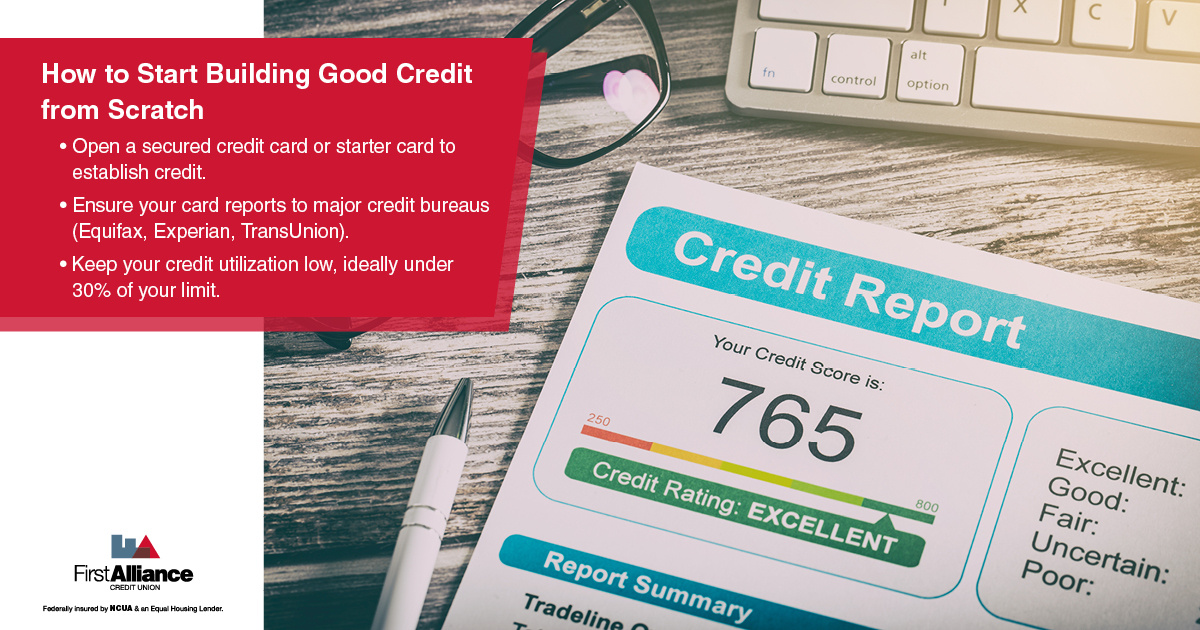
If you’re like John and want to build credit responsibly, keep the following in mind:
Secured Credit Cards: These are great for new credit users because they limit how much you can spend and help you avoid debt. Plus, as long as you pay on time, the credit bureaus will start building your credit history.
Rewards Cards: First Alliance Credit Union offers rewards for using your credit card, so John can earn cool stuff or even cash back while building his credit. However, it’s essential to pay off the balance monthly to avoid interest fees.
Using your credit card wisely is key. Don’t max it out—stick to small purchases you can easily pay off, like groceries or gas, and pay on time. Just because you have $1,000 available doesn’t mean you should spend it all. In fact, keeping your credit utilization under 30% will benefit your score.
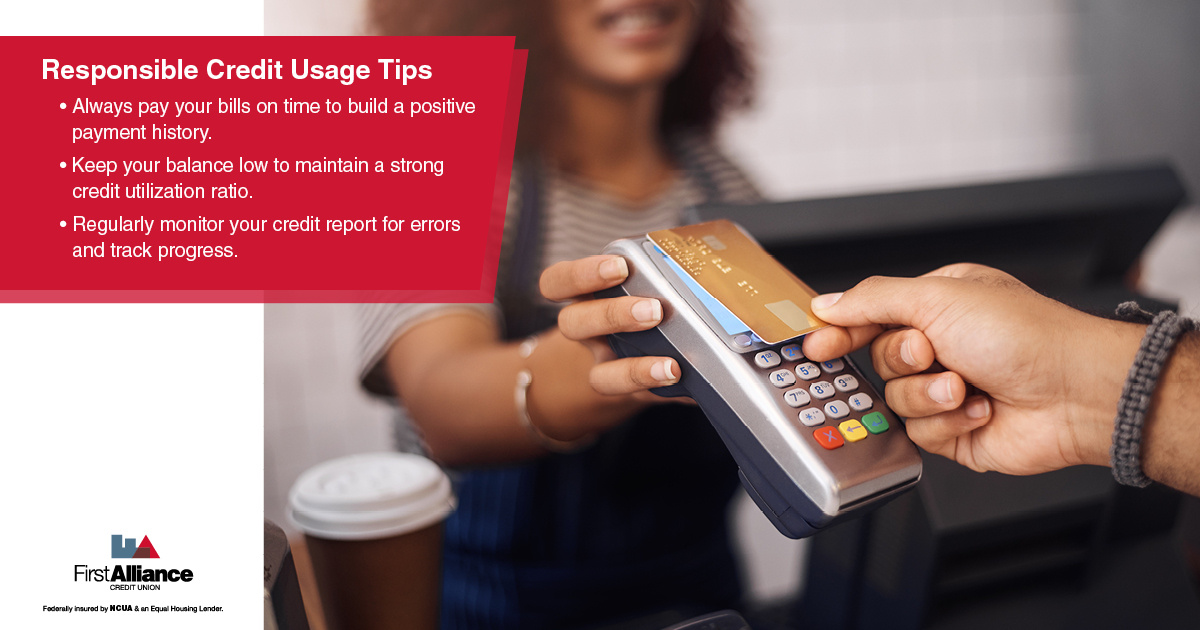
John knows he needs to use his secured card responsibly to build a strong credit history. His goal is to use less than $300 of his $1,000 limit to maintain a low credit utilization ratio. This ratio—how much of your available credit you're using—plays a big role in your credit score. Here’s how John is using his card responsibly:
Paying on Time: One of the most important factors in building good credit is paying bills on time. Even one late payment can hurt your score, so John set up automatic payments to ensure he never misses a due date.
Keeping Balances Low: John is careful not to max out his card. He uses it for smaller purchases like gas and groceries, which he can easily pay off at the end of the month. Keeping his balance low shows he can manage credit responsibly.
Monitoring Credit Reports: John regularly checks his credit report to track his progress and catch any errors. First Alliance Credit Union offers tools to help monitor credit health, which gives him peace of mind.
By using credit responsibly, John will see his credit score improve over time, opening doors to better loan rates and higher limits in the future.
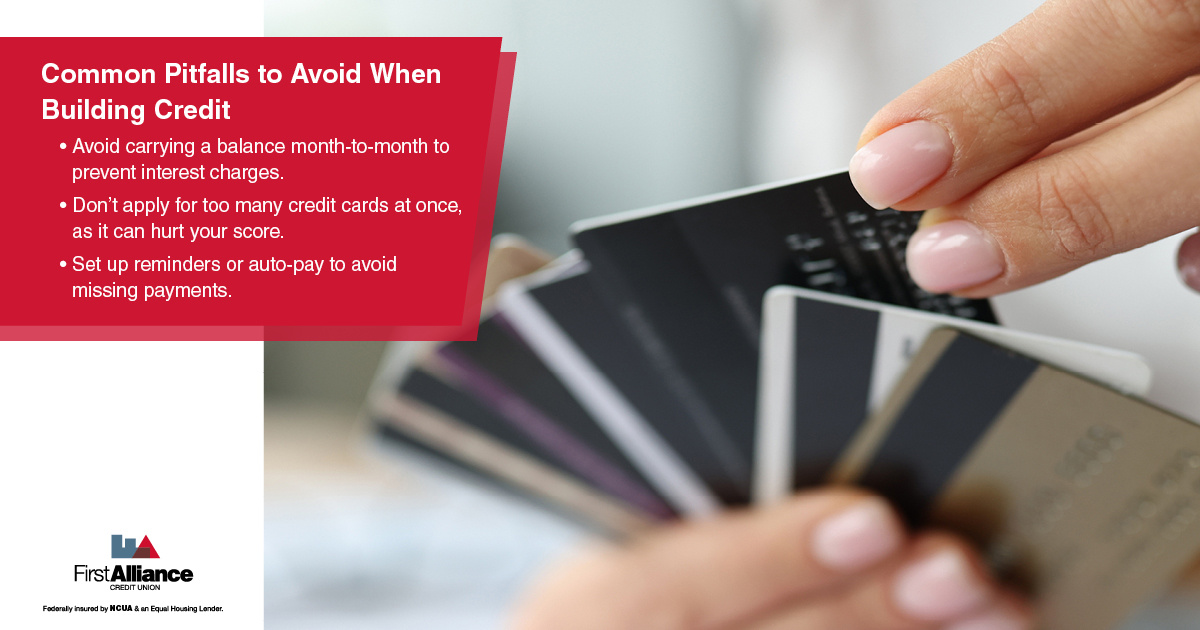
While John is off to a good start, there are common pitfalls that can easily derail someone building credit from scratch. Let’s take a look at what John is avoiding:
Carrying a Balance: Some people mistakenly believe that carrying a balance month to month helps build credit. This isn’t true. Paying your full balance every month avoids interest fees and builds a positive credit history.
Applying for Too Many Credit Cards: Opening too many credit cards at once can lower your credit score. John understands that applying for multiple cards in a short period can make him seem desperate for credit, which doesn’t look good to lenders.
Missing Payments: This one’s a biggie. Missing even one payment can set you back significantly. John ensures he pays his bills on time by setting up automatic payments or reminders.
John is careful to avoid these traps because he knows the importance of keeping his credit score healthy. He understands that good credit takes time and consistency, but by following these steps, he’s setting himself up for financial success.
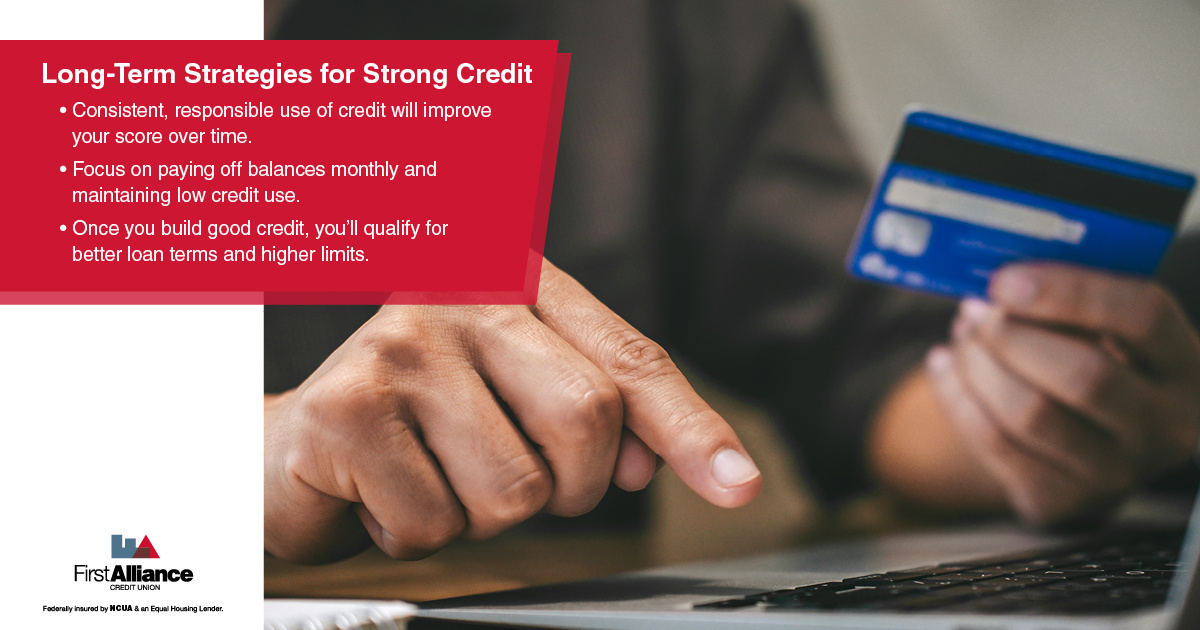
By following the steps John is taking, you too can build good credit from scratch. Whether it’s choosing the right secured credit card, using credit responsibly, or avoiding common pitfalls, the key is consistency and discipline. Remember, credit isn’t built overnight. It takes time, but the rewards—like lower interest rates and higher loan limits—are worth it. So, what’s next for John? After a year of responsible credit use, he’s planning to apply for an auto loan with First Alliance Credit Union. He’ll qualify for better terms because of his good credit, and before you know it, he’ll be driving away in his new car, one step closer to owning his dream home.

 First Alliance Credit Union : Jun 1, 2017, 7:32:54 PM
If you've ever used credit in the past, you have a credit score. But what does the number you're given mean? Read more about understanding credit...

 Allethea Faye Monfiel : Aug 20, 2026, 6:00:00 AM
See how your credit score affects loan approval, interest rates, renting, and utilities, plus how First Alliance Credit Union can help you build...

 Kamel LoveJoy : Mar 11, 2025, 1:05:35 PM
Learn how to manage your credit card utilization to maintain a healthy credit score with practical tips and strategies for keeping your usage in...