
For those new to online banking: click here to get started.
Needing a cosigner for a loan is common, and it does not mean your loan process has to stop there. There are realistic, practical ways to improve your approval odds on your own, from building credit to adjusting how much you borrow.
Can You Get a Loan Without a Cosigner?
Yes. If your credit, income, and debt meet the lender’s requirements, you may be able to qualify without a cosigner. If your financial profile does not meet those requirements on its own, a lender may ask for a cosigner to strengthen the application. A cosigner may help you qualify, but adding a loan payment can still put pressure on your budget. Consider the full monthly payment and your existing obligations before deciding whether this option is right for you.
A cosigner agrees to share responsibility for a loan, which can help an applicant qualify when their financial profile does not fully meet a lender's requirements on its own. Without one, the lender evaluates your ability to repay based only on your own financial picture. How to qualify for a loan without a cosigner usually comes down to strengthening whichever part of that picture is currently holding you back, whether that is thin credit history, a high loan amount, or existing debt.
If this is your first loan, or you have had setbacks in the past, it may take some extra preparation. That is normal, and it does not mean you are out of options.
What Can You Do If a Lender Says You Need a Cosigner?
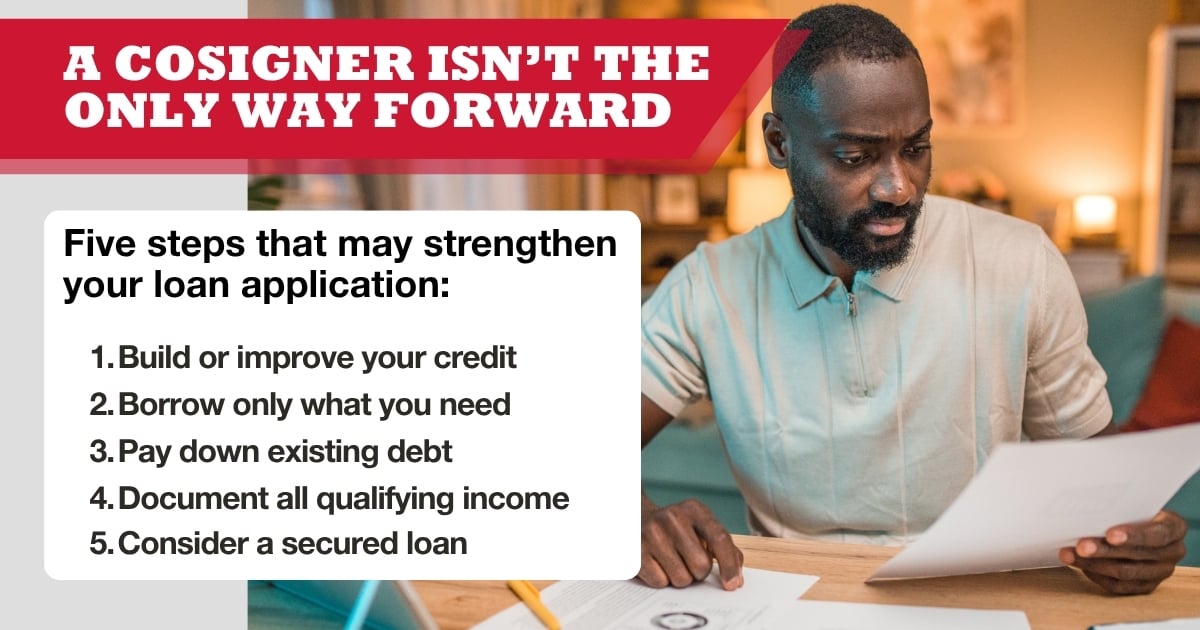
You have several alternatives to a cosigner: build your credit, borrow less, pay down existing debt, document or increase your income, or add collateral (such as a vehicle).
Being told you need a cosigner usually points to one specific gap in your application, not a total rejection. Here is a quick checklist of where to start:
Build or Improve Your Credit
Your credit history tells a lender how you have handled credit and debt in the past. Limited history gives a lender less to work with, and missed payments can make qualifying harder too. Start by checking your credit report and score, and dispute any errors you find. From there, on-time payments and manageable balances build a stronger profile over time.
For example, a first-time borrower with no credit history at all is often a harder "yes" than someone with a thin but clean record. In that case, spending a six months building even a small credit file can change the outcome of a future application.
Borrow Less
The amount you request shapes both the approval decision and the monthly payment you will need to manage. If you do not need the full amount your originally considered, scaling back can help.
For example, if you need $12,000 but can cover $2,000 from savings, borrowing $10,000 instead may fit your budget and the lender's comfort level better. Before you apply, calculate the estimated payment of the loan your planning to apply for and then weigh it against your current housing, utilities, food, transportation, and other debt costs to ensure it is affordable for you.
Pay Down Existing Debt
If you already have several monthly payments, adding another can put more strain on your budget and may affect how a lender evaluates your ability to repay. If you have room in your budget, paying down existing balances before applying may help. Focus on your total monthly obligations, not just the total amount you owe, when deciding whether you’re ready to apply for a loan without a co-signer.
Document or Increase Your Income
Lenders need to confirm that your income is sufficient to repay the loan. If your income has recently increased, update your application and be ready to provide documentation. If you earn income from more than one source, ask which types qualify and what documents you will need, since requirements can vary by lender and loan type. Having the right information ready can make the application process smoother and help you understand your options.
Consider a Secured Loan
A secured loan uses collateral, such as an eligible vehicle, to give the lender added security. Depending on your circumstances, that may make it possible to qualify without a cosigner. Keep in mind that the collateral could be at risk if you cannot repay the loan. Before choosing this option, ask about the interest rate, fees, repayment term, and what could happen if you fall behind.
You do not need to act on all five. Focus on whichever one matches the reason you were asked for a cosigner in the first place.
Before agreeing to cosign a loan, make sure you understand the responsibilities and potential risks involved. Listen to Good Money Moves Episode #40, "Cosigning a Loan: What You Are Agreeing To," to learn what cosigning means and what to consider before making a decision.
How Can You Improve Your Chances of Loan Approval on Your Own?
Beyond the levers above, a few application habits can improve your odds regardless of which one applies to you.
-
Review your credit report for errors before you apply, not after you are denied
-
Ask about pre-qualification, which often uses a soft credit check and will not affect your score
-
Keep your debt-to-income ratio in mind when deciding how much to request
-
Only borrow what you actually need for the expense in front of you
-
Gather income identification documents ahead of time so the process moves faster
-
Avoid applying with multiple lenders in a short window, since several hard inquiries close together can affect your score
These habits will not override a genuine gap in your application, but they remove the avoidable reasons for a denial or slower decision.
Are Secure Loans Easier to Get Than Unsecured Loans Without a Cosigner?
Sometimes, but not always. A secured loan may help you qualify without a cosigner because collateral gives the lender added security. However, the lender will still review your credit, income, debt, and ability to manage the payment based on your own financial picture. Collateral does not guarantee approval.
An unsecured loan does not require collateral, so the lender may place more weight on your credit, income, debt, and repayment ability when reviewing your application. If you are considering a secured loan as an alternative to a cosigner, make sure the payment fits your budget and understand the risk: if you fall behind, the lender may be able to take the collateral.
For example, a Vehicle Loan is typically secured by the vehicle, while a Personal Loan is usually unsecured. First Alliance Credit Union offers both options. Compare the interest rate, total cost, monthly payment, repayment term, and collateral requirements, and ask a lending professional which option may fit your circumstances.
What Loan Options Can Help Someone Build or Rebuild Credit to Avoid Needing a Cosigner?
Building or rebuilding credit is not something you have to figure out on your own, and it is more common than you might think. Wherever you are starting from, there is a tool here to meet you there. First Alliance Credit Union offers a Credit Builder Loan, a Classic Credit Card, and Credit Score Monitoring, each suited to a different stage of your credit journey.
-
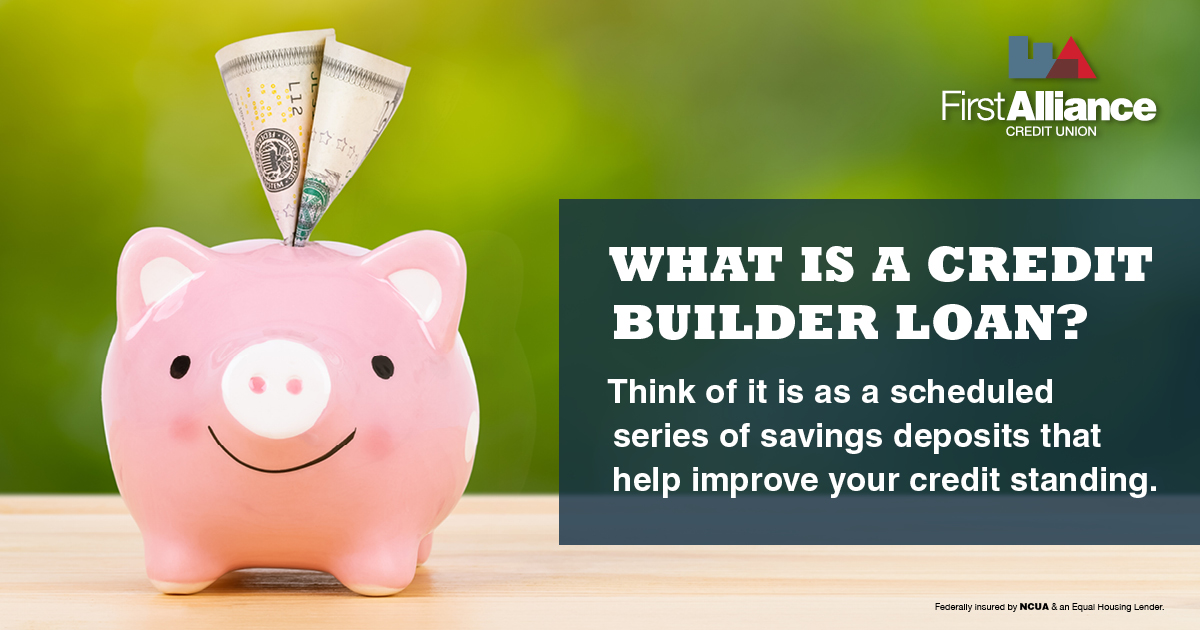
Credit Builder Loan: your loan funds sit in a certificate of deposit while you make payments, and payment history is reported to the credit bureaus. Funds are released once the term is complete, so this is a good fit if you have little to no credit history yet.
-
Classic Credit Card: used responsibly, ongoing card payments continue building your history after a Credit Builder Loan, or alongside it.
-
Credit Score Monitoring: keeps you informed about where your score stands and how it is changing, so you can track progress and catch errors early.
None of these guarantee approval on a future loan, but they give you real tools to work with as you strengthen you profile, one step at a time. Plus, you get access to a team of dedicated professionals to help guide you along the way.
What to Do If You Need a Loan but Do Not Have a Cosigner
Start by reviewing your financial picture: check your credit, look at your current debt and income, decide how much you actually need to borrow, and calculate a monthly payment you can comfortably afford. Then talk with a lender about your options. You may be able to qualify on your own, adjust your loan amount, consider a different type of financing, or take some time to strengthen our profile first.
First Alliance Credit Union offers Personal Loans for a range of borrowing needs and Vehicle Loans for eligible new and used vehicles. The right fit depends on what you need to finance and whether you meet the applicable requirements. You do not need to have everything figure out before asking questions. A conversation with a lending professional can help you understand what is available based on your personal circumstances.

Frequently Asked Questions
Yes, you may be able to get a Personal Loan without a cosigner if your own financial profile meets the lender’s requirements. First Alliance Credit Union Personal Loans are usually unsecured, so collateral is generally not required. Instead, the lender will evaluate factors such as your credit history, income, existing debt, and ability to afford the monthly payment. To improve your chances, review your credit, make sure your income documentation is current, pay down debt when possible, and request only what fits comfortably within your budget. Approval and loan terms depend on your individual circumstances.
Yes, you may be able to get a Vehicle Loan without a cosigner if your own credit, income, existing debt, and ability to afford the monthly payment meet the lender’s requirements. The vehicle and loan amount must also meet the lender’s guidelines, so choosing a vehicle and payment that fit comfortably within your budget can strengthen your application. To prepare, review your credit, gather current proof of income, and ask about pre-approval before you shop. First Alliance Credit Union offers Vehicle Loans for eligible new and used cars, trucks, motorcycles, and recreational vehicles.
It is harder, but not impossible. How to get approved for a loan without a cosigner and bad credit usually starts with the same steps as building credit from scratch: checking your report for errors, paying down what you can, and considering a Credit Builder Loan or secured option while your score recovers.
No. A cosigner shares responsibility for the debt, but the lender still applies its own lending requirements when reviewing the application either way. The strength of your chosen cosigners credit profile will also be taken into account.
You May Have Loan Options Without a Cosigner
Needing a cosigner does not mean your financial goal is out of reach. Improving your credit, reducing existing debt, borrowing less, or considering a different loan product can all help strengthen your application on its own merits.
If you are not sure which option fits your situation, talk with First Alliance Credit Union team about the lending options available to you. Whether you are buying your first vehicle, covering an unexpected expense, or working to build your credit, understanding your options can help you make a borrowing decision that works for you.