
 Jenna Taubel
1 min read
The End of the Penny: What It Means for Your Finances
 Jenna Taubel : Dec 18, 2025, 5:45:00 AM
The penny was first authorized in 1792, but as of November 12th, 2025 the United States has officially minted its final penny.

Paying at checkout has gotten faster and easier thanks to tap-to-pay technology. If you’ve noticed people quickly tapping their card on a payment terminal and walking away with a receipt, you’ve seen tap-to-pay in action.
If you’re new to tap-to-pay, or wondering whether your debit or credit card supports it, this quick guide will walk you through what it is, how to use it, and why it’s often safer and more convenient than traditional card swiping or inserting a chip.
Tap-to-pay is a contactless payment method that allows you to pay by briefly tapping your credit or debit card on a compatible payment terminal. The card uses secure, short-range wireless technology, called Near Field Communication (NFC) technology, to transmit payment information, no swiping, no inserting, and no PIN entry for most everyday purchases.
Tap-to-pay cards are sometimes labeled as contactless cards, and many newer debit and credit cards come with this feature built in.
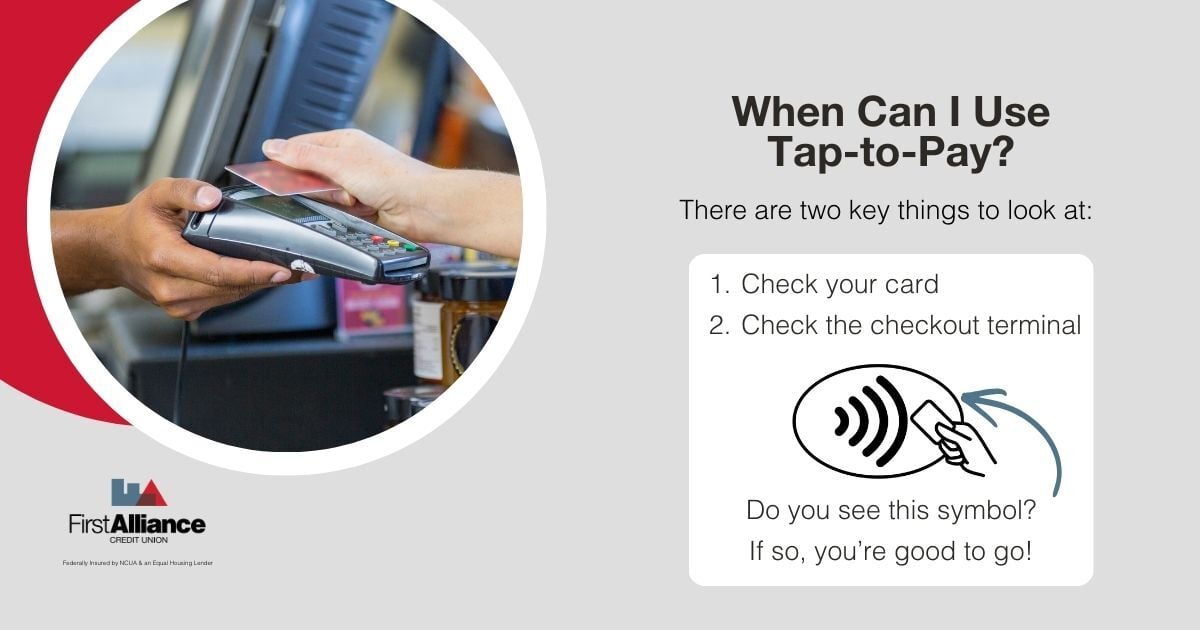
There are two key things to look at: one is on your card, and one is at the checkout terminal.
Most tap-to-pay cards have a small symbol that looks like a sideways Wi-Fi signal or a series of curved lines getting larger from left to right. This is the universal contactless payment symbol. If you see that symbol on the front or back of your card, it’s tap-to-pay enabled and can be used anywhere you see the same symbol at checkout.
At the store, look for the same contactless symbol on the payment terminal. It’s often displayed on the screen or near the card reader. If both symbols are present, follow these steps to complete your in-store purchase:
That’s it, you’re done. Making in-store purchases is easy and secure with tap-to-pay contactless technology.
Tap-to-pay isn’t just faster, it also offers meaningful benefits over older payment methods, from stronger built-in security to a smoother checkout experience. By keeping your card in your hand, limiting how often you touch the payment terminal, and reducing wear on your card’s chip and magnetic stripe, tap-to-pay can make everyday purchases feel easier, safer, and more convenient.
Tap-to-pay transactions usually take just a second or two, so you can be on your way quickly. There’s no need to swipe, re-swipe, or leave your card inserted while the payment processes, just a quick tap, a confirmation on the screen or a beep from the terminal, and your payment is complete.
Contactless payments use encrypted, one-time transaction codes, which means your actual card number isn’t shared with the merchant in the same way it is during a swipe. Instead, a unique, temporary code is created just for that purchase and can’t be reused.
Even if someone were to intercept that code, it would be useless for future transactions. This reduces the risk of card data theft and skimming fraud, and adds an extra layer of protection every time you tap your card.
Because you don’t need to hand over your card or touch the terminal as much, tap-to-pay can feel cleaner and more convenient, especially in busy or high-traffic locations. This can be particularly reassuring during cold and flu season, when you may want to limit how often you touch shared surfaces. It also helps keep the checkout line moving smoothly, since you’re not fumbling with the card reader, entering a PIN, or waiting while your card is inserted in the terminal.
Magnetic stripes can wear out, and chip cards can sometimes fail after repeated insertions. Tap-to-pay minimizes physical contact, which can help your card last longer by reducing scratches, dirt buildup, and damage to the chip or stripe. That means fewer issues at the checkout, less frustration if you’re in a hurry, and potentially fewer replacement cards (and replacement card fees) over time.
Tap-to-pay is now accepted at many grocery stores, gas stations, coffee shops, pharmacies, and retail locations, both locally and nationwide. You’ll also see it at many big-box retailers, fast-casual restaurants, and even some public transit systems and parking ramps.
Whether you’re grabbing a quick coffee, filling up your tank, or checking out with a cart full of groceries, there’s a good chance you’ll be able to simply tap your card and go. The number of stores offering contactless payment options grows every day, making it easier to rely on tap-to-pay as your go-to way to make everyday purchases.
Yes. Tap-to-pay is considered one of the most secure ways to pay with a physical card.
Each transaction includes built-in fraud protection, and most cards still include the same zero-liability protections you’re used to with debit or credit purchases. That means if someone makes unauthorized charges with your card, you typically won’t be held responsible as long as you report the activity promptly and follow the guidelines on your account. Many tap-to-pay cards also come with additional security monitoring, so unusual spending patterns can be flagged quickly.
If your card is ever lost or stolen, you can report it just like any other card, and your credit union can help protect your account. In many cases, you can also lock or freeze your card through online or mobile banking while you look for it, giving you extra peace of mind until everything is resolved.
Tap-to-pay is designed to make everyday purchases simpler, faster, and more secure, and getting started is easier than you might think. If you’re interested in using tap-to-pay, or want to confirm whether your current debit or credit card supports it, First Alliance Credit Union is here to help.
Reach out to a our team today, we can answer your tap-to-pay questions, such as:
Tap-to-pay is currently available on First Alliance Credit Union debit cards that are being reissued on their regular schedule. The tap-to-pay feature for reissued credit cards and cards instantly issued at our branches is coming soon. Stay tuned for updates!


1 min read
Jenna Taubel : Dec 18, 2025, 5:45:00 AM
The penny was first authorized in 1792, but as of November 12th, 2025 the United States has officially minted its final penny.
1 min read
Jenna Taubel : Jan 9, 2020, 5:35:00 AM
You may have heard before that credit unions are “not-for-profit” business entities. That is not to be confused with a “nonprofit.” There are...

1 min read
 Chris Gottschalk : Nov 13, 2018, 7:29:00 AM
College students will face a lot of choices as they’re learning how to be adults. One of those choices is the financial institution they’ll use. This...