
1 min read
How to Buy a Used Car from a Private Seller
Buying a used car from a private seller can save you thousands of dollars compared to going through a dealership. Private sellers often have lower...
5 min read

Yes, you can finance a car bought from a private seller. It works differently than buying from a dealership, but it is absolutely possible, and for many buyers, it is worth it. Private sellers often have lower prices and more room to negotiate, and with the right financing in place, you can shop with confidence.
This guide walks you through how private party auto loans work, what you need to apply, and what to watch out for before you sign anything.
A private party auto loan is a vehicle loan used to purchase a car directly from an individual instead of a dealership. Instead of walking into a showroom, you are buying from someone who already owns the car and is selling it on their own.
The loan itself works similarly to a standard auto loan. You apply, get approved for a loan amount, and use those funds to pay the seller. Once the sale is complete, the car title transfers to your name and your lender holds a lien on the vehicle until the loan is fully paid off. The main difference is that there is no dealership handling the paperwork on your behalf, so a little more of the legwork falls on you as the buyer.
That is actually one of the reasons we recommend getting pre-approved before you start shopping. When you know your budget ahead of time, you can move quickly when you find the right car and negotiate from a position of confidence. At First Alliance Credit Union, we offer vehicle loans for private party purchases with terms designed to fit your budget. Our team is here to walk you through the process from application to title transfer, so you are never left figuring it out on your own.
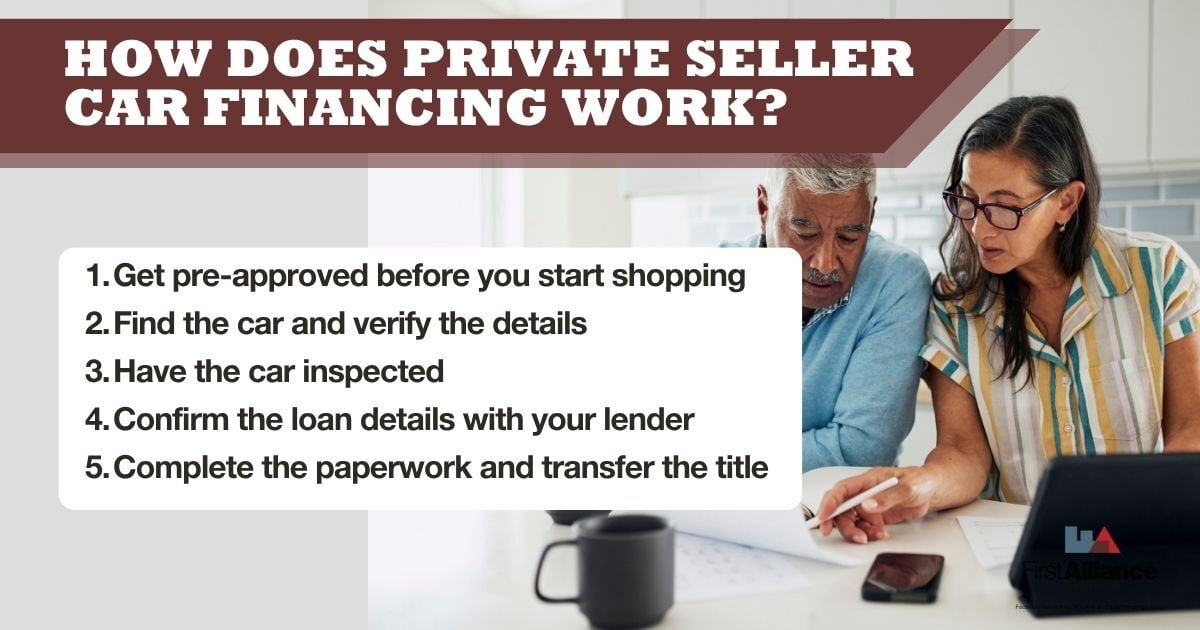
Here is how the purchasing process typically works from start to finish:
Before you even start looking at cars, apply for a vehicle loan and get pre-approved. This tells you exactly how much you can spend, which puts you in a much stronger position when negotiating with a private seller.
Once you find a car you are interested in, pull a vehicle history report using the VIN (Vehicle Identification Number, a unique 17-character code stamped on every vehicle that identifies its make, model, year, and history). Check for accidents, title issues, odometer discrepancies, and whether the seller actually owns the car free and clear.
Always get an independent inspection from a trusted mechanic before committing. This step can save you from buying a car with hidden problems.
Share the vehicle details with your lender, including the VIN, mileage, year, make, and model. Lenders typically have requirements around the age and mileage of the vehicle, so make sure the car qualifies.
Once everything checks out, your lender will finalize the loan and either pay the seller directly or provide you with the funds to do so. You and the seller will complete the title transfer through your state's DMV or Department Motor Vehicles.
Having your documents ready ahead of time speeds up the car loan process. Here is what most lenders will ask for when buying a car from a private seller:
If the seller still has an outstanding loan on the car, the process gets more complicated. It can be done, but you will want to work closely with your lender to make sure the existing lien is cleared before the title transfers to you, and the lien is then moved to your lender.
Both loan options can work, but they are not the same. Here is a quick comparison:
| Feature |
Vehicle Loan |
Personal Loan |
|
Interest rate |
Typically lower |
Typically higher |
|
Secured by |
The vehicle |
Nothing (unsecured) |
|
Approval requirements |
Vehicle must qualify |
Based on creditworthiness |
|
Best for |
Newer, lower-mileage vehicles |
Older vehicles or those that don't meet loan criteria |
A vehicle loan is usually the better choice if the car qualifies, because the rate is typically lower. A personal loan makes more sense if the car is older, has high mileage, or does not meet the lender's vehicle requirements. A good lender can help you review your loan options before you decide.

Buying from a private seller means there is no dealer warranty or consumer protection fallback, so doing your homework upfront is important. Here is a practical checklist:
Getting the car is just the first step. Once you have the keys, it is worth thinking about what happens if things go wrong down the road. First Alliance Credit Union offers a few options that can give you extra peace of mind:
GAP covers the difference between what you owe on your loan and what your insurance pays out if your car is totaled or stolen. If your car's value drops faster than your loan balance, GAP can prevent you from being left with a bill for a car you no longer have.
Extended warranties help cover the cost of unexpected repairs after the manufacturer's warranty expires, which matters a lot when buying a used vehicle.
Debt Protection can pause or cancel your loan payments if something unexpected happens, like a job loss, disability, or death.
These are optional loan add-ons, but they are worth asking about when you set up your loan, especially for a used car purchase from a private seller.
If you still have questions about financing a car from a private seller, here are answers to some of the common things people ask most often before they start the process.
Yes. A private party auto loan works just like a standard vehicle loan, except the funds go to an individual seller instead of a dealership.
You apply for a loan, get approved, and your lender pays the seller or provides you with the funds to do so. The seller signs over the title, and your lender holds a lien until the loan is paid off.
You will generally need a valid ID, proof of income, proof of insurance, the vehicle's VIN and details, and the seller's clean title.
A vehicle loan usually offers a lower interest rate, but the car has to meet the lender's requirements. A personal loan is a good backup option for older or high-mileage vehicles that do not qualify. Your lender can help you decide which option makes the most sense for your situation.
Run a vehicle history report, verify the title is clean and in the seller's name, have the car inspected by a trusted mechanic, and confirm the price is fair using a tools available online.
Yes, and it is a smart move. Getting pre-approved first tells you your budget and puts you in a stronger negotiating position with the seller.
Buying from a private seller can be a great way to get a reliable vehicle at a fair price. With the right loan and a little preparation, the process does not have to be complicated.
At First Alliance Credit Union, we offer vehicle loans designed to fit your budget, along with personal loan options if they are a better match for your situation. Our team is here to help you understand your options and move forward with confidence.

1 min read
Buying a used car from a private seller can save you thousands of dollars compared to going through a dealership. Private sellers often have lower...

1 min read
 First Alliance Credit Union : Apr 5, 2018, 7:04:00 AM
These days, it seems like there is a fine print for everything we do: cell phone contracts, utilities, cable, and the list goes on. We've all been...

1 min read
 Jenna Taubel : May 8, 2018, 6:50:00 AM
With all of the recent data breaches and Facebook privacy concerns in the news the last few months, I felt it was important to highlight some of the...