<img src="https://events.xg4ken.com/pixel/v2?tid=KT-N2BAB-3ED&amp;noscript=1" width="1" height="1" style="display:none">
Skip to the main content.

8 min read

How to Buy a Used Car from a Private Seller

How to Buy a Used Car from a Private Seller

Buying a used car from a private seller can save you thousands of dollars compared to going through a dealership. Private sellers often have lower asking prices, and there is no markup for overhead, commissions, or dealer fees. That said, buying a used car from a private seller does come with its own set of things to watch out for. Knowing what to do before, during, and after the sale makes all the difference.

Basic Steps for Buying a Used Car from a Private Party

Here's an 8 step guide to help you feel confident about buying a used car from a private seller.

Step 1: Figure Out Your Budget Before You Start Shopping

Before you start scrolling through listings, get clear on what you can actually afford. This includes the purchase price, sure, but also ongoing costs like insurance, fuel, registration, and potential repairs.

A great place to start is our Auto Loan Calculator. Plug in different loan amounts and terms to see what a monthly payment might look like for you. This gives you a realistic number to work with before you fall in love with a car that is out of your price range.

If you do not have cash for the full purchase, that is okay. You can get a private party auto loan, which is financing specifically designed for buying from an individual rather than a dealership. More on that in just a bit.

Pro tip: If you have a savings account, consider setting aside a small repair buffer before you buy. Even a well-maintained used car can have a surprise expense or two in the first few months. Having a few hundred dollars set aside gives you breathing room.

Find out exactly what fits your budget before you start shopping. Use our Auto Loan Calculator to compare loan amounts and terms side by side.

Step 2: Search Smart and Ask the Right Questions

Once you know your budget, start looking at listings on platforms like Facebook Marketplace, Craigslist, or CarGurus. Look for cars with a detailed description, clear photos, and a seller who seems willing to communicate openly.

When you find a car that interests you, reach out and ask these questions before you commit to seeing it in person:

  • Why are you selling the car?
  • How long have you owned it?
  • Has it been in any accidents?
  • Is the title clean, or is there a lien on it?
  • Has it been regularly serviced? Do you have records?
  • Are there any known mechanical issues?
  • Is the mileage accurate on the odometer?
  • Will you allow a pre-purchase inspection?

A seller who is honest and helpful when answering these questions is a good sign. A seller who gets defensive or vague? That is worth paying attention to.

Step 3: Run a Vehicle History Report

Before you go see the car in person, look up its VIN (Vehicle Identification Number). Every car has one, typically found on the dashboard near the windshield or on the driver's side door jamb. Use the VIN to run a vehicle history report through a service like Carfax or AutoCheck.

A vehicle history report can reveal things like:

  • Prior accidents or flood damage
  • Title issues, including salvage or rebuilt titles
  • Odometer discrepancies
  • Previous owners and how it was used
  • Outstanding recalls

A clean title means the car has not been declared a total loss by an insurance company. A lien means there is still a loan owed on the car by the seller. If there is a lien, the seller's lender needs to be paid off and release the title before ownership can transfer to you. This is an important detail to sort out before you hand over any money.

Step 4: Get a Pre-Purchase Inspection

This is one of the most important things you can do when buying a used car from a private seller, and it is one of the most frequently skipped steps. Do not skip it.

A pre-purchase inspection means taking the car to a trusted, independent mechanic before you buy it. This typically costs between $100 and $150, and it can save you from a repair bill that is many times that amount. Your mechanic will check things like:

  • Engine and transmission condition
  • Brake wear
  • Tire condition and alignment
  • Fluid levels and leaks
  • Suspension and steering
  • Signs of rust or frame damage
  • Electrical systems

If a seller refuses to let you take the car for an inspection, that is a major red flag. A seller who has nothing to hide will almost always agree.

Private Seller Car Buying Checklist: What to Bring to the Sale

When you are ready to meet the seller and potentially complete the purchase, bring these with you:

  • Valid government-issued ID
  • A copy of the vehicle history report
  • Your pre-approval letter or financing details (if applicable)
  • A bill of sale template (you can find these online or your state's DMV website may have one)
  • A cashier's check or funds ready to transfer safely
  • A trusted friend or family member, especially if you are a first-time buyer
  • Any printouts of the listing or messages from the seller

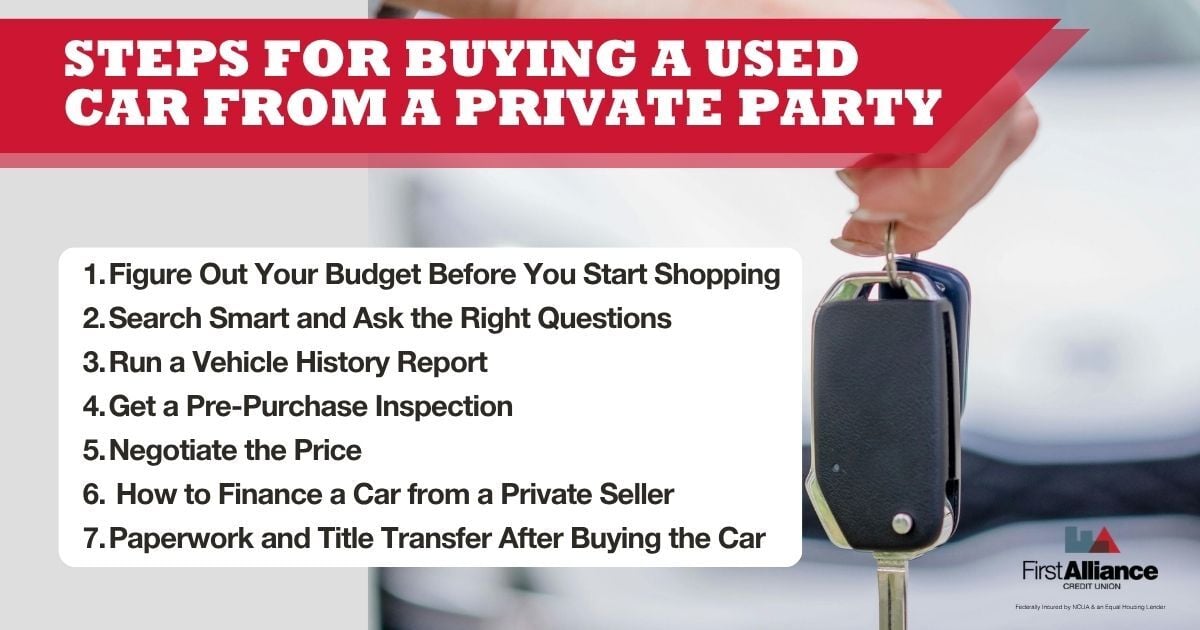
steps for buying a used car from a private party

Step 5: Negotiate the Price

Private sellers usually have some room to negotiate, especially if the car has been listed for a while or if your inspection turned up any minor issues. Be polite and reasonable. Point out specific things that justify a lower offer, whether that is a cosmetic scratch, tire wear, or a maintenance item that will need attention soon.

Do not feel pressured to decide on the spot. A legitimate seller will give you time to think it over. Pressure tactics like 'I have two other buyers coming today' are sometimes real and sometimes not. Either way, do not let urgency push you into a deal you are not comfortable with.

Step 6: How to Finance a Car from a Private Seller

A lot of people do not realize that you can get a loan to buy a car from a private seller, not just from a dealership. This is called a private party auto loan, and it works similarly to a standard auto loan.

At First Alliance Credit Union, our Vehicle Loans are designed to give you flexible terms and competitive rates, whether you are buying from a lot or from your neighbor. Getting pre-approved before you start shopping is a smart move for a few reasons:

  • You know exactly how much you can spend before you fall in love with a car
  • You can act quickly when you find the right one
  • You go into negotiations as a serious, ready buyer
  • There are no surprises about what you can afford

Once your financing is sorted, here is a breakdown of the safest payment methods for a private party car sale:

  • Cashier's Check: This is one of the most common methods. You get it from your bank or credit union for the exact purchase amount. The seller can verify it easily, and it is more secure than personal checks.

  • Bank Wire Transfer: Secure and traceable, though it can take a business day to process. Great for larger amounts.

  • Online Transfer through your financial institution: If both parties use the same bank or credit union, this can be quick and simple.

  • Avoid: Cash apps like Venmo or Zelle for large transactions, money orders from unknown sources, and wiring money to anyone you have not met in person.

If you have a checking account with First Alliance Credit Union, our Online and Mobile Banking tools make it easy to manage your funds, verify your balance, and initiate transfers securely before and after the sale.

Ready to see what you qualify for? Apply for a vehicle loan or get pre-approved today at First Alliance Credit Union. It is a simple process and our team is happy to walk you through it!

Step 7: Paperwork and Title Transfer After Buying the Car

Once you and the seller have agreed on price and payment, it is time to handle the paperwork. This is one of the most important parts of buying a used car from a private seller, and it is often where people get tripped up.

Here is what you need:

  • Bill of Sale: A written record of the transaction. It should include the purchase price, date, both parties' names and addresses, the VIN, odometer reading, and signatures from both buyer and seller. Some states require this; even if yours does not, it is smart to have one.

  • Title: The seller signs the title over to you. Make sure their name on the title matches their ID. If there is a lien, the lender must release it first.

  • Odometer Disclosure: In most states, this is required for vehicles under a certain age. It documents the mileage at the time of sale.

  • Title Transfer at the DMV: Take the signed title and bill of sale to your local Department of Motor Vehicles (DMV) to register the car in your name. You will also pay any applicable taxes and registration fees at this point.

Steps after buying a used car also include getting auto insurance if you do not already have it. In most states, you need to have coverage before you can legally drive the vehicle off the seller's property.

Is It Safe to Buy a Used Car from a Private Seller?

Yes, it can be very safe, as long as you do your homework. Millions of people buying cars and selling cars privately every year without any problems. The key is knowing what to look for, what questions to ask, and how to protect yourself during the transaction. Private seller car buying is not inherently risky, but it does require a little more legwork on your part than buying from a dealership.

Unlike a dealership, a private seller typically offers no warranty and no return policy. That means once money changes hands, the car is yours. Taking a few smart precautions before you get to that point is what keeps you from getting burned.

How to Avoid Scams When Buying a Used Car

Unfortunately, car buying scams do happen. Here are the most common ones and how to spot them:

  • The 'Too Good to Be True' Price: If a car is listed well below market value with no clear reason, be cautious. Run the VIN and meet in person before sending any money.

  • The Absent Seller: A seller who claims to be out of town and wants you to wire money before seeing the car is almost certainly a scammer. Never pay for a car you have not seen and inspected.

  • Title Problems: Some sellers try to sell cars with salvage titles, active liens, or even stolen vehicles. Always run a VIN check and verify the title is in the seller's name.

  • Pressure to Skip the Inspection: A seller who will not let you get an inspection has something to hide. Walk away.

  • Fake Payment Confirmation: If you are selling and someone sends a fake cashier's check or claims a payment went through before it clears, be very careful. For buyers, always use verified, traceable payment methods.

Private Seller vs. Dealership: A Quick Comparison

If you are still deciding between buying from a private seller and going through a dealership, here is a simple breakdown:

  • Private Seller Pros: Lower prices, more room to negotiate, no dealer fees, more personal history on the car.

  • Private Seller Cons: Sold as-is with no warranty, more legwork on your end, potential title complications, payment logistics.

  • Dealership Pros: Often includes a short warranty or return window, financing available on-site, more consumer protection.

  • Dealership Cons: Higher prices, dealer fees, added pressure during the sales process.

For budget-conscious buyers who are willing to do a little extra research, buying from a private seller is often well worth it. With the right preparation, you can end up with a reliable car at a price that really works for your budget.

Frequently Asked Questions

Buying a car from a private seller can be a great way to find better value, and financing it is easier than most people think.

Can I finance a car bought from a private seller?

Yes. A private party auto loan works just like a standard auto loan. You borrow the money from a lender like First Alliance Credit Union and use it to pay the seller. Getting pre-approved before you shop helps you know your budget and act fast when you find the right car.

What should I check before buying a used car?

Run a vehicle history report using the VIN, review service records if available, test drive the car, and get a pre-purchase inspection from an independent mechanic. These steps help you uncover any hidden issues before you commit.

How do I verify the title is clean?

Request the VIN from the seller and run a vehicle history report. You can also check with your state's DMV. Confirm the title is in the seller's name and that there are no outstanding liens. If there is a lien, the seller's lender must release it before ownership transfers to you.

How do I pay a private seller safely?

Use a cashier's check, bank wire transfer, or a secure transfer through your financial institution. Avoid carrying large amounts of cash or using payment apps that do not offer buyer protection for large transactions.

What paperwork do I need when buying from a private seller?

You need a signed title, a bill of sale, and an odometer disclosure (required in most states). Take these documents to your local DMV to complete the title transfer and register the car in your name.

Is it safe to buy a used car from a private seller?

Yes, with the right precautions. Run a vehicle history report, get a pre-purchase inspection, verify the title, and use a safe payment method. Buying from a private seller is a smart option for many people, especially those trying to save money on transportation.

Ready to Make Your Move?

Buying a used car from a private seller is one of the smartest ways to get reliable transportation without overpaying. And when you have the right financial tools and support behind you, the process is a lot less stressful than it sounds.

At First Alliance Credit Union, we are here to help you feel confident about every financial decision, including your next car purchase. Whether you need help figuring out your budget, exploring vehicle loan options, or simply understanding how the process works, we have got you!

Ready to find the right car? Listen to Episode #34 of our podcast, Buying a Used Car Without Getting Ripped Off, before you sign anything — it's the one episode every used car buyer needs to hear first.