
For those new to online banking: click here to get started.
6 min read

Managing several debts at once can make it hard to know where your money is going. You may have multiple credit card payments, different interest rates, and several due dates to keep track of each month.
Debt consolidation can bring some of that complexity together. By combining multiple eligible debts into one new loan or credit account, you may be able to make one monthly payment instead of several. But consolidation isn't automatically the right choice for everyone. In this guide, we'll look at how debt consolidation works, when it may make sense, and what to compare before choosing an option.
What Is Debt Consolidation, and How Does It Work?
Debt consolidation means combining multiple debts into one new loan or credit account. Depending on the option you choose, this could include credit card balances, medical bills, or other eligible loans.
A debt consolidation loan is one common approach. You borrow enough to pay off your existing balances, then make payments on the new loan over a set period. Instead of keeping up with several creditors, you have one payment and one payoff schedule to manage.
Other options, such as a balance transfer credit card or home equity loan, may also be used to consolidate debt. A personal loan can be a straightforward option for credit card debt because it may offer a fixed rate and a defined repayment period.
Before choosing an option, look at the rate, fees, repayment term, monthly payment, and total cost. Your credit and budget also matter. What works well for one person may not be the best fit for someone else.
Is Debt Consolidation Right for Me?
Debt consolidation can make sense when you're dealing with several debts, especially if high interest rates are making repayment difficult. Before moving forward, compare the new loan with what you're already paying and consider whether the new payment fits your budget.
Debt consolidation may be worth considering if:
-
You have several debts with different due dates and interest rates. One payment can make your monthly finances easier to manage.
-
You're paying high interest, particularly on credit cards. A lower rate could help reduce your interest costs.
-
You have steady income and can comfortably make one monthly payment. The new payment should fit comfortably into your budget.
-
You want a set repayment schedule. A fixed term gives you a clearer timeline for paying off your debt.
It may be better to pause if:
-
The new rate is similar to or higher than what you're already paying.
-
You're likely to build up new credit card balances after consolidating.
-
Fees could outweigh the potential savings.
-
The new payment would stretch your budget too much.
The goal isn't simply to combine your debts. It's to find an option that makes repayment easier and works for your overall financial situation.
Can Debt Consolidation Lower My Monthly Payment or Interest Rate?
It can, but it depends on the debt you're starting with and the loan you qualify for. For example, if most of your debt is on high-interest credit cards and you qualify for a personal loan with a lower interest rate, consolidation could reduce the amount of interest you pay and potentially lower your monthly payment.
Keep in mind that a lower monthly payment doesn't always mean you'll pay less overall. A longer repayment term can reduce your monthly payment while giving interest more time to add up. That's why it's important to compare the total repayment cost, not just the monthly payment.
Is Debt Consolidation a Good Idea for Credit Card Debt?
It can be a good option for people who are carrying high-interest credit card balances.
Credit cards can have relatively high interest rates, so moving those balances to a lower-rate, fixed rate personal loan may help reduce interest costs and give you a set date for paying off the debt. But consolidation doesn't make the debt disappear. It simply changes how you repay it.
For example, if you use a loan to pay off your credit cards and then continue adding new balance to those cards, you could end up with the loan payment and new credit card debt at the same time. That's why a debt consolidation plan should include more than the new loan. Take a look at your budget, identify what caused the balances to build up, and make a plan that helps you avoid taking on more debt.
How Does Debt Consolidation Affect My Credit Score?
Applying for a new loan can cause a small, temporary drop in your credit score because of the credit inquiry. Opening a new account can also affect the average age of your credit accounts.
The longer-term effect can be more positive. Paying down credit card balances can lower your credit utilization, and making your new loan payments on time can help build a positive payment history.
Your credit score may take some time to adjust, so don't be discouraged by a short-term change. What matters most is how you manage your accounts going forward.
First Alliance Credit Union’s online and mobile banking tools make it easier to stay on top of your credit, track changes, and feel more confident about your financial progress.
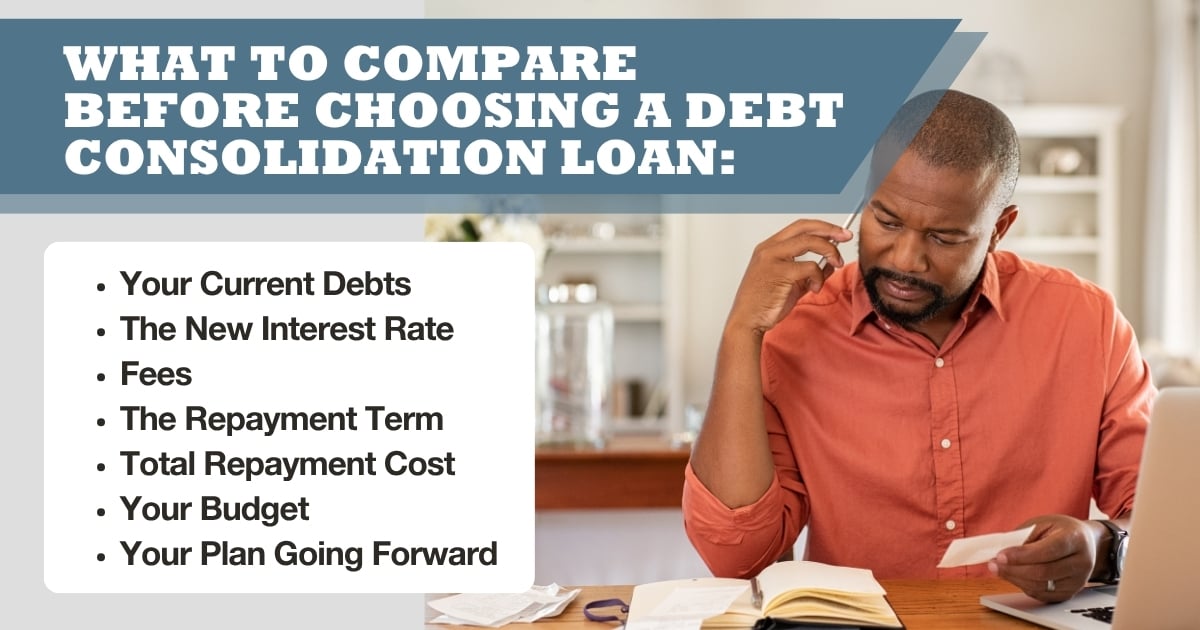
What Should I Compare Before Choosing a Debt Consolidation Option?
The monthly payment is only one part of the picture. Before choosing a debt consolidation option, take some time to compare the full cost. Here's what to look at:
Your Current Debts
Start by getting a clear picture of what you already owe. Write down the balance, interest rate, minimum payment, and due date for each debt you're considering consolidating. This gives you a useful starting point when comparing a new loan and can help you see which debts are costing you the most in interest.
The New Interest Rate
The interest rate is one of the most important details to compare, but don't look at it in isolation. Compare the new rate with the rates you're currently paying across all of your debts, not just the one with the highest rate. A lower rate could help reduce your interest costs, but you'll want to consider the full loan terms before deciding whether the difference is enough to make consolidation worthwhile.
Fees
A lower interest rate doesn't necessarily mean you'll save money if the new loan comes with significant fees. Check whether there are origination fees, prepayment penalties, balance transfer fees, or other charges associated with the option you're considering. Include those costs when comparing your current debt with the new loan so you have a more accurate idea of what consolidation could cost.
The Repayment Term
Look at how long you'll have to repay the new loan. A longer term can make the monthly payment easier to fit into your budget, but it also gives interest more time to accumulate. On the other hand, a shorter term may mean a higher monthly payment but could help you pay off the debt sooner and reduce the total interest you pay.
Total Repayment Cost
Once you know the rate, fees, and repayment term, look at the total amount you'll pay over the life of the loan. This is one of the best ways to compare a consolidation option with your current debts. A monthly payment that looks lower may not actually save you money of the longer repayment period results in a higher overall cost.
Your Budget
Before taking on a new payment, make sure it works with your monthly budget. Look at your income and regular expenses, including housing, utilities, groceries, transportation, and other debt payments. It's also worth leaving some room for unexpected expenses. A consolidation loan should make your debt easier to manage, not leave you struggling to make the new payment each month.
Your Plan Going Forward
Paying off your existing balances is only part of the process. Think about what you'll do after the debts are consolidated so you don't end up in the same situation again. If credit card balances were part of the problem, consider how you'll use those cards going forward and whether changes to your budget or spending habits are needed. Having plan in place can help you make the most of the progress you've made through consolidation.
Using a debt consolidation calculator can help you compare the numbers before you apply and give you a better idea of what the new payment could look like.
Estimate your monthly payment after debt consolidation by accessing our free debt consolidation calculator today!

Building a Stronger Financial Footing After Consolidation
Getting your debts into one payment can be a helpful step, but the real goal is to make your overall financial situation easier to manage. That means knowing what you're paying, keeping your budget realistic, and giving yourself a plan for staying out of new debt.
If you're considering debt consolidation, you don't have to figure it all out on your own. First Alliance Credit Union can help you look at your options and understand how the numbers may work for your specific situation.
Ready to simplify your debt? Contact First Alliance Credit Union today and let’s find the right solution for you.
