For those new to online banking: click here to get started.
 Allethea Faye Monfiel

An inheritance, an insurance payout, a work bonus, or a larger-than-expected tax refund can leave you looking at your balance and wondering what to do next. You may feel relieved, unsure, or both. Even when the money is welcome, deciding where to keep it can feel like another responsibility to sort through.
You don't have to figure it all out today. A large sum means something different for every household. If it's more money than you're used to managing, it's reasonable to want time to think before making a decision.
For now, focus on one step: finding a safe, accessible place to hold the money while you consider your options. Keeping it separate from groceries, bills, and everyday spending can help you see what you have set aside. That gives you room to weigh your next move without committing to a long-term plan before you're ready.
Where Should I Keep a Large Sum of Money While I Decide What to Do With It?
A federally insured savings account or money market account can give your money a place to stay while you work out what comes next. Both can earn dividends and let you access your money without committing to a set term. The details matter, though: check the fees, the balance you'll need to maintain, and any limits on withdrawals. Before depositing the money, confirm how much of your total balance will be covered by federal insurance.
For now, you're choosing a place to hold the money, not deciding what to do with every dollar. Look for an account that keeps your deposit protected within insurance limits and lets you cover upcoming expenses while you think through your options.
Is It Okay to Wait Before Deciding What to Do With the Money?
Yes. Having options doesn't mean you have to choose right away.
Give yourself time to look at what you owe, which expenses are coming up, and what you'd like the money to help you do. If you're unsure whether the payment comes with tax obligations or deadlines, a qualified tax professional can help you sort that out before you spend or move it.
If the money came from an inheritance or insurance claim, you may also be handling a loss, paperwork, or changes at home. You don't need to rush a long-term financial decision while you're working through everything else.
Taking a few weeks or longer to think can be reasonable, as long as you stay on top of any bills or deadlines. Keep the money protected within applicable insurance limits and accessible for expenses you need to cover. You can take care of today's needs without deciding your whole financial future.
What Should You Compare When Deciding Where to Put a Lump Sum of Money?
When deciding where to put a lump sum of money, look at more than the dividend rate. Consider how easily you can access it, whether it's federally insured, and what it costs to maintain the account.
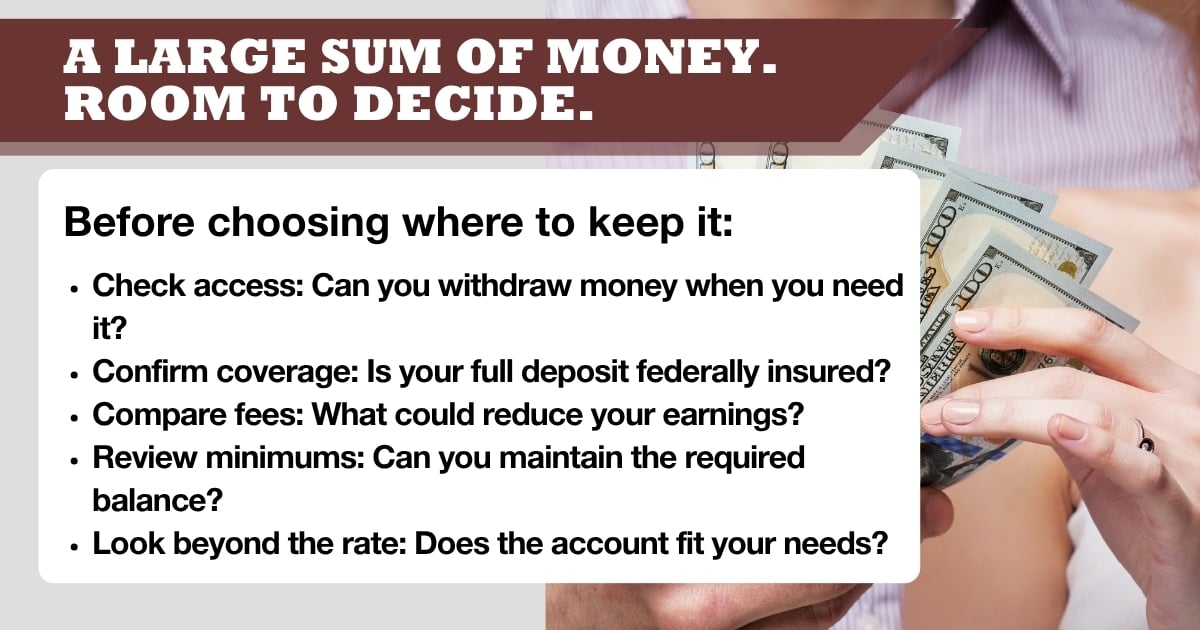
Here are five things to check before opening an account.
Check How Easily You Can Access Your Money
A leaking roof or a medical bill may need your attention before you've decided what to do with the rest of your money. If you have expenses coming up, consider keeping enough in an account you can access when those bills are due.
Before opening an account, ask how withdrawals work: how often you can take money out, how long a transfer takes, and whether any fees or early withdrawal penalties apply. A higher dividend rate can be appealing, but it may not be worth the trade-off if accessing money you need means paying a penalty. Choose access that fits your life, not just a rate that looks good on paper.
Make Sure Your Deposits Are Federally Insured
When you're setting aside a large amount of money, it's worth checking how much is protected. At a federally insured credit union, the National Credit Union Administration (NCUA) insures eligible deposits up to $250,000 per member, per insured credit union, for each account ownership category.
Before depositing an inheritance, insurance payout, or other lump sum, ask your credit union to help you review your coverage, including money you already have there. How your accounts are owned and categorized matters—not just how many accounts you have. Getting those details clear can help you decide where to keep the money while you consider your next steps.
Ask About Fees
A higher dividend rate doesn't tell the whole story. Monthly service charges, fees for falling below a minimum balance, and withdrawal fees can eat into what you earn. Before opening an account, ask which fees apply and what you'd need to do to avoid them. An account with a slightly lower rate may leave you with more money after fees, especially if its requirements are easier for you to meet.
Know the Balance Requirements
Check how much you need to open the account and how much you'll need to keep there to avoid fees or earn a higher dividend rate. Those amounts may be different. Think about what your balance could look like after paying upcoming bills, not just on the day you make your deposit. Look for requirements you can comfortably meet while still covering what you need.
Compare What You'll Earn
Compare the dividend rates available for the amount you plan to keep in the account. Earning more is worth considering, but it doesn't have to drive the whole decision. While you're working out your plans, keeping your money protected and available when you need it may matter more than getting the highest rate.
Where Can You Hold a Lump Sum of Money While You Plan?
You don't have to choose one account for every dollar. A savings or money market account can hold money you may need while you're making plans, and checking can cover bills that are coming due. The right mix depends on when you'll need the money. Here's how each option works and what to consider before choosing.
Savings Account
A savings account can help you keep your lump sum separate from the money you use for groceries and bills, without tying it up for a set term. At First Alliance Credit Union, Share Savings has a $5 minimum balance, no monthly service fees, and earns dividends from the first day of deposit.
If you're still deciding what the money needs to do for you, savings can be a simple starting point. You can keep track of what you've set aside and access it as your plans become clearer.
Money Market Account
If you're setting aside a larger amount, a money market account may be worth a look. You can earn dividends without committing your money to a set term. Just check the balance requirements and withdrawal rules so you know what to expect when you need to use it.
At First Alliance Credit Union, our Personal Money Market Account has tiered dividend rates, meaning your balance determines the rate you earn. You'll need $2,000 to open the account, and a monthly fee applies if your balance falls below $2,000. Consider what you'll keep there after paying upcoming expenses, not just what you can deposit today.
A money market account should give you room to plan, not another requirement to worry about. If the minimum balance or withdrawal rules don't fit how you'll use the money, a savings account may be a simpler choice.
Certificate of Deposit (CD)
If you know you won't need part of your money for a while, a Certificate of Deposit may be worth considering. You set aside a specific amount for an agreed-upon term and earn a fixed dividend rate during that time. The trade-off is access: taking money out before the term ends may mean paying an early withdrawal penalty.
At First Alliance Credit Union, Certificate of Deposit terms are available up to 120 months, with a $500 minimum deposit. Choose a term based on when you'll need the money, not just the rate you could earn.
If you're still sorting out bills or upcoming expenses, you don't have to commit your entire lump sum. Keeping that money in savings or a money market account can leave you room to handle what comes up. A certificate may fit the portion you're comfortable leaving untouched until the term ends.
Checking Account
Checking account can be a practical place for money you'll use soon. If you have funeral expenses, a tax bill, or other payments coming up, consider keeping enough there to cover them alongside your regular bills.
For money you haven't made plans for yet, a separate savings or money market account can help you keep track of what's set aside. When everything sits in checking, a larger balance can make it harder to tell what's available for everyday spending. Keeping the money separate gives you a clearer picture, and you can transfer what you need as expenses come up. Just check transfer timing so the money reaches checking before a payment is due.
Not sure which account fits your situation? Our team can help you compare your options.

Should I Choose a Savings Account or a Money Market Account for a Large Deposit?
Start with how you'll use the money, not just how much you're depositing. The choice between savings and a money market account comes down to the balance you can maintain, how often you'll need access, and what you'll earn after fees.
A savings account may be a better fit if:
-
You want a simple place to keep money separate from everyday spending.
-
You prefer a lower minimum balance requirement.
-
You expect your balance to drop as you pay upcoming expenses.
A money market account may be worth considering if:
-
You can comfortably meet its balance requirements, even after planned withdrawals.
-
Its withdrawal rules fit how often you'll need the money.
-
It offers a higher dividend rate for your balance without fees outweighing the extra earnings.
You can also use both. For example, you might set aside money for upcoming expenses in savings and keep money you're less likely to need soon in a money market account. Just check the fees and requirements for each. Splitting the money can help you organize it, but it doesn't automatically increase your federal insurance coverage.
How Can I Check Whether My Full Deposit Is Federally Insured?
Start with the money you already have at the credit union, then include the deposit you're planning to make. Federal coverage generally protects eligible deposits up to $250,000 per member, per insured credit union, for each account ownership category. That means how your accounts are owned matters—not just how many you've opened.
Individual accounts, joint accounts, certain retirement accounts such as Individual Retirement Accounts (IRAs), and trust accounts have different coverage rules. Opening another savings or money market account doesn't automatically give you another $250,000 in protection. Review how each account is titled and which ownership category it falls into before assuming your full balance is covered.
You don't have to work through the details on your own. The National Credit Union Administration (NCUA) offers a free Share Insurance Estimator to help you estimate coverage based on your accounts and ownership details. Your credit union can also help you review the results.
There's No Need to Figure Everything Out Today
Receiving a large sum of money can feel like a big responsibility, especially when you're not sure what to do with it yet. You may have several priorities competing for your attention, from paying bills to setting something aside for the future. You don't have to settle every question at once.
If you'd like someone to talk it through with, our First Alliance Credit Union team can help you compare savings options, understand account requirements, and review how deposit coverage applies to your situation. You don't need a finished plan before starting that conversation.
Start with what needs your attention now. You can make the longer-term decisions one at a time, with your household's needs, not someone else's timeline, guiding the way.
Want to hear more?
Listen to "What to Do When You Receive a Large Sum of Money" on the Good Money Moves podcast for more practical tips on finding your footing after receiving a lump sum.