
The Basics for Needing a Cosigner on a Loan
 Jenna Taubel : Dec 4, 2018, 6:29:00 AM
How do you choose someone to be your cosigner, and what can you do if you can’t find one? Here we layout the basics of needing a cosigner for your...
5 min read
There are a few things about the car loan process that tend to catch people off guard, and proof of insurance is one of the biggest ones. Lenders require it because the vehicle serves as collateral for the loan. If the car is damaged or totaled, insurance ensures the loan can still be repaid, protecting both you and the lender. Knowing this early, and knowing what to do about it, saves you from delays and last-minute stress at your loan closing.
A lot of people think of an auto loan as a two-step process: get approved, but the car. But there is more happening in between. Here is how it actually flows:
You apply for an auto loan and get pre-approved.
You find the vehicle you want to purchase.
You submit the vehicle information so the loan can be tied to that specific car.
You submit proof of insurance on that vehicle. This step surprises a lot of first-time car buyers. You have not driven off the lot yet, but insurance needs to be in place before the loan can be finalized.
The loan closes and the funds are disbursed.
That fourth step is where most delays happen. People arrive at closing without insurance sorted, and everything comes to a stop. The fix is simple: treat insurance as part of your prep, not as an afterthought.
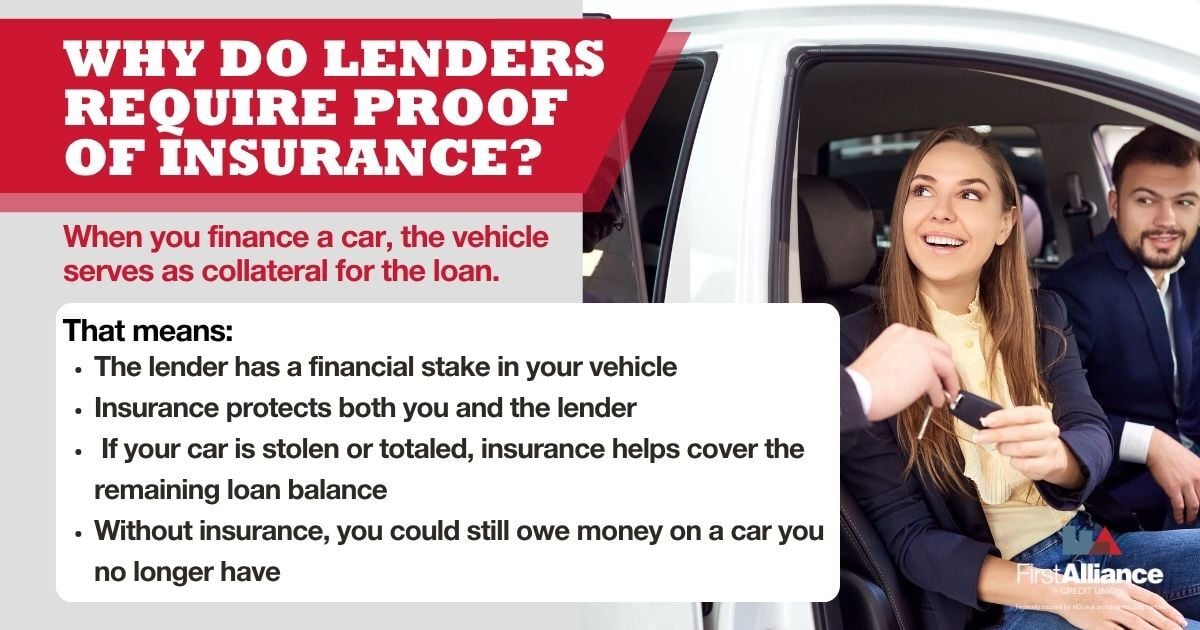
Here is the part most people do not think about. When you finance a vehicle, the lender has a financial stake in that car until the loan is paid off. The vehicle is collateral, meaning it is the asset securing the debt. That is the risk factor for the lender. If the car is totaled in an accident, stolen, or written off as a total loss, the lender still needs to be repaid. Insurance is what makes that possible. Without it, you could be stuck making payments on a vehicle that no longer exists, and the lender would have no way to recover the outstanding balance.
The insurance requirement is not a formality. It directly protects you just as much as it protects the lender.
No, not through most lenders. This is worth knowing well before your closing date.
Even if your state only requires liability insurance to legally drive, a financed vehicle requires more. State minimum coverage protects other people from damage you cause. Lenders need coverage that also protects the vehicle itself.
If you arrive at your closing without proof of insurance, your loan may not be finalized that day. It is one of the most avoidable delays in the loan process.
Most lenders require full coverage insurance on financed vehicles. Here is what that typically includes:
Together, collision and comprehensive are what make a policy "full coverage." Liability alone is not enough for a financed vehicle because it only protects other people, not the car itself. Since the car is securing your loan, the lender needs to know the vehicle is covered no matter what happens to it.
It is also worth knowing that lenders may have specific requirements around coverage limits and deductible amounts. When you are shopping for a policy, let your insurance agent know you are financing the vehicle so they can make sure your coverage meets those requirements.

Here is the part most people do not know about until it is too late, so it is worth being upfront about.
If you do not provide proof of insurance at closing, your loan may not be finalized. But the issue does not end there. Once your loan is active, you are required to maintain continuous coverage for the life of the loan. If that coverage lapses, here is what can happen:
The easiest path is making sure your coverage is current from day one and stays active throughout the life of the loan.
Proof of insurance is not just a box to check during the auto loan process. It is a step that protects you just as much as it protects the lender. When you have the right coverage in place:
Think of it less as a requirement and more as one of the smartest things you can do when taking on a vehicle loan.
Here is how to handle the insurance piece so it does not hold up your car loan:
We know this part of the loan process can feel like a lot, especially if you are note expecting it. Here are the questions members ask us most.
Because the vehicle is collateral for the loan. Until the loan is paid off, the lender has a financial stake in that car. Insurance ensures that if the vehicle is damaged or totaled, there is a way to cover the remaining loan balance, protecting both you and the lender.
No. Proof of insurance is required before your loan can be finalized. If you arrive at closing without it, your closing could be delayed until coverage is in place.
Full coverage, which includes collision, comprehensive, and liability. You will also need to list your lender as a lienholder or loss payee on the policy.
Yes. Liability-only coverage meets the legal minimum for driving but does not protect the vehicle itself. Since the car secures your loan, lenders require coverage that protects the vehicle too.
Your lender will be notified and you will have a window of time to reinstate your coverage. If you do not act, your lender will purchase force-placed insurance on your behalf, which is more expensive and only protects the lender’s interest, not yours. It is important to restore coverage as soon as possible.
Force-placed insurance, also called lender-placed insurance, is a policy your lender purchases on your behalf when your own insurance coverage lapses. It is more expensive than a standard policy, the cost is typically added to your loan balance, and it only protects the lender’s financial interest, not you as the borrower.
Getting a car loan does not have to feel complicated. When you know what to expect, including the insurance step, the process moves a lot more smoothly. At First Alliance, we are here to make sure you have everything you need before your closing date so there are no surprises along the way.

 Jenna Taubel : Dec 4, 2018, 6:29:00 AM
How do you choose someone to be your cosigner, and what can you do if you can’t find one? Here we layout the basics of needing a cosigner for your...
 First Alliance Credit Union : Aug 22, 2019, 6:20:00 AM
Buying a new car? You should know why your credit score matters when applying for an auto loan. Here's why a good credit score for an auto loan...
 Chris Gottschalk : Dec 3, 2020, 5:15:00 AM
Do you need GAP insurance on your auto loan? Do you know what GAP insurance is? Explore the pros and cons of adding GAP insurance to your vehicle...