

For those new to online banking: click here to get started.
Setting up your first budget does not have to be complicated. Start by looking at how much money comes in each month, what you need to spend, and what you want your money to accomplish. From there, you can create a simple plan for bills, everyday spending, savings, and other financial goals.
Budgeting is not about restricting every purchase or getting every number perfect. It is about knowing where your money is going and making spending decisions that fit your real life.
How Do You Set Up a Budget for the First Time?
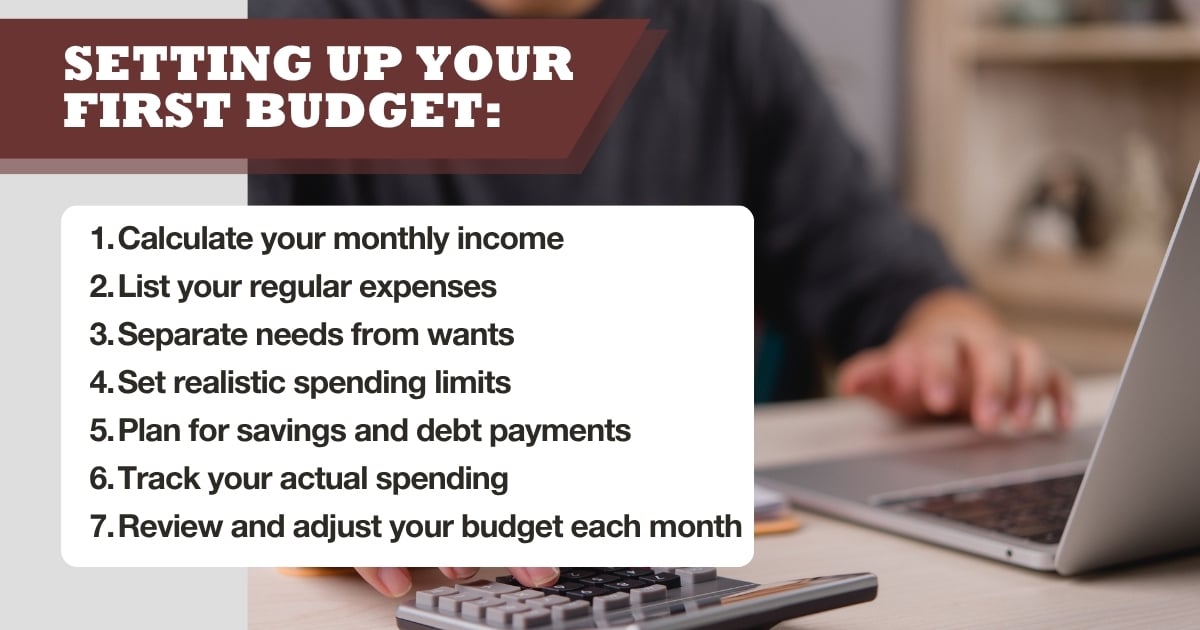
To set up a budget for the first time, start by calculating your take-home income and listing your regular expenses. From there, separate your needs from your wants, set realistic spending limits, and make room for savings and debt payments. Keep track of your spending and review your budget regularly to see what’s working and what needs adjusting. You don’t need a complicated spreadsheet or a perfect system, these simple steps are enough to help you get started.
1. Calculate Your Monthly Income
Start by figuring out how much money you actually bring home each month. Use your take-home pay, the amount deposited into your checking account, rather than your salary before taxes and other deductions. This helps ensure you don’t accidentally count money that’s already committed to other expenses.
If your income changes from month to month because of overtime, tips, commissions, freelance work, or changing hours, use the months you earned the lowest income estimate based on what you typically earn. This helps ensure even at your minimum income can cover your most basic needs.
2. List Your Regular Expenses
Write down the expenses you expect to pay each month. Start with essential bills such as housing, utilities, transportation, insurance, groceries, and debt payments. Then add flexible expenses such as dining out, entertainment, shopping, subscriptions, and hobbies.
Do not forget expenses that happen less frequently. Car maintenance, annual insurance payments, holiday spending, and gifts can all affect your budget, even if they do not show up every month. You don't want to be surprised by annual bills or seasonal spending changes.
3. Separate Needs from Wants
If you find your income doesn't always cover your expenses each month. Take a moment to review your needs and wants to help you prioritize your spending.
-
Needs are expenses you generally have to cover, such as housing, food, utilities, transportation, and required debt payments.
-
Wants are purchases you enjoy but may be able to reduce or postpone, such as eating out, entertainment, and nonessential shopping.
This does not mean you have to eliminate wants from your budget. Instead, knowing the difference helps you decide where you have flexibility when money is tight or if you need additional income from a side gig.
4. Set Realistic Spending Limits
Set spending limits based on your actual habits and financial situation. For example, if you typically spend $400 a month on groceries, setting a $100 limit may not be realistic. Start with a number you can reasonably maintain, then look for opportunities to reduce spending over time.
Remember, a budget works better when it reflects real life.
5. Plan for Savings and Debt Payments
Make savings and debt payments part of your budget rather than treating them as an afterthought. Even setting aside a small amount each month can help you build the habit of saving. You can also include extra debt payments if paying down debt is one of your financial goals.
A First Alliance Credit Union Savings Account can give you a separate place to set aside money for emergencies and other money goals.
6. Track Your Actual Spending
Creating a budget is only the beginning. Throughout the month, compare your actual spending with what you planned. Review your transactions regularly to see where your money is going. First Alliance Credit Union's Online Banking and Mobile Banking can make it easier to monitor your account activity and stay aware of your spending.
7. Review and Adjust Your Budget Regularly
Your budget should change when your circumstances change.
At the end of each month, compare your planned spending with what actually happened. Look for expenses you forgot to include, categories where you overspent, and areas where you spent less than expected.
Then use what you learned to create a more realistic plan for the following month. Your first budget does not have to be perfect. The goal is to create a system you can understand, use, and adjust.

What Should Be Included in a First Budget?
A first budget should include monthly income and basic expenses and spending categories. You don't want to make your first budget complex.
-
Monthly income
-
Fixed bills
-
Flexible spending
-
Savings goals
-
Debt payments
-
Occasional expenses
The important thing for a first time budgeter is to give your money a purpose before you spend it. This process helps ensure your money goes toward your most important financial priorities without overspending in areas that matter less to you.
How Do You Make a Budget for Beginners?
The best way to make a budget for beginners is to start with your actual financial situation rather than an ideal version of it. For example, imagine your monthly take-home income is $3,000. Your budget might look something like this:
| Category | Example Amount |
| Housing | $1,300 |
| Utilities | $150 |
| Groceries | $500 |
| Transportation | $200 |
| Debt payments | $200 |
| Savings | $100 |
| Personal Spending | $300 |
| Other Expenses | $250 |
| Total | $3,000 |
These numbers are only an example. Your budget may look completely different depending on your income, household size, bills, and goals. The important part is that your income and planned expenses are clear. Once you can see the numbers together, you can make decisions about where your money should go. Just look at your recent spending and use those numbers to create realistic categories. If you spend more than expected in one area, do not assume your budget has failed. Adjust the amount and look for changes you can realistically maintain.
First Alliance Credit Union's My Money personal budgeting tool, available through Online Banking, can also help you organize your financial information and put your budget into practice,
Want a simple way to organize your monthly spending plan? Use the Snapshot Budget Worksheet to map out your income and expenses, plan for upcoming bills, and get a clearer picture of your month.
How Do You Start a Monthly Budget?
If you are learning how to start a monthly budget, choose a regular time each month to review your income, bills, spending, and financial goals. Some people prefer to start at the beginning of the month, while others prefer the end. You can also choose to budget and track your spending weekly or daily.
Start by asking yourself a few reflection questions:
- How much money do I expect to receive?
- Which bills are due this month?
- What expenses can change?
- What am I saving for?
- Are there any unusual expenses coming up?
If you're paid twice a month, you can also organize your budget around each paycheck. Knowing which income will cover specific bills can make it easier to manage your cash flow throughout the month, this strategy is especially if you live paycheck to paycheck.
How Do You Create Your First Budget When Living Paycheck to Paycheck?
Learning how to create your first budget when living paycheck to paycheck starts with getting a clear picture of your income, your expenses, and when each bill is due.
The process still starts with the essentials: housing, utilities, food, transportation, insurance, and any required debt payments. Once those are covered, look at what's left and see where your flexible spending has room to move.
If your income isn't ready, build your budget around a conservative estimate rather than your best month. That way, when you do earn more than expected, you already have a plan for it, whether that's savings, debt, an upcoming expense, or another goal you're working toward.
A budget won't create extra money overnight, but it will show you exactly where yours is going, and that's usually where the options start to appear.
What are some beginner budgeting tips?
Here's a few of the best beginner budgeting tips we often share with members that can make your plan easier to stick with:
-
Base it on your actual spending, not guesses.
-
Set limits you can realistically maintain, rather than cutting everything at once.
-
Build savings into the plan from the start, not as an afterthought.
-
Leave a little room for the unexpected when you can.
-
Check in on your spending throughout the month, not just at the end.
-
Adjust the budget as your circumstances change.
Budgeting is a habit, not a one-time task. The more you use your budget, the more you'll learn about your own spending, and that's what makes the next month's plan a little easier to build.
Frequently Asked Questions About Creating Your First Budget
Start by calculating your take-home income, listing your expenses, separating needs from wants, setting realistic spending limits, and planning for savings and debt payments. Then track your spending and adjust your plan each month.
A monthly budget should include your take-home income, fixed bills, flexible expenses, savings goals, debt payments, and occasional expenses. Including these categories gives you a clearer picture of where your money needs to go.
Use a conservative estimate of your expected income when creating your budget. If you earn more than expected, decide whether to put the extra money toward savings, debt, upcoming expenses, or another financial goal.
Needs are essential expenses such as housing, food, utilities, transportation, and required debt payments. Wants are expenses you enjoy but may be able to reduce or postpone, such as dining out, entertainment, and nonessential shopping.
Review your budget at least once a month and make adjustments whenever your income, expenses, or financial goals change. Regular reviews help keep your budget realistic and useful.
Yes. Start by prioritizing essential expenses, organizing bills by their due dates, and identifying flexible spending you may be able to reduce. A budget can help you understand your cash flow and make more informed decisions, even when money is tight.
Start Building Your First Budget
Creating a budget is simply a way to make a plan for your money. It doesn't have to be perfect, and it doesn't mean giving up everything you enjoy. Start with your income, understand your expenses, and give your money a purpose. As your circumstances change, your budget can change with you.
If you're not sure where to begin, you don't have to figure it out alone. First Alliance Credit Union is here to help, whether that's opening the right account, setting up Online Banking to track your spending, or just talking through your first plan with someone on our team.