For those new to online banking: click here to get started.
7 min read

A financial check-in can tell you a lot about where your money is going. Maybe spending has crept up, your savings haven't grown the way you'd hoped, or debt payments are taking up more of your monthly budget than you'd like. The good news? You don't have to fix everything at once. How to get your finances back on track starts with looking at what's happening now and choosing a few realistic changes you can actually stick with.
If you're wondering how to get your spending, savings, and debt back on track, this guide will help you work through each one, from spending leaks and improving cash flow to building savings and choosing a debt payoff strategy. Think of it as the next step after your financial check-in.
How Do I Know If My Spending Is Getting Out of Control?
You can pay every bill on time and still feel like your paycheck disappears before you have room to breathe. Sometimes the strain is easy to spot. Other times, it’s a few extra subscriptions or food delivery orders that quickly add up. You don’t have to cut everything you enjoy; start by noticing what’s leaving you with less than you expected.
Some signs that your spending may need attention include:
- You're regularly running short before your next payday.
- You're using a credit card to cover everyday expenses.
- Your savings balance is going down instead of up.
- You're mostly making minimum payments on your credit cards.
- Takeout, subscriptions, app purchases, and other small expenses add up to more than expected.
- You feel uneasy when you open your banking app because you're not sure what you'll find.
None of these means you've failed at managing your money. They simply give you a place to start.
The first step is figuring out where your money is actually going. First Alliance Credit Union's My Money tool, available free through Online Banking, brings your accounts into one view, including accounts you have at other financial institutions. It also organizes your transactions and can help you build a budget based on your actual spending.
If you've never created a budget before, our guide on how to set up your first budget can help you get started.
What Does Healthy Cash Flow Actually Look Like?
When every paycheck is already spoken for, having money left over can feel out of reach. Healthy cash flow isn’t about hitting a particular income number. It means having enough money available when rent, groceries, utilities, and debt payments come due, while leaving a little room to save and handle surprises like a car repair. If you’re not there yet, start with finding room for one small cushion, not getting everything perfect.
If your checking account regularly gets close to zero before your next paycheck, look for a few places where you can create some breathing room. Here's how to improve cash flow without trying to cut everything you enjoy:
- Look at your bill due dates. If several bills come due at the same time, ask your lenders or service providers whether a different due date is available.
- Review recurring expenses. Cancel subscriptions you're no longer using, or contact providers to see whether a lower rate is available.
- Keep a small checking buffer. Even a modest cushion can help when a bill comes out a few days before your next paycheck.
- Automate your savings. Setting up an automatic transfer on payday can help you save before that money gets spent elsewhere.
You don’t have to take on all four changes at once. Pick one that feels manageable, like canceling a subscription you no longer use or setting aside a little on payday. Give yourself time to settle into that change, then add another when you’re ready.
Should I Focus on Saving Money or Paying Off Debt First?
This is one of the most common questions people have when they're trying to get their finances in better shape. And the answer isn't always one or the other.
If you have high-interest debt, putting extra money toward that balance can help reduce the amount of interest you pay over time. At the same time, having no savings at all can leave you vulnerable when an unexpected expense comes up. That's why it can make sense to build a small emergency cushion while putting most of your extra money toward high-interest debt. Once you have that starter cushion in place, you can focus more heavily on paying down those balances while continuing to save a little at a time.
This approach gives you room to pay down debt while keeping a little money ready for a car repair or an unexpected medical bill. That cushion may not cover every surprise, but it can help you avoid putting the whole expense back on a credit card. Keeping it in a separate savings account can also help you set it apart from everyday spending, so it’s there when you need it.
If remembering to save feels like one more thing on your list, Round Up Savings can help you set aside small amounts automatically. The program rounds eligible First Alliance Credit Union debit card purchases up to the nearest dollar and transfers the difference into your savings or money market account. It’s a way to save a little from purchases you’re already making, not a reason to spend more. There are no program fees, although standard fees may apply.
Ready to start building your cushion? Enroll in Round Up Savings and let your everyday purchase help grow your savings.

What to Do When Your Debt and Monthly Bills Feel Overwhelming
When rent, credit cards, and loan payments all need a piece of your next paycheck, even opening a bill can feel stressful. You don’t have to figure out your entire payoff plan today. Start by gathering your bills and account statements in one place, so you can see what you owe without trying to keep it all in your head.
Write down each debt, including:
- Current balance
- Interest rate
- Minimum monthly payment
- Due date
Having the numbers in front of you can make the situation feel much more manageable. From there, you can decide which payoff strategy makes the most sense for you.
Our guide on how to pay off credit card debt covers additional strategies, but here are two common approaches:
- Avalanche method: Put extra money toward the debt with the highest interest rate while continuing to make the minimum payments on your other debts. This approach can reduce the amount of interest you pay.
- Snowball method: Focus on your smallest balance first. Once it's paid off, put that payment toward the next smallest balance. Seeing a balance disappear can give you some extra motivation to keep going.
If choosing between the two feels like another decision on an already full plate, focus on what will help you keep going: paying less interest or seeing a smaller balance disappear first. Choose a plan that fits your budget and leaves room for groceries, rent, and other essentials. As you pay down debt, you can also check your credit regularly to follow changes over time.
When Should I Consider Debt Consolidation?
You may want to consider debt consolidation when you're juggling several high-interest payments, keeping up but not really making progress, or finding it hard to track all your due dates. Consolidation combines multiple debts into one new loan with one monthly payment.
A personal loan from First Alliance comes with a fixed rate, so your payment stays the same for the life of the loan. Consolidation works best when it's paired with a plan to avoid building new balances on the cards you've paid off. You can learn more about how debt consolidation works and how it may affect your credit before you decide.
What Small Changes Can Help Me Get Back on Track Financially?
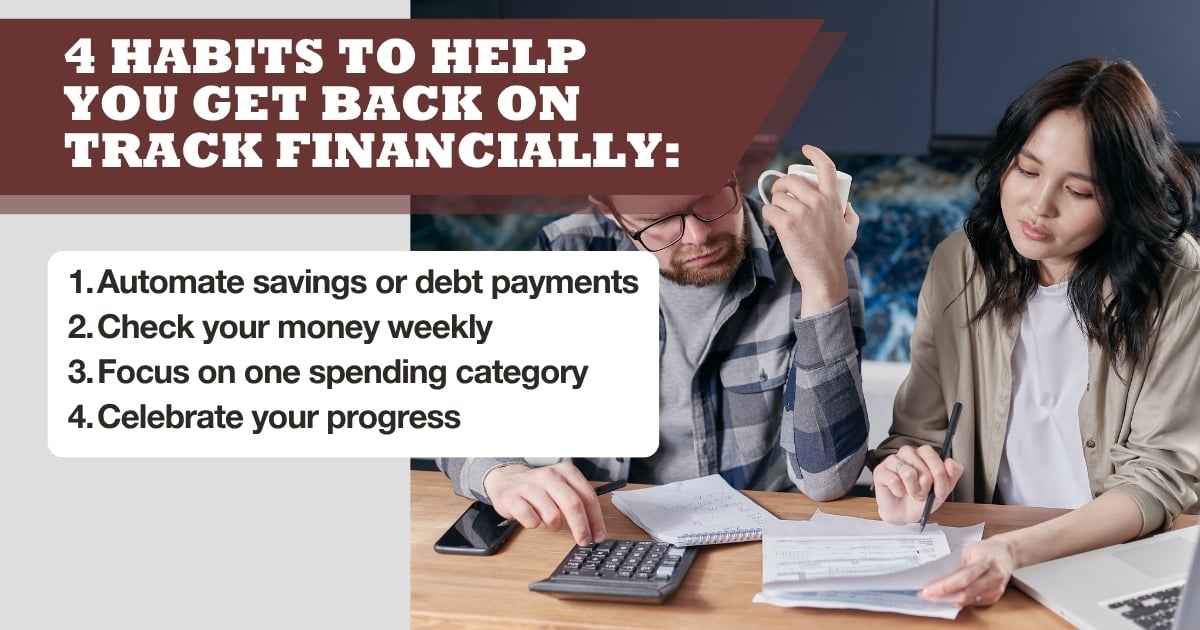
When work, groceries, and family needs fill your day, managing money can feel like one more thing to remember. You don’t have to rely on willpower for every spending or savings decision. Small habits, like a savings transfer that fits your budget or a weekly look at upcoming bills, can take some of that work off your plate. Start with something you can keep doing, even during a busy week.
Here are a few that help build momentum:
-
Automate one good habit. An automatic transfer to savings or an extra payment toward debt happens whether or not you remember.
-
Set aside 10 minutes a week for a money check. Glance at recent transactions and upcoming bills so nothing catches you off guard.
-
Focus on one spending category at a time. Dining out, online shopping, or subscriptions are good places to start.
-
Celebrate your progress. Paying off a card or reaching your first savings goal is worth celebrating, so give yourself credit.
Getting your finances back on track can start with one repeatable step, like checking your bills each week or setting aside a little on payday. Give that habit time to fit into your life, then add another when you’re ready. A little more in savings or a little less owed is progress worth noticing.
Have questions about managing your finances? Talk to us. We’re here to help.

Progress Starts With One Good Money Move
Learning how to manage spending, savings, and debt doesn't require a perfect plan. Start with a clear view of your spending, make a little room in your cash flow, keep a small cushion in savings, and choose a debt strategy you can stick with. Each step makes the next one easier, and it's okay to go at your own pace.
If you’re still unsure where to start, you don’t have to figure it out alone. When you’re ready, talk with our team at First Alliance Credit Union in Rochester, Minnesota. We can help you take a closer look at your finances, identify what needs attention, and find a practical next step that fits your situation. No judgment, and no pressure to have all the answers before you come in.
Not sure where to begin? Watch “Financial Check-In Guide” from our Good Money Moves podcast for help taking a closer look at your finances and finding your starting point.