



1 min read
Tips to Protect Yourself from Holiday Scams
Fraud scams and schemes are hardly limited to the holidays, but they tend to spike during this high-spending and stressful time of the year. We have...
6 min read
Allethea Faye Monfiel : August 4, 2026
Elder financial fraud does not discriminate. It affects people who are sharp as a tack and people whose memory has started to slip. It targets high earners and people living on a fixed income. What tends to make the difference is whether someone in the family is paying attention, and whether the right tools are already in place before a scammer calls.
We are diving into everything you need to know about:
Let's dive in!
Scammers lean on a short list of tactics because they continue to work. Most rely on emotional manipulation through creating a sense of urgency, fear, or a even from building a trusting relationship first.
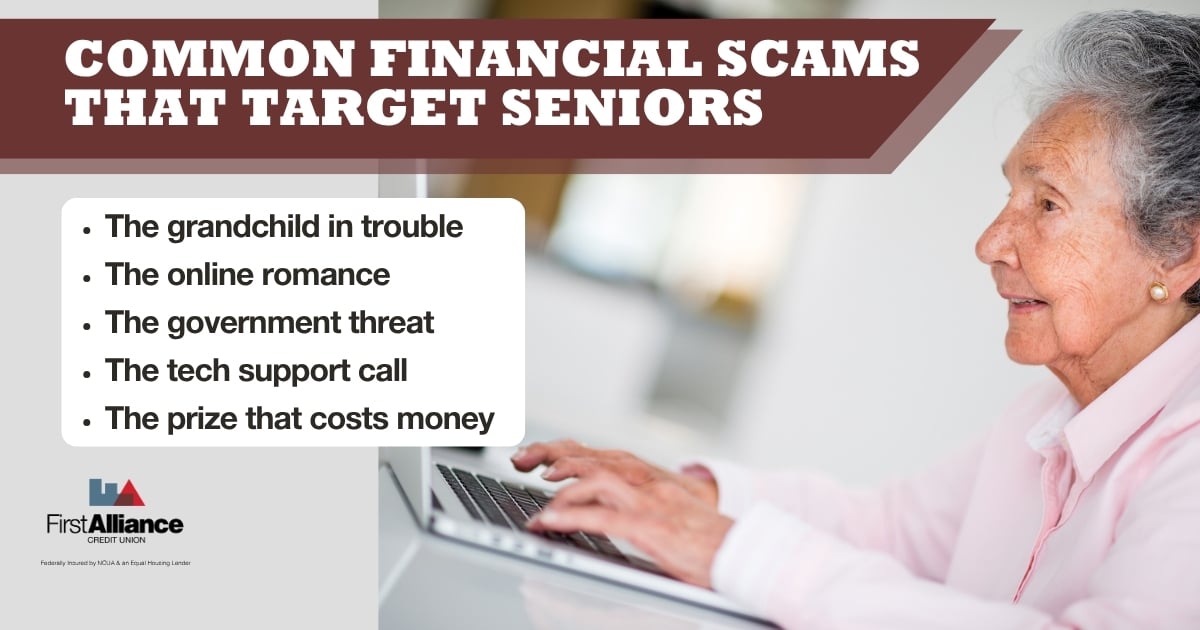
A caller claims to be a grandchild who's been arrested, stranded, or seriously hurt and needs money sent right away, often by wire transfer, gift cards, or another hard-to-trace method. The caller may beg them not to tell anyone, saying they're embarrassed or afraid, and that pressure to act quickly and keep it secret is exactly what makes this scam so effective.
Often called a romance scam, this usually starts with someone building trust over weeks or even months through texts, phone calls, emails, or social media messages. Once that emotional connection is in place, the scammer introduces a sudden crisis, like a medical emergency, travel problem, or overdue bill, and insists that sending money is the only way to help. Because the relationship can feel very real, this type of scam can be especially hard to recognize until significant money has already been lost.
Someone posing as the IRS, Social Security, or Medicare may call, email, or send a letter claiming there's a serious problem that has to be handled immediately. They might threaten fines, arrest, loss of benefits, or legal action unless payment is made right away, often through gift cards, wire transfers, or other methods that are hard to trace. The goal is to create panic before the person has time to pause, verify the claim, or talk it through with someone they trust.
A pop-up warning or unexpected phone call may claim there's a virus, security breach, or urgent problem with the computer that needs immediate attention. From there, the scammer pressures the person into giving remote access, sharing online banking credentials, or providing card information so they can "fix" the issue. Once they're in, they may steal personal information, move money, or leave behind software that gives them ongoing access.
A lottery win or sweepstakes scam usually starts with exciting news that someone has won a big prize, cash payout, or vacation. The catch is that before the winnings can be released, they're told they need to pay taxes, processing fees, or shipping costs up front. In reality, legitimate prizes do not require payment first, and once money is sent, the prize never arrives.
Nearly all of these scams depend on getting someone to act before they've had a chance to think it through or talk to family. That single fact is also the best defense against them, encourage your family member to not act in response to pressure.

Financial exploitation usually doesn’t start with one obvious red flag. More often, it shows up through a pattern of small changes that together suggest something isn’t right.
Watch for unusual withdrawals or transfers, new names added to an account, or missing statements that used to arrive regularly. It’s also worth paying attention if a parent suddenly becomes defensive about money, mentions a new "friend" who seems unusually interested in their finances, or appears confused by bills they normally manage with confidence.
One unusual transaction on its own may not mean there’s a serious problem. But when several warning signs start showing up at once, that’s a good time to step in with care and start a supportive conversation.
This is the part most families worry about, and for good reason. Nobody wants a safety conversation to come across as "you can't handle your own money anymore."
Here's a few tactics you can try for starting the conversation:
It also helps to be upfront that tools like account alerts exist to make life easier and catch problems fast, not to check up on someone behind their back. And this doesn't have to fall on one person. Siblings, other relatives, or a close family friend can all share in keeping an eye out.
You don't have to catch everything by memory or hope a problem surfaces before it's too late. A few tools already available to First Alliance members can help.
Mobile banking lets you check account activity from anywhere, so unusual charges don't sit unnoticed for days.
My Cards into the First Alliance Mobile Banking app, lets you set spending limits, restrict where a card can be used, and turn it off instantly if something looks off. For a family helping an older relative, being able to shut down a card in seconds can stop a fraudulent charge from turning into several.
Debit card fraud notice text alerts work in the background, so you'll know about suspicious activity the moment it happens. A quick text reply confirms whether it was really you, no waiting on hold with a call center.
Credit Score Monitoring is available through Mobile Banking, helps track credit health over time so identity theft doesn't go unnoticed for months.
For families looking for something built specifically around senior safety, Greenlight is worth a look. Most people know Greenlight as a debit card and money app for kids, and First Alliance members get the Select plan at no cost. But Greenlight's Family Shield Select tier goes further, adding financial account monitoring built for seniors, fraud and suspicious activity alerts, and coverage against identity theft and deceptive transfer fraud. It's not a substitute for staying in touch or reviewing accounts together, but for families managing money across generations, it's a solid extra layer.
If you suspect a parent or loved one has already been scammed, speed matters, but so does how you approach it. Here are important steps you can take to gain control of the situation:
Start by staying calm. Scams are built to fool careful, intelligent people, and shame will only make someone less likely to speak up next time.
Call your financial institution right away to report the activity and freeze or shut off any affected cards or accounts, and start any needed dispute process. Depending on the situation there maybe ways to recover some of the lost funds if it is reported in a timely manner.
Write down what happened while it's fresh, including any texts, emails, or details from phone calls.
File a report with local law enforcement and with the FTC at reportfraud.ftc.gov.
It's a smart idea to check other accounts too, since scammers sometimes come back for a second try. And once things are handled, talk together about what tools or check-ins might help prevent it from happening again.
Bring it up casually and more than once, using a news story or real example rather than a direct warning. Questions tend to open the conversation more than instructions do.
Contact your financial institution right away and use a tool like My Cards to turn off the affected card while the situation gets reviewed.
No. While Greenlight is best known for helping kids learn about money, its Family Shield Select plan adds account monitoring and fraud alerts built specifically for older adults, making it useful for families managing money across generations.
There's no single right answer, but a regular check-in, whether that's weekly or monthly, is usually enough to catch something unusual before it becomes a bigger problem.
Fraud prevention works best as a team effort, and you don't have to build that team alone. First Alliance Credit Union members already have protecting tools in place, from everyday account monitoring to options like Greenlight for families who want an extra layer of support. What's often missing is just knowing they're there, and how to put them to use for a parent or loved one.
Stop by a branch or contact our team today to walk through your account security options and get fraud alerts set up. It takes less time than you'd think, and it means one less thing to worry about.
1 min read
Fraud scams and schemes are hardly limited to the holidays, but they tend to spike during this high-spending and stressful time of the year. We have...
1 min read
In the digital age, finding love online has become increasingly common. However, with the rise of online dating comes the unfortunate increase in...
1 min read
You’re probably aware of the numerous ways scammers try to con money out of victims through the Internet. What you may not know, though, is that in...