
Personal Loan Approval: What Affects Your Rate and Timeline?
Learn what affects personal loan approval, from credit score to debt-to-income ratio, and how to prepare before you apply at First Alliance Credit...
8 min read

Your credit score can affect much more than whether you qualify for a loan. It can influence the interest rate you receive, how much you pay each month, and, in some situations, whether you need to provide a deposit when renting an apartment or setting up utilities.
Understanding how credit score affect loans, rates, and everyday financial decisions can help you make more informed choices before you apply for financing. Whether you are building credit for the first time, preparing to buy a car or home, or working to recover from past credit challenges, knowing what lenders look at can put you in a stronger position.
Here is a closer look at why credit scores matter and how they can affect different parts of your financial life.
A credit score is a three-digit that helps lenders evaluate how you have managed credit in the past. FICO Scores, which are commonly used by lenders, range from 300 to 850.
However, your score does not tell the entire story of your finances. When you apply for a loan, lenders may also consider your income, existing debts, employment history, loan amount, repayment term, and other information. That is why two people with the same credit score may not necessarily receive the same loan offer.
Your credit score is based on several aspects of your credit history. For a typical FICO Score, the factors are generally weighted like this:
| Factor | Approximate Weight | What It Reflects |
| Payment History | 35% | Whether you pay your bills on time, including any missed or late payments |
| Amounts Owed | 30% | How much debt you carry compared to your total available credit |
| Length of Credit History | 15% | How long your credit accounts have been open and active |
| Credit Mix | 10% | The variety of credit types you manage, such as credit cards and installment loans |
| New Credit | 10% | How often you apply for new credit accounts |
Your payment history matters most, so paying on time really does make a difference. How much you owe comes in right after that, especially with revolving credit like credit cards.
Keep in mind, these percentages are more like general guidelines than an exact formula for your score. And every scoring model weighs things a little differently.
The role your credit score plays can vary depending on the type of loan you are applying for.
The stronger your credit profile, the more financing options tend to open up. If your credit history is limited or has some bumps in it, lenders may ask for a bit more, like a cosigner, extra documentation, or a larger down payment, depending on who you're working with and your specific situation.
But here's the thing: a lower credit score doesn't shut the door on borrowing altogether. It just means your options and terms might look a little different.
One of the biggest ways your credit score comes into play is through the interest rate you might qualify for.
Lenders typically look at your credit history to get a sense of risk. Someone with a solid track record of managing credit is often viewed differently than someone who's missed payments or is carrying a lot of debt.
That's really where credit score and interest rates connect.
Many lenders use risk-based pricing, which means borrowers may receive different loan terms based on factors that help the lender assess risk.
Credit score can be one of those factors, but it is not necessarily the only one. The type of loan, loan amount, repayment term, income, existing debt, collateral, and other factors may also affect the terms you are offered.
For example, two borrowers could apply for similar loans but receive different interest rates because their overall financial profiles are different.
The interest rate on a loan affects both your monthly payment and the total amount of interest you pay over time.
Consider a loan that you repay over several years. Even a relatively small difference in the interest rate can add up over dozens of payments. The longer the repayment period and the larger the balance, the more important the rate can become.
This is why improving your credit is not only about getting approved. A stronger credit profile may also help you qualify for more favorable terms, depending on the lender and other factors in your application.
Your credit score doesn't set your monthly payment directly, but it does influence the interest rate and loan terms you're offered, and that ends up shaping what you pay each month.
Picture two people borrowing the same amount over the same period. If one qualifies for a lower interest rate, they'll likely have a smaller monthly payment and pay less interest overall. The flip side is true too. A higher rate means a bigger monthly cost and more paid over the life of the loan.
That's exactly why it's worth understanding your credit before you apply for financing, especially if you're planning a major purchase. Knowing where you stand ahead of time helps you set realistic expectations and get a clearer picture of what you can comfortably afford.
Your credit score can sometimes come into play when you're applying for an apartment, though it really depends on the landlord or property management company you're dealing with. Some landlords check credit history as part of their screening process, since it gives them a sense of how you've handled financial responsibilities in the past.
If your credit history is limited or has a few rough patches, a landlord might ask for a little more from you, maybe a cosigner, some extra documentation, or a larger security deposit, depending on your situation. But your credit score is never the whole story. Income, rental history, employment, and each landlord's own requirements matter just as much.
This is actually one of the best reasons for young adults to start building credit early, even before their first apartment. Your credit history can shape opportunities well beyond just borrowing money.
A low credit score can make borrowing tougher, but it's not permanent. Your score shifts as the information in your credit history changes, so if yours needs some work, it helps to start with the basics.
Pay on time and keep track of your due dates. Take a look at your credit reports for any errors and dispute them if something's off. Keep an eye on your credit card balances, and try not to take on more debt than you can realistically handle.
It's also smart to be a bit selective about applying for new credit. Opening a bunch of accounts in a short window can hurt your credit profile and make it harder to stay on top of your finances.
And above all, give it time. Building or rebuilding credit is usually a slow, steady process, not something that turns around after one payment or one good decision.
You don't have to wait until you're ready to apply for a loan to check your credit. Looking it over ahead of time gives you a chance to understand where you stand financially and catch any issues early, including inaccurate information that might need to be corrected.
Say you're planning to buy a car in the next few months. Checking your credit beforehand gives you time to review your history before you start comparing financing options.
The same goes for buying a home. Since a mortgage is such a major financial commitment, understanding your credit early on gives you more room to address anything that needs attention.
Just keep in mind, checking your score doesn't guarantee a specific interest rate or approval. It just puts more information in your hands.
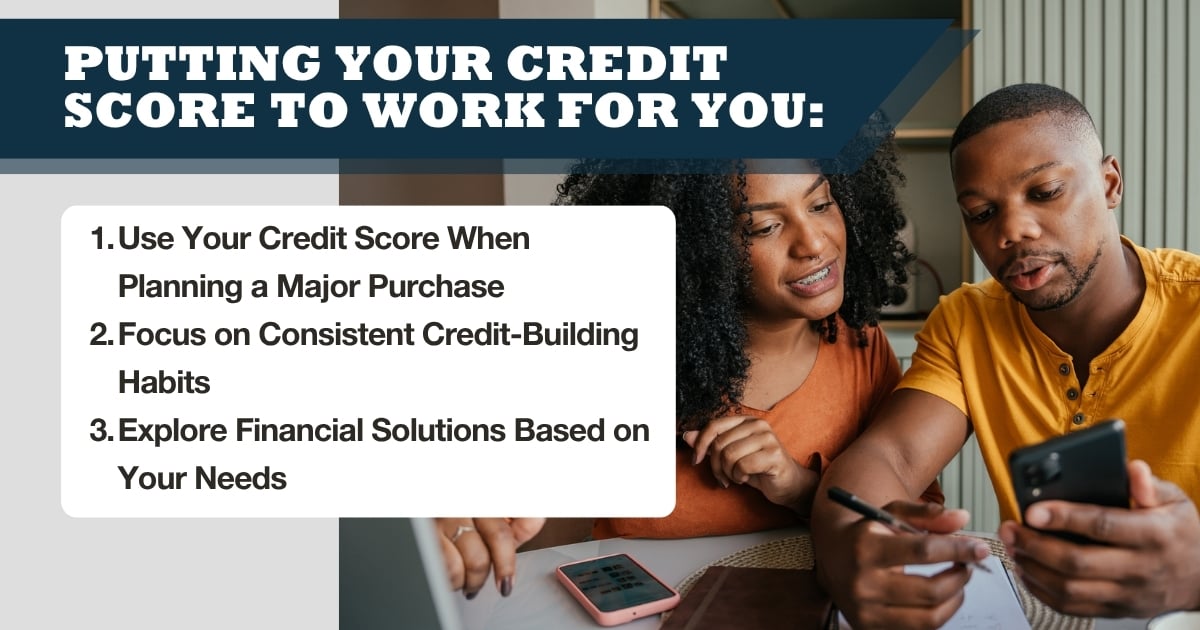
A credit score is most useful when you understand what it means and use that information to make better financial decisions.
Before you take on a big purchase, it helps to look at the full picture. If you're preparing for an auto loan, compare your budget with the loan amount you're considering, not just what you might qualify for, but what actually fits comfortably into your monthly expenses. If you're thinking about buying a home, take time to review your credit and overall debt before you start the mortgage process. Getting a clear read on where you stand early on can help you avoid surprises later and make more informed decisions along the way.
If you're working on rebuilding your credit, it's better to focus on steady, consistent habits rather than trying to make big changes all at once. Paying your bills on time, managing debt responsibly, and keeping an eye on your credit regularly can all add up over time. Progress with credit tends to build gradually, so small, reliable habits often make more of a difference than one-off efforts.
Everyone's financial situation looks a little different, which is why it helps to have options that can be tailored to your needs. At First Alliance Credit Union, members can explore a range of financial solutions, including:
With these, you can find the right fit for wherever you are on your financial journey.
Your credit score is one part of your financial picture, but understanding it can give you more confidence when making decisions about borrowing and managing money.
Your credit score has a way of showing up in a lot of life's bigger decisions, financing a car, applying for a mortgage, renting an apartment, even setting up utilities.
But it's not a permanent label. Whether you're just starting to build credit, working toward a major purchase, or rebuilding after some setbacks, there are steps you can take to build healthier habits along the way.
The more you understand how your credit score affects loans, interest rates, and everyday financial decisions, the better equipped you'll be to make choices that actually support your goals.
First Alliance Credit Union is here to help you understand your options, find solutions that fit your life, and move forward with more confidence.


Learn what affects personal loan approval, from credit score to debt-to-income ratio, and how to prepare before you apply at First Alliance Credit...

Learn how to get a loan without a cosigner by building credit, borrowing less, adding collateral, or exploring credit-building loans with First...

Thinking about cosigning a loan? Learn what cosigners are legally responsible for, how it affects your credit, and what to ask before you say yes.