
What is a Savings Account?
 Jenna Taubel : Jan 10, 2019, 7:40:00 AM
Learn what is a savings account, their benefits, and how to choose the best one for your financial needs. Discover how to open your savings account...

Splitting dinner with friends or paying someone back is simple with Cash App. When it's part of your everyday routine, it's understandable to assume the money you leave there has the same protection as money in a checking or savings account. But those protections aren't always the same. Knowing the difference can help you decide how much to keep in the app and where to put money you're saving for later.
So, is your money in Cash App safe? It depends on how your account is set up and who's holding your money. Cash App isn't a bank or credit union, so your balance may have different protections than money held directly in a federally insured account. A little money set aside to split dinner is one thing. The emergency savings you're counting on for groceries or an unexpected car repair is another. If your balance has started to grow, it's worth checking what protection applies so you can decide where that money belongs.
Not automatically. Cash App isn't a bank or credit union, and simply keeping money in the app doesn't guarantee deposit insurance.
According to Cash App's terms of service, your Cash App balance and savings balance may qualify for Federal Deposit Insurance Corporation (FDIC) pass-through insurance if you have a Cash App Prepaid Card, have a sponsored account, or sponsor one. If you don't meet those requirements, your balance may not be covered.
The key is knowing what applies to your account. Seeing “FDIC” alongside Cash App doesn't mean every dollar in every account is insured. Before leaving savings there, it's worth checking whether your balance qualifies and what the coverage protects.
The name sounds technical, but the idea is straightforward: Cash App may place your money with an FDIC-insured partner bank. If the coverage requirements are met, that bank's deposit insurance can extend to your eligible funds if the bank fails.
Here's the important distinction: the insurance protects eligible money at the bank, not Cash App itself. The Consumer Financial Protection Bureau (CFPB) has cautioned that money kept in payment apps can have different protections than money held directly in an insured account. So seeing “FDIC” next to an app's name doesn't mean the entire app is insured or that every balance is covered.
The balance you see on your phone doesn't tell the whole story. Federal deposit insurance depends on the insured institution holding your money and whether the coverage requirements are met, not the app you use to check your balance. With a savings account held directly at a federally insured bank or credit union, you have a clear connection to that institution and its insurance program. With Cash App, a partner bank may hold your money, adding another layer to understand.
That doesn't mean you need to stop using Cash App. It means knowing what protection applies to the money you're leaving there. Keeping $50 handy to pay a friend back tomorrow is different from holding $5,000 you've worked to set aside for emergencies. Moving money and saving money serve different purposes, and understanding where your funds are held can help you choose a place for each.
Different names, similar purpose: both provide federal insurance for eligible money held at insured financial institutions. FDIC insurance covers eligible deposits at federally insured banks. The National Credit Union Administration (NCUA) administers the federal insurance program that covers eligible shares and deposits at federally insured credit unions.
The National Credit Union Share Insurance Fund (NCUSIF), administered by the NCUA, provides up to $250,000 in coverage for qualifying accounts, subject to ownership and account-type rules. The FDIC provides similar coverage for qualifying deposits at insured banks. Choosing a credit union doesn't mean giving up federal protection for your savings.
At First Alliance Credit Union, our members' eligible funds are federally insured through the NCUA, up to applicable limits. Whether you're setting aside money for a car repair or building an emergency fund, the important question isn't which set of initials is “better.” It's knowing that your financial institution is federally insured and understanding how the coverage applies to your accounts.
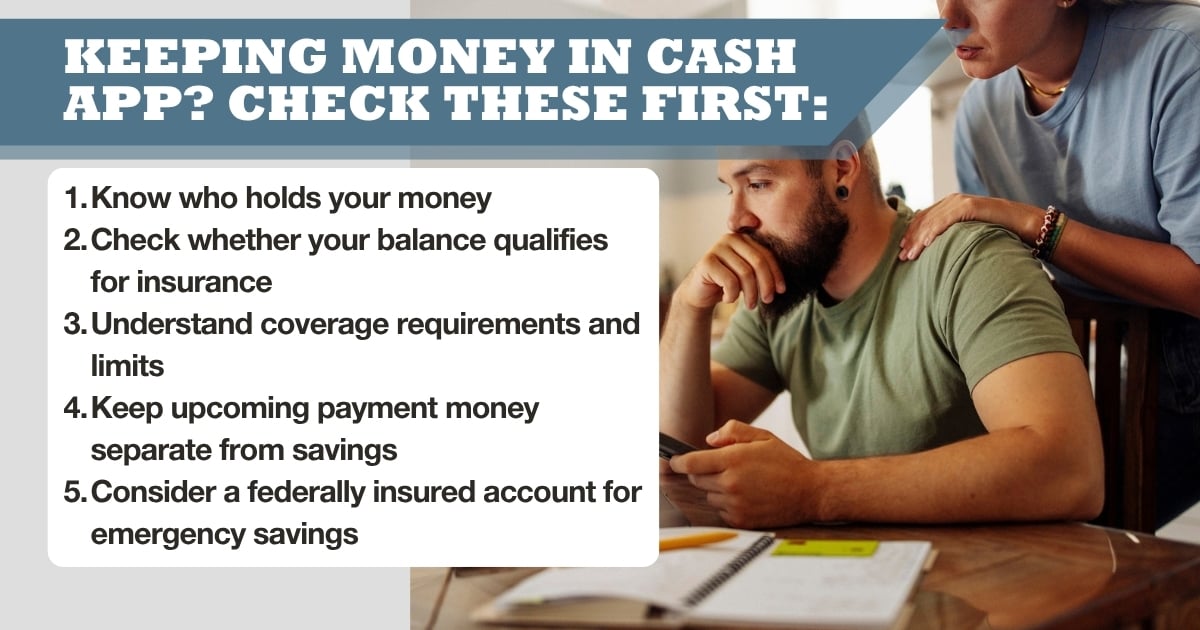
If Cash App has become a convenient place to leave money between payments, that's understandable. But money for next week's dinner and money you're saving for an emergency serve different purposes. Cash App can be handy for everyday payments. For savings you're counting on, an account held directly at a federally insured bank or credit union is usually a better fit, with coverage you can check against your account type and balance.
Whether you're building a cushion for unexpected bills or saving for a vacation, you can give that money its own place without giving up Cash App. One simple approach is to keep enough in the app for upcoming payments and move the rest into a federally insured savings account, within applicable coverage limits. That way, you keep the convenience for sending money while keeping your savings separate from everyday spending.
If your payment app balance has grown beyond what you need for everyday payments, a few questions can help you decide what to keep there and what to move into savings:
You don't need to have every answer right away. Start by checking your account's terms and insurance details. The goal isn't to give up payment apps; it's to keep their convenience while choosing a place for savings you can count on.
If quick access to your money is what you like about Cash App, you don't have to give that up when choosing a place for your savings. With First Alliance Credit Union's mobile app, you can check balances, review transactions, transfer money, pay bills, and deposit checks from your phone. Online banking also lets you manage your accounts from your computer, so a trip to a branch isn't your only option.
The right account depends on what you need that money to do:
You can keep using Cash App to split a bill or pay a friend, while moving money you don't need for upcoming payments into your First Alliance Credit Union account.

So, is your money in Cash App safe? The answer depends on your account setup, where your money is held, and what coverage applies. Cash App can be convenient for everyday payments. If your balance has grown to include savings you're counting on, checking those details is a practical next step.
You don't have to stop using Cash App to give your savings a separate home. You can keep enough in the app for upcoming payments and hold your savings directly in a federally insured account, with eligible funds protected up to applicable limits.
If you're not sure which account fits your goals, a conversation can help. At First Alliance Credit Union, our Member Advisors can listen to what you're saving for, explain account requirements and insurance coverage, and help you compare your options without pressure.

 Jenna Taubel : Jan 10, 2019, 7:40:00 AM
Learn what is a savings account, their benefits, and how to choose the best one for your financial needs. Discover how to open your savings account...

 Allethea Faye Monfiel : Nov 12, 2026, 6:00:00 AM
Not sure where to keep a large sum of money? Compare savings, money market, checking, and certificate options by access, coverage, fees, and earnings.

 Chris Gottschalk : Oct 8, 2020, 5:45:00 AM
Which is better Zelle vs. Cash App vs. Venmo? Make sure you understand what's the difference between Zelle, Cash App and Venmo before you sign up for...