
For those new to online banking: click here to get started.
 Allethea Faye Monfiel

Your 20s can bring a lot of financial firsts. You might be earning a steady paycheck for the first time, paying rent, managing student loans, or figuring out how to cover your bills while still having money left for the things you enjoy. It can take some time to get comfortable managing it all, especially when nobody really teaches you where to start.
You don't need a bigger paycheck or a complicated plan to start building good money habits. Small steps, like checking your balance before you spend or setting aside a few dollars when you can, give you something to build on. Start with what fits your life today, and adjust as you go.
What Money Habits Should I Build in My 20s?
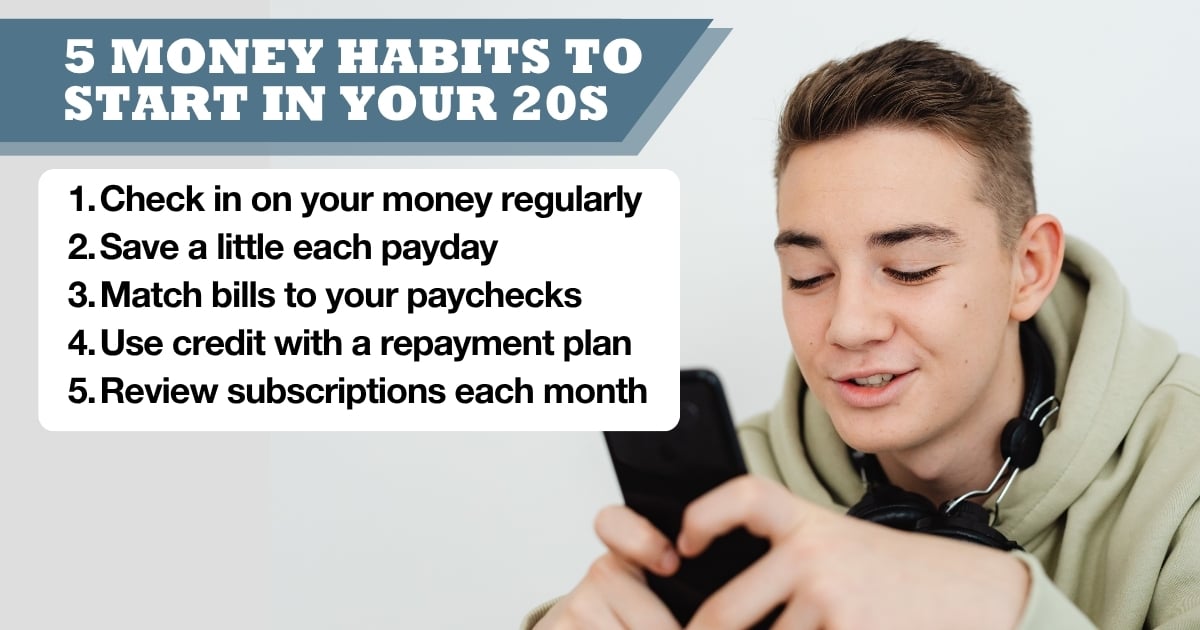
Some of the most helpful money habits to build in your 20s include checking your accounts regularly, setting aside money from each paycheck, planning bill payments, using credit responsibly, and keeping track of recurring expenses. These habits can help you stay on top of everyday costs while making room for future goals.
You don't need to tackle everything right away. Start with the habit that makes the most sense your current situation, then work on the others as you get more comfortable.
1. Check In on Your Money Regularly
A grocery run, a phone bill, a few small purchases—it's easy to lose track of what's left between paydays. Checking your balance and recent transactions a few times a week helps you see where your money went and catch charges you might have forgotten about.
For a closer look, try setting aside about 15 minutes once a week. Review what came in, what you spent, and which bills are due before your next paycheck. If payday is a convenient time, use that check-in to work out what's already needed for bills and what's available for the week ahead.
You don't need a complicated spreadsheet to do this. A short list on your phone or a piece of paper is a good place to start. The goal isn't to judge every purchase; it's to know what you have to work with. If you'd like a little guidance, our guide to creating a budget walks you through the process.
Quickly track your income and expenses when you download our free budgeting worksheet.

2. Save a Manageable Amount Each Payday
When you're paying rent, covering groceries, and handling other monthly expenses, putting money into savings might not feel like a priority. But waiting until you have extra money left over can make it harder to build the habit. Instead, try setting aside a small amount whenever you get paid.
When most of your paycheck goes toward rent, groceries, and bills, saving $5 or $10 still counts. If that amount fits your budget, try setting it aside each payday to build the routine without leaving yourself short for essentials. You can add more when your pay increases or your expenses ease up. If your work hours change from week to week, a small percentage of each paycheck may fit better than a fixed dollar amount. Give yourself room to adjust on lighter weeks.
Saving money in your 20s also gets easier when it's kept apart from your everyday spending. A separate Savings Account gives your cash buffer its own place, so it's less tempting to dip into it for a night out. A good first goal is enough to cover one surprise, like a car repair or a missed shift. That small cushion can keep a rough week from landing on a credit card.
3. Plan Your Bill Payments Ahead of Time
A bill due the day before payday can put you in a tight spot, even when you're keeping track of your spending. Laying out your bills alongside your paydays can help you spot that gap before a late fee adds to it.
Try listing each bill, its amount, and its due date, including rent, utilities, phone, insurance, student loans, and credit card payments. Then match each one to the paycheck that needs to cover it. If rent is due before your next paycheck arrives, you'll know to hold money back from the one before it.
If your hours change from week to week, plan for basics like housing, groceries, utilities, and transportation first, along with minimum debt payments as your budget allows. When a paycheck is larger than usual, consider keeping some of it for a week with fewer hours.
First Alliance Credit Union members can also use account alerts and notifications in Online Banking and Mobile Banking to stay aware of account activity. Pair those alerts with your bill list so you can see both what's in your account and what's coming due. If you expect to miss a payment, contact your lender or biller before the due date and ask what options are available. They may be able to discuss a different due date or payment arrangement, though options will vary.
4. Use Credit With a Repayment Plan
Your 20s can be a good time to establish a credit history, but it's important to understand how borrowing works before making credit a regular part of your spending.
Credit works better when you know how the payment will fit into your next paycheck. Before putting a purchase on a card, think through what you'll use to pay it back without leaving yourself short for rent or groceries.
And if you've heard you need to carry a credit card balance to build credit, you don't. On-time payments help build your credit history; paying interest isn't a requirement. Paying your statement balance in full by the due date generally lets you avoid interest on purchases when your card has a grace period. Leaving a balance unpaid from month to month can add interest costs without giving your score a boost.
A few steps keep credit manageable:
- Charge what you can pay off. Only put purchases on a card if you already know how you'll cover them.
- Pay on time. Make at least the minimum payment by the due date, every time.
- Make a debt list. If you already have debt, write down each balance and rate, keep up with the minimums, and put any extra toward one balance at a time. Our tips to pay off debt can help you choose where to start.
Credit Score Monitoring can help you stay aware of where you stand, and you can read more about how a credit score works. Keep in mind that it provides educational scores, which may differ from the scores used in lending decisions.
My Cards offers credit and debit card management and protection in the mobile app. Looking over your card transactions now and then is an easy way to spot a charge you don't recognize.
If you're in your mid-to-late 20s and carrying debt, you haven't missed your chance. A fresh start begins with a clear list and one small step.
5. Review Recurring Expenses Before Adding More
Small recurring charges are easy to forget about. Say you pay for two streaming apps at $12 each, a $30 gym membership, and a $40 meal kit you forgot to cancel. That's $94 a month, or more than $1,100 a year, and none of it felt like a big decision.
Once a month, scan your statements and mark every charge that repeats. Ask yourself whether you used it and whether it's worth the price. Cancel or pause what isn't. Before you sign up for something new, think about how it fits with what you already pay.
Reviewing your spending isn't about cutting out everything you enjoy. Dinner with friends or a concert you've been looking forward to can have a place in your budget, too. After accounting for bills and what you can set aside for savings, choose an amount for the things you enjoy. If a trip or concert costs more than that, you can save toward it over a few paychecks. The idea is to make room for what matters to you without leaving yourself short when a bill comes due.
How First Alliance Credit Union Can Help You Manage Your Money in Your 20s
Whether you're trying to stretch your paycheck or save for your next move, you don't have to figure out every step on your own. At First Alliance Credit Union, we'll listen to what you're working toward and help you explore your options, without pressure. Our budgeting tools, savings accounts, and everyday account access give you practical ways to put these habits to work. Here are a few ways to get started:
My Money
This free personal budgeting tool is available through Online Banking and helps you see where your money is going. My Money automatically sorts transactions into categories, lets you create and track a budget, and helps you follow your progress toward savings goals. You can also connect accounts from other financial institutions for a fuller picture of your finances. Try starting with a look at your spending on groceries, dining out, or subscriptions, then choose one small adjustment that fits your next paycheck.
Savings Account
Open a Savings Account with a $5 deposit and give your savings a place of their own, separate from the money you use for everyday purchases. Whether you're building a cushion for a car repair or setting money aside for a future move, having a dedicated account can help you keep that goal in mind. Start with an amount that fits your paycheck, even if it's just a few dollars, and add to it as your budget allows. You don't need a large balance to begin building the habit.
Online and Mobile Banking
Access your accounts and manage everyday banking transactions when it's convenient for you. Online and Mobile Banking make it easier to fit a quick money check-in into your day, whether you're reviewing recent spending or checking your accounts before your next payday. You can also set up account alerts and notifications to help you stay aware of account activity. Start by choosing a regular time to check in, so keeping track of your money becomes part of your routine rather than another task to put off.
Financial Guidance
Not sure which account fits your needs or where to start with saving? You don't have to sort it out alone! At First Alliance Credit Union, we'll listen to what you're working toward, answer your questions in plain language, and talk through your options without pressure. Bring one question, and we can start there.
We're here to help you figure out your options, connect with our team today.

Start With One Habit This Payday
You don't have to to have your finances all figured out in your 20s. Your income, responsibilities, and goals will change, and your approach to managing money can change with them. Give yourself time to figure out what works and make adjustments as you go.
If you'd like some guidance along the way, the First Alliance team is happy to answer your questions. Whether you're exploring your banking options or looking for help with your financial goals, we're here to help!
Know someone who's also figuring out their finances? Share this article with them, and visit our blog for more practical money tips.
