1 min read
5 Essential Tips To Winterize Your Finances Until Spring
Every Midwesterner knows the value of preparing for winter. You need to make sure your furnace can take the increased demands you’ll put on it, make...
If your paycheck changes from month to month, you are not alone. Construction crews, landscapers, farm workers, hospitality staff, retail employees during peak seasons, and freelancers all deal with the same challenge: income that goes up and down depending on the time of year. Budgeting with a schedule like that takes a different approach than a standard nine to five paycheck, but it is absolutely doable.
This guide walks through how to budget for seasonal work, plan ahead for slower months, and build a little more breathing room into your finances, without needing a finance degree to follow along.
An irregular income budget works a little differently than a typical monthly budget. Instead of planning around one predictable number, you are working with a range. Some months bring in more than you need. Others bring in less. The goal is not to force your income into a rigid box. The goal is to smooth it out so your bills get paid no matter what season you are in.
That usually means a few things:
Once those pieces are in place, budgeting on variable income starts to feel a lot less stressful.
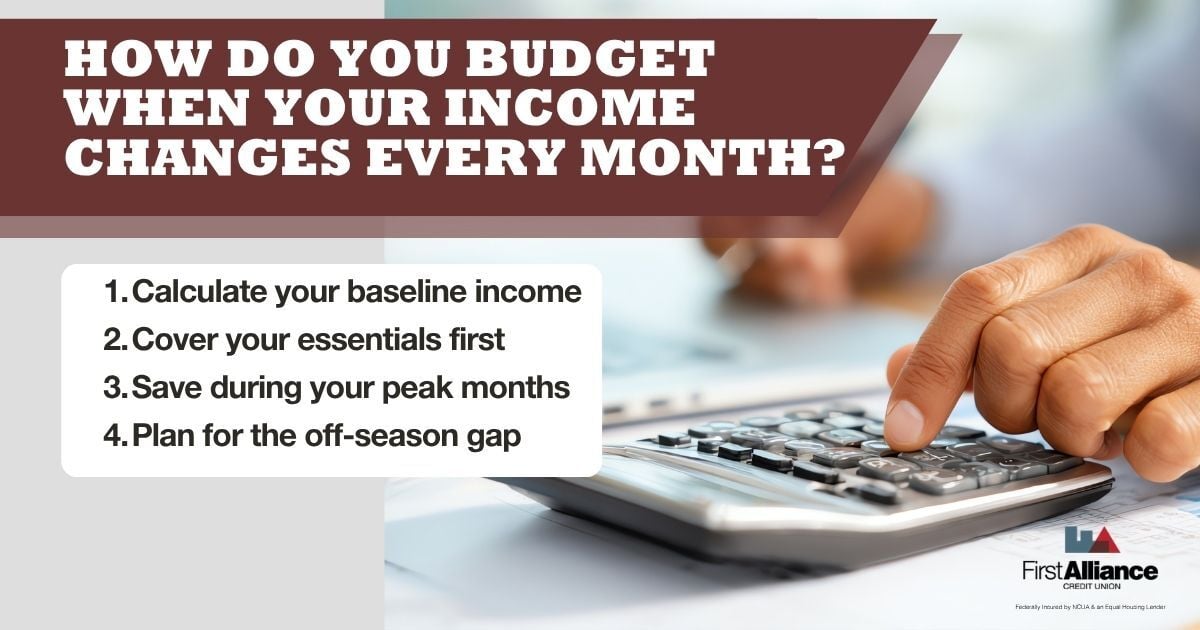
This is one of the most common questions we hear from members who work seasonal or gig-based jobs, and it comes down to a simple framework. Here is how to budget for seasonal work when income changes month to month:
Look back at your last 12 months of earnings, you can usually find this information from your monthly banking statements, or from your directly from employer if you're a W2 worker. Find your lowest earning month. That number becomes your baseline, the amount you can realistically count on no matter the season. Build your core budget around that number, not your best month.
Housing, utilities, groceries, transportation, insurance, and minimum debt payments come first. These are the expenses that do not pause just because work stops or slows down. Make sure your baseline income can cover these before anything else gets funded or paid.
When work picks up in busier times and the paychecks get bigger, resist the urge to spend at the same pace. This is the time to set aside money for the slower months ahead. A good target is to save enough during busy season to cover any income gap you expect during your slow season. This is especially important if you find that your slow time wages to not cover your minimum expenses.
Once you know roughly how much your income drops in slower months, you will know exactly how much of a cushion you need. This turns a stressful guessing game into a number you can actually plan for.
For example, if you earn significantly more in the summer months as a landscaper, setting aside a portion of that summer income specifically for winter bills means you are not scrambling when the weather turns and the work slows down.
That is the heart of a solid seasonal budget.

There is no single right answer to how much you should save during your peak income season. Every job and every household looks different, but a helpful starting point is to save enough during peak months to cover your baseline expenses through your expected slow period. If your slow season typically lasts three months, aim to build savings that can cover three months of essentials.
This is where having the right tools makes a real difference. First Alliance Credit Union's My Money budgeting tool can help you track income as it comes in, see spending patterns across the year, and set savings goals tied to your specific slow season. It is built right into online and mobile banking, so you can check in anytime.
Preparing for your off-season starts long before it actually arrives. A few things that help:
A WINcentive Savings Account from First Alliance Credit Union is a great fit for this kind of planning. It rewards consistent saving habits, which pairs naturally with the rhythm of setting aside a little from each paycheck during your busy months. Pairing that with a Savings Account for your everyday cushion and a Checking Account for daily expenses gives you a simple, three-part system that does most of the heavy lifting for you.
When money is tighter than usual due to inconsistency in your income, prioritizing the right expenses can prevent a lot of stress down the road. In general, this order works well:
Keep your home and core utilities funded first, since this is the foundation everything else depends on. Falling behind here creates the most stress and the most risk, so it should be the first thing your baseline income covers. If a slow month makes this tight, look at your other categories before you consider cutting back here.
Groceries and everyday household basics come next, ahead of anything discretionary. This category can flex a little more than housing, so it is a reasonable place to trim if a slow month calls for it. Just make sure the essentials, not the extras, are what gets funded first.
This one matters even more if it affects your ability to work, whether that means gas, a vehicle payment, or maintenance costs. If unreliable transportation could cost you a job or a shift, it deserves priority right alongside housing. Protecting your ability to earn is part of protecting your whole budget.
Staying covered now protects you from a much bigger expense later, whether that is health, auto, or home insurance. Letting a policy lapse to save money in a slow month can end up costing far more if something unexpected happens. Think of this as a smaller, steady cost that prevents a much larger one.
Keeping current on debt payments protects your credit score and avoids late fees or added interest. Even if you cannot pay more than the minimum during a slow month, staying current keeps the door open for better rates and terms down the road. Missing payments tends to create problems that outlast the slow season itself.
Discretionary spending and extras come last, once the first five categories are funded. This includes things like entertainment, dining out, gifts for others, and non-essential purchases. During your busy months, this is also the category where extra income can comfortably go toward savings instead.
If a credit card is part of your financial picture, it can actually be a helpful tool during a seasonal budget, as long as it is used with a plan. Using a card to bridge a lower income month, then paying it down once busier season income comes in, can smooth out cash flow without letting balances grow unchecked. First Alliance's Mobile Banking app makes it easy to keep an eye on your accounts and stay ahead of due dates no matter where a job site takes you.
A good starting goal is three to six months of essential expenses, based on your baseline income. If that feels like a lot right now, start smaller. Even one month of savings gives you a meaningful cushion, and you can build from there.
The most reliable approach is building your budget around your lowest earning month, covering essentials first, and treating any income above that baseline as an opportunity to save for the months ahead.
Yes, when it is used intentionally. A credit card can help cover essential expenses during a low income month, as long as there is a plan to pay it down once income increases again.
Monthly is ideal. Seasonal income can shift due to weather, demand, or new opportunities, so checking in regularly helps you adjust before a small gap becomes a bigger problem.
Budgeting on variable income is a skill, not a personality trait, and it gets easier with the right systems in place. Whether you are just starting to plan around seasonal work or you are trying to rebuild after a rough stretch, First Alliance Credit Union is here to help you build a plan that actually fits your life.
1 min read
Every Midwesterner knows the value of preparing for winter. You need to make sure your furnace can take the increased demands you’ll put on it, make...
1 min read
Every financial expert talks about the importance of saving money. A lot of them have also come up with innovative ways to save, not to mention what...
1 min read
The summer season is a time of year when your utility bills can get out of hand if you aren't careful. From watering the lawn and the flowers because...