
For those new to online banking: click here to get started.
 Allethea Faye Monfiel

Between paying rent, picking up groceries, and remembering when that streaming subscription renews, keeping track of your money can feel like one more job. If you've ever looked at your balance and wondered where your paycheck went, you're not alone. You don't need a perfect budget or hours of free time to get a clearer picture. A few small digital banking habits, like checking recent purchases and looking ahead at bills, can help you find a routine that works for your life.With First Alliance Credit Union's Online Banking and Mobile Banking, you can review your accounts, pay bills, and make loan payments without a trip to a branch. Whether you're in Rochester or elsewhere in Southeast Minnesota, these tools can make everyday money management easier to fit into your routine.
How to Stay Organized with Digital Banking: Which Habits Help Most?
When bills and everyday purchases compete for the same paycheck, it helps to know what's already been spent and what's still coming. A few simple digital banking habits can make it easier to keep track of your finances and stay on top of everyday responsibilities.
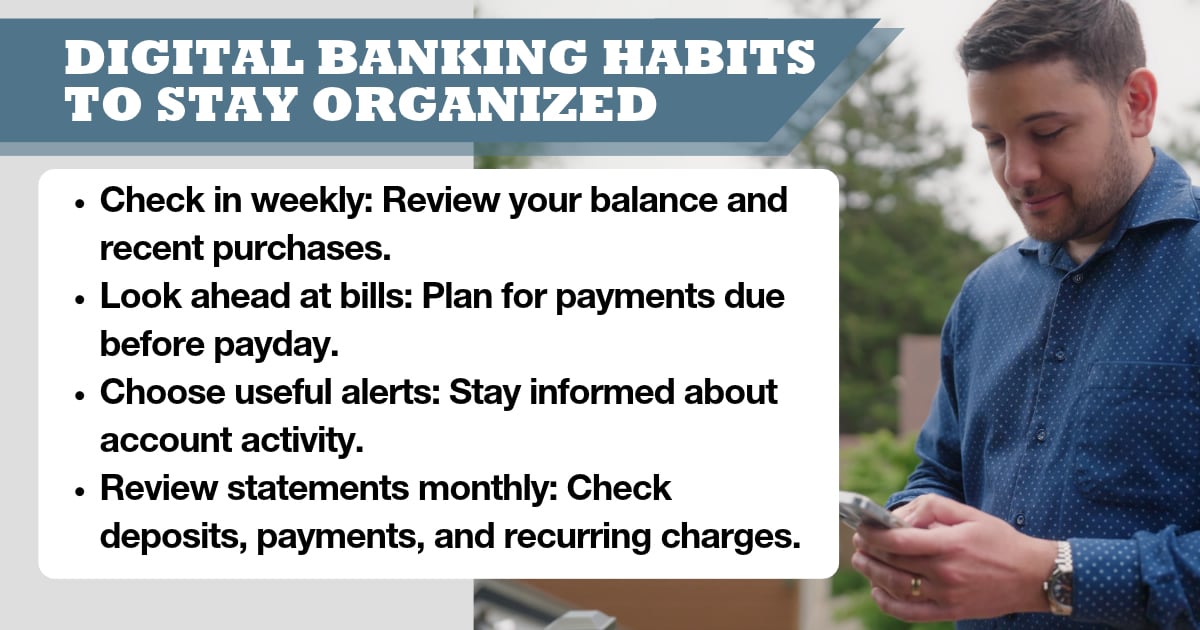
You can start with four habits:
-
Reviewing transactions each week
-
Looking ahead at bills
-
Choosing useful account alerts
-
Reading your electronic statements each month.
Each habit helps you keep track of something different, from everyday purchases to upcoming bills. You don't have to take on all four at once. Start with the one that would make your week easier, then add another when it feels manageable.
How Often Should I Review My Balances and Transactions?
A weekly check-in is a practical place to start, especially when purchases and bills are easy to lose track of between paychecks. You might set aside 10 to 15 minutes to check your balance, review recent spending, and look for charges you don't recognize. Checking more often is fine, too. The goal is a routine that helps you, not another task to feel behind on.
Choose a time that fits your week, whether that's Friday afternoon or a quiet moment on Sunday evening. Open Mobile Banking and worth through this checklist:
-
Review the past week's transactions for anything unfamiliar.
-
Check which bills are due before your next paycheck.
-
Compare your balance with those bills and what you'll need for groceries, gas, and other essentials.
-
Look for subscriptions or recurring charges you may have forgotten about.
Say you're checking your account before the holidays and notice gift purchases, a shipping charge, and a streaming trial that's become a paid subscription. Those smaller charges can be easy to miss on their own. Seeing them together gives you a chance to decide what comes next: cancel a subscription you don't use, adjust your gift plans, or set aside what's needed for bills. You're gathering information to make your next decision, not grading yourself on the last one.
How Can Online Banking Help Me Keep Track of Bills and Due Dates?
When rent, utilities, and a car payment are all due before payday, figuring out what's left for groceries can feel like a guessing game. Looking at your available balance alongside upcoming bills helps you see how much of your money is already committed.
Add up the bills due over the next week or two. Compare that amount with your available balance, then account for groceries, gas, and other essentials. If there isn't enough to cover everything, knowing sooner gives you a chance to consider what can change. That might mean putting off a purchase or contacting a biller to ask about payment options. A tight week isn't a personal failure; it's a situation you can plan for with with clearer information.
Online Banking and Mobile Banking for Everyday Payments
First Alliance Credit Union's Online Banking and Mobile Banking let you manage everyday banking tasks without visiting a branch. You can check account balances, review transactions, pay bills, and make loan payments.
If remembering every payment is the hardest part, one-time or recurring bill payments in the mobile app may help. Recurring payments mean less to handle manually, but they still need a check: confirm the amount, the payment date, and whether your account has enough to cover it. You might start with one bill and see how it fits your routine.
Which Account Alerts Should I Turn On to Stay Informed?
Account alerts can help you stay informed about activity between your regular account reviews. Depending on the options available, you can receive notifications about balance changes, purchases, and incoming deposits.
A good way to choose is to ask yourself what you'd want to hear about right away, whether that's a change in your balance, a purchase you didn't expect, or a deposit coming in. Then look through the account alerts available in Online Banking and Mobile Banking and turn on the ones that fit. Two or three well-chosen alerts are usually more useful than a long list, because you're more likely to read them.
My Cards for Monitoring Card Activity
Your cards are worth a quick look too. With My Cards in the mobile app, you can monitor card transactions, set up alerts, and use spending controls. Adding a quick card activity review to your weekly check helps you catch unfamiliar charges early, which is especially handy during the holidays, when card use tends to go up.
To get started:
- Pick two or three account or transaction alerts in Online Banking or Mobile Banking
- Review your My Cards activity and available spending controls in the mobile app.
How Can Budgeting Tools and Electronic Statements Help Me Track Spending?
My Money and eStatements are two online banking tools that help you organize your finances. My Money can help you understand your spending patterns, while eStatements provide a convenient record of your monthly account activity.
My Money for Budgeting and Spending Categories
My Money brings your accounts together in one place, so you can review spending categories, track budgets, and follow savings goals without piecing things together from several screens. During your weekly review, glance at your categories. If dining out or shopping looks higher than you expected, you can decide whether that fits your plans or whether it's worth a small adjustment. There's no need to get it perfect. You're just getting a feel for where your money goes.
eStatements for Monthly Financial Records
Once a month, take a few extra minutes to read through your eStatement. eStatements are available through Online Banking, and they give you the whole month in one place, along with an organized digital record you can look back on whenever you need to check a past payment or purchase. A short monthly checklist keeps it manageable:
- Open your eStatement in Online Banking
- Compare the totals with what you saw in My Money
- Check that deposits and payments match what you expected
- Review recurring charges and cancel anything you no longer use
Reviewing your statement regularly also gives you a complete record of your monthly financial activity. You can refer back to it when checking past purchases, confirming payments, or reviewing how your spending has changed over time. For more details, read our guide to Understanding Your eStatements and learn how to access and make the most of your digital statements.
How Long Should I Keep Bank Statements?
A good starting point is about a year for everyday statements and at least three years for any statement that supports something on your tax return. The IRS generally advises keeping tax records for three years, and records tied to a home purchase or sale are worth keeping longer. If you're not sure about a particular record, a tax professional can help.
Keeping digital copies of your statements is another simple way to organize your finances. A quick sort once a year keeps things tidy:
- Keep everyday statements for about a year
- Keep statements that back up your tax return for at least three years
- Keep records tied to a home purchase or sale for longer
Make Digital Banking Easier With First Alliance Credit Union
Have questions about Online Banking or Mobile Banking? You don't have to figure out every feature on your own. Whether you're logging in for the first time or looking for a better way to keep track of bills and spending, the First Alliance Credit Union team can help you find resources that fit what you're trying to do.
You might want to review purchases in My Money, explore account alerts, or find your monthly eStatements in Online Banking. Start with the task that would make the biggest difference in your week. There's no need to learn everything at once, and asking a question is a practical first step.
When you're ready, contact First Alliance Credit Union or visit one of our Southeast Minnesota branches. Tell us what you'd like to do and where you're getting stuck. We'll listen, answer your questions, and help you find a next step you feel comfortable taking. The goal is a routine that works for your household, not another system you have to work around.
