
How to Get a Loan Without a Cosigner
 Allethea Faye Monfiel : Sep 10, 2026, 6:00:00 AM
Learn how to get a loan without a cosigner by building credit, borrowing less, adding collateral, or exploring credit-building loans with First...

Cosigning a loan can be a meaningful way to help someone you care about, whether that's your child, a family member, partner, or close friend. But cosigning is more than a kind gesture. It means taking on a serious financial and legal commitment if the primary borrower cannot repay the loan.
Before you say yes, it's important to understand what a cosigner is responsible for, how cosigning affects your credit, and what could happen if the borrower misses payments. This guide covers what to know before cosigning a loan so you can make a decision that works for both your finances and your relationship.
Cosigning a loan means agreeing to be legally responsible for the debt if the primary borrower does not meet their loan obligations. When you cosign, you are not simply vouching for someone's character or helping them with an application. You are signing a loan agreement that can make you responsible for repayment.
A lender may require a cosigner when a borrower has limited credit history, lower income, or doesn't yet meet the lender's qualification requirements on their own. This can happen when a young adult applies for their first vehicle loan or when someone with limited credit history applies for a personal loan.
For example, a parent may cosign a first auto loan for their adult child to help them qualify. The child makes the monthly payments, but the parent also takes on responsibility for the debt.
That is why it's important for both people to understand the commitment before signing.
Yes. A cosigner can be legally responsible for repaying the loan if the primary borrower does not make the requirement payments. The exact terms depend on the loan agreement, but cosigning generally means putting your own finances and credit on the line for someone else's debt.
Before signing, review the loan agreement carefully so you understand what you are agreeing to. Pay attention to the loan amount, interest rate, monthly payment, repayment period, fees, and the circumstances under which the lender can seek payment from you.
It's also important to understand that your responsibility does not necessarily end if your relationship with the borrower changes. In most cases, you remain connected to the loan until it is paid off, refinanced without you, or the lender formally releases you from the obligation.
Cosigning can affect your credit because the loan may be reported on your credit report and become part of your overall debt obligations. If the borrower makes payments on time, the account may contribute to a positive payment history. If payments are missed or become seriously delinquent, those negative payment records may affect your credit as well.
Here are a few ways cosigning can affect your financial picture:
If you're already monitoring your credit, continue checking it after cosigning. You can also learn more about the factors that influence your credit profile with our guide to understanding your credit score.
If the primary borrower stops making payments, the lender may require you to make the payments or repay the remaining debt according to the terms of the loan. Missed payments may also be reported on your credit history.
Depending on the loan, other consequences may include:
The consequences can extend beyond your finances. If you have cosigned for someone you care about, money problems can out additional stress on the relationship.
That is why it is worth discussing potential problems before they happen. Talk about what you would do if the borrower loses their job, faces an unexpected expense, or has trouble making a payment. A plan made ahead of time is easier to follow than a plan created during a financial emergency.
Before agreeing to cosign, have an honest conversation with the borrower about their finances and their ability to repay the loan. You don't need to have the same financial goals, but you should both understand the risks and expectations.
Consider asking these questions:
These conversations may feel uncomfortable, especially with family or close friends. But discussing money openly before signing can help protect both the relationship and your financial well-being.
When a family member asks you to cosign, it's natural to want to help. Before saying yes, separate the emotional part of the decision from the financial commitment.
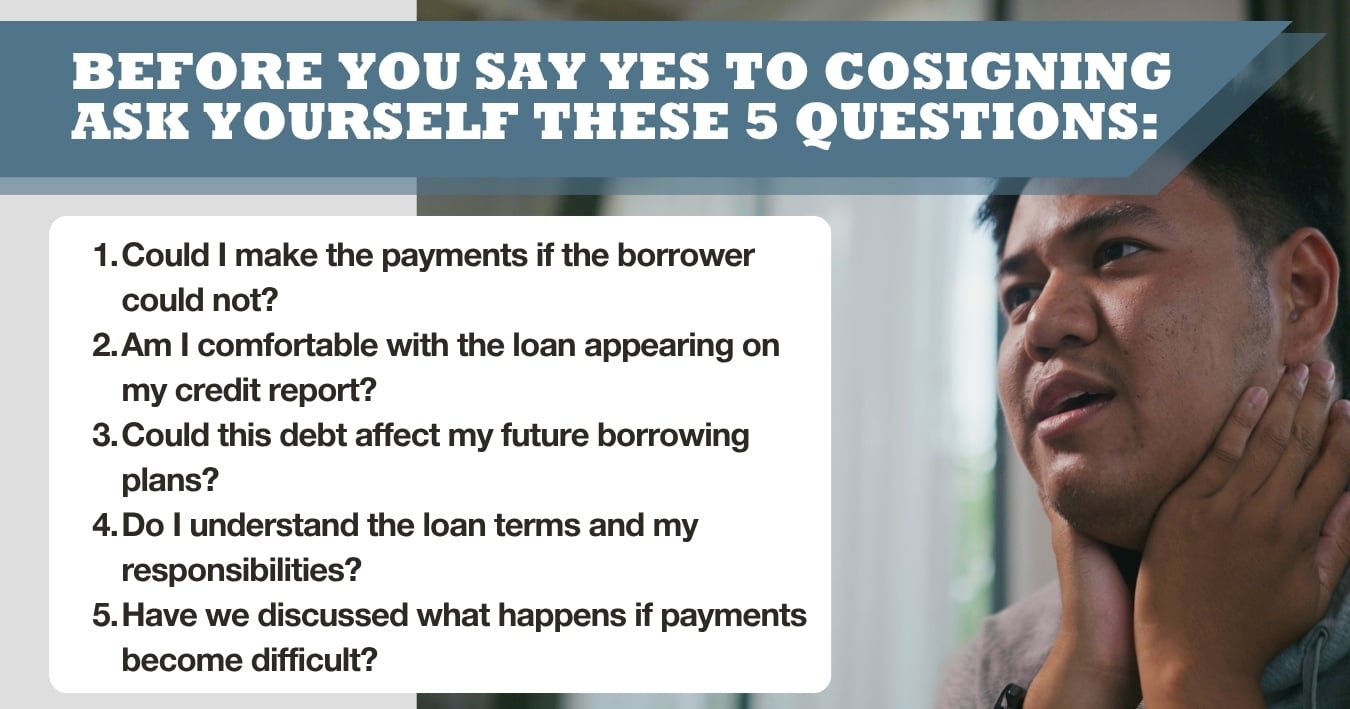
Think about whether you could make the loan payments yourself if the borrower suddenly could not. If the answer is no, that is important formation to consider. You should also think about your own financial goals. A cosigned loan could affect your ability to qualify for a mortgage, vehicle loan, credit card, or other financing in the future.
It's also helpful to agree on expectations before you sign. For example, you might decide that the borrower will let you know if they are having trouble making a payment or that you will review the loan status together periodically.
Most importantly, don't feel pressured to cosign simply because you love or trust someone. Saying no to a financial commitment does not mean you are unwilling to help. You may be able to support them in another way that carries less financial risk.
Cosigning is not the only way to help someone who has limited credit history or is having trouble qualifying for financing. Depending on their situation, credit-building products or a different loan approach may be worth considering.
A Credit Builder Loan can help someone establish a positive payment history while working toward stronger credit. With this type of loan, payments are reported to the credit bureaus, and the funds are made available according to the terms of the loan.
A Classic Credit Card can be another option for someone who wants to establish or rebuild credit. Used responsibly, making payments on time and keeping balances manageable can help develop healthier credit habits.
If someone is struggling to qualify for financing, talking with a lender can help identify options that may fit their situation. A smaller loan amount, different product, or credit-building strategy may make more sense than immediately asking someone else to cosign.
Whether you should cosign a loan depends on your financial situation, your relationship with the borrower, and how comfortable you are accepting responsibility for the debt.
Before you say yes, ask yourself:
If you are not comfortable taking on the responsibility, it's okay to say no. Helping someone does not have to mean putting your own financial stability at risk.
If you are considering cosigning or looking for a loan that does require a cosigner, First Alliance Credit Union can help you explore your options. Our team offers personal loans, vehicle loans, Credit Builder Loans, and other lending solutions, along with judgment-free guidance based on your situation.
You can also use credit score monitoring to stay aware of changes for your credit and understand how your financial decisions may affect your credit profile.
Cosigning a loan can be a generous way to help someone you care about, bit it should never be treated as a simple favor. Before you sign, make sure you understand your legal responsibility, the potential effect on your credit, and what could happen if the borrower cannot make the payments.
A thoughtful conversation can make the decision clearer for both of you. And if cosigning doesn't feel right, there may be other ways to help he borrower move toward their financial goals.
If you want to talk through your lending options, First Alliance Credit Union is here to help. Our team can help you understand products and find an approach that fits your financial situation!

 Allethea Faye Monfiel : Sep 10, 2026, 6:00:00 AM
Learn how to get a loan without a cosigner by building credit, borrowing less, adding collateral, or exploring credit-building loans with First...

 Jenna Taubel : Dec 4, 2018, 6:29:00 AM
How do you choose someone to be your cosigner, and what can you do if you can’t find one? Here we layout the basics of needing a cosigner for your...
 Allethea Faye Monfiel : Aug 20, 2026, 6:00:00 AM
See how your credit score affects loan approval, interest rates, renting, and utilities, plus how First Alliance Credit Union can help you build...