
7 Tips to Stay Safe While Online Shopping
 First Alliance Credit Union : Nov 23, 2021, 5:15:00 PM
Stay safe while shopping online this holiday season with seven essential tips to protect your identity and personal information.
8 min read
Your phone can do a lot when it comes to managing your money. You can check your balance, pay a bill, move money, or check a recent purchase without having to visit a branch. It can also help you keep your accounts safer.
The easiest way to protect yourself from fraud while banking on your phone is to use the security tools already available through your credit union mobile banking experience. Transaction alerts, card controls, biometric login, and credit score monitoring each give you a different way to keep an eye on your finances and catch something unusual sooner.
If you've been wondering how to protect yourself from banking fraud without giving up the convenience of mobile banking, you're in the right place. Let's look at some simple tools and habits that can help you feel more confident when managing your money on the go.
Mobile banking tools that can help protect against fraud include transaction alerts, card controls, biometric login, and credit score monitoring. Together, these features can help you notice suspicious activity sooner, control how your cards are used, and protect access to your financial information.
First Alliance Credit Union's online and mobile banking tools put several of these features right at your fingertips. Here's how they can help.
Debit card fraud alerts can help you spot unusual activity without having to constantly check your account. With My Cards in the First Alliance mobile app, you can receive notifications when your debit or credit card is used, approved, or declined. You can also receive alerts when a purchase goes over a limit you've set.
That means you don't have to wait until the end of the month to discover a purchase you don't recognize. If something looks unfamiliar, you can see it much sooner and decide what to do. For example, you might be sitting at home when an alert pops up for a purchase you didn't make. Rather than wondering about it until you have time to check your account later, you can take a closer look right away.
Alerts aren't only useful for fraud, either. They can help you keep track of everyday spending, remember where you've used your card, and stay connected to what's happening in your account.
My Cards gives you more control over how, when, and where your First Alliance debit and credit cards are used. That can give you another layer of protection while making it easier to manage your cards from your phone.
Depending on the controls available for your card, you can:
These controls can come in handy in everyday situations.
Misplaced your wallet? You can turn your card off while you look for it. Found it tucked away in your car or underneath a stack of mail? You can turn it back on.
You can also use the controls to give yourself another layer of protection based on how you normally use your card.
Biometric login can help protect access to your mobile banking app by using features such as fingerprint or facial recognition. It can also make signing in easier, since you don't have to type your password every time you want to check your account.
Our mobile app supports fingerprint and facial recognition login on compatible devices. You can use the security features built into your phone to make accessing your account quick and easy. It also gives you another layer of protection if someone else happens to get hold of your phone.
For the best protection, make sure your phone itself is secured with a passcode, fingerprint, or facial recognition. It's a small step that can make a big difference if your phone is ever lost or misplaced.
Credit score monitoring can help you spot changes in your credit that may deserve a closer look. That's important because fraud doesn't always show up as a purchase on your existing debit or credit card.
Someone who has your personal information may also try to use it to open an account or apply for credit in your name. With free credit score monitoring, you can keep an eye on your credit and notice changes that may deserve your attention. If you see something you don't recognize, you can investigate it rather than letting it go unnoticed.
Checking your credit score isn't a replacement for reviewing your accounts or credit reports, but it gives you another way to stay connected to your financial picture.
Knowing how to use mobile banking tools to prevent fraud starts with turning on the security features that fit your everyday banking habits. Most of these steps only take a few minutes to set up, and then they can help you stay informed in the background.
If you haven't already, start with these simple steps:
You don't need to become an expert in fraud prevention. The goal is simply to make these small steps part of the way you already manage your money.
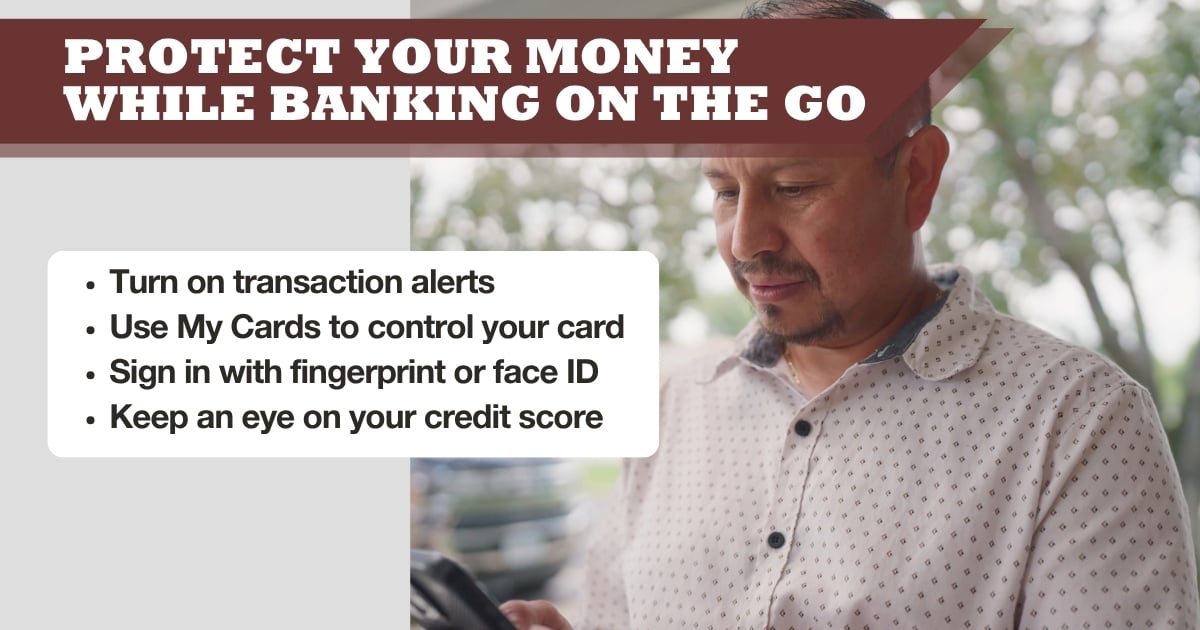
Some of the simplest ways to protect your debit card and account from fraud are to turn on transaction alerts, use card controls, protect your login information, and regularly review your account activity. These habits work together to help you notice something unusual and respond sooner.
Those update notices are easy to put off, especially when life gets busy and your phone seems to be working just fine. But those updates often include security fixes that help protect your device and your mobile banking app from known risks. Taking a minute to install them can be a simple way to keep your information safer and your banking tools working the way they should.
Free Wi-Fi can be handy when you're out and about, but it's not the best place to handle your banking. Public networks can be harder to trust, and if you're not sure who's behind the connection, it's better to play it safe. If you need to check your account or move money, use your cellular data instead or wait until you're back on a network you know and trust.
Your phone carries a lot of personal information, including access to your financial accounts. That's why locking it matters. A strong passcode, fingerprint, or face lock adds one more layer of protection and can make it harder for someone else to get into your information if your phone is ever lost or ends up in the wrong hands.
When you download a banking app, stick with your phone's official app store and take a moment to make sure you're choosing the real First Alliance app. That's one simple way to avoid fake apps designed to look legitimate. It also helps to be cautious with unexpected texts or emails that push you to download an app or install a security update, especially if the message catches you off guard.
A one-time verification code is meant for you and should stay with you. If someone unexpectedly reaches out and asks for it, that's a good reason to pause and take a closer look. Even if they say they're calling from your financial institution, it's worth verifying who you're really dealing with before you respond. When something feels off, contact First Alliance directly using a phone number or website you know you can trust.
You don't need to spend a long time reviewing your accounts to stay on top of what's happening. A quick check a few times a week can help you get familiar with your normal activity and make it easier to notice when something doesn't look right. The more familiar you are with your usual transactions, the easier it becomes to catch something that feels out of place before it turns into a bigger problem.
If you notice suspicious activity, act quickly by turning off your card, contacting First Alliance, changing your password if necessary, and reviewing your recent transactions. You don't have to figure everything out on your own.
Seeing a transaction you don't recognize can be stressful. Your first thought might be, "What do I do now?"
Start by taking a breath and acting quickly. Here's where to start:
Most importantly, don't be afraid to ask for help. If something doesn't look right, it's better to reach out and ask about it than to ignore that feeling.
Protecting yourself from fraud doesn't mean giving up the convenience of mobile banking. With tools like transaction alerts, card controls, biometric login, and credit monitoring, you have more ways to stay connected to your money and notice when something doesn't look right.
The goal isn't to constantly worry about your accounts. It's to build a few simple habits that make it easier to stay informed and act quickly when you need to. And if something ever feels off, you don't have to figure it out alone.
If you have questions or notice suspicious activity, reach out to First Alliance Credit Union at 507-288-0330. We're here to help you understand what's happening and work through the next steps with you.

 First Alliance Credit Union : Nov 23, 2021, 5:15:00 PM
Stay safe while shopping online this holiday season with seven essential tips to protect your identity and personal information.
 First Alliance Credit Union : Dec 19, 2017, 8:59:00 AM
With ATM fraud and skimming on the rise, it is increasingly important to be alert. Here are some tips to protect yourself from ATM fraud.
 First Alliance Credit Union : Dec 19, 2019, 9:10:00 AM
Fraud scams tend to spike during this high-spending and stressful time of the year. We have some tips on how to protect yourself from holiday scams.