Give Yourself a Financial Wellness Boost! How to Start Saving Money
Saving money is tough. In fact, as humans, we're wired to take care of our needs now, and worry about later...well, later. Putting resources away for...
8 min read
Allethea Faye Monfiel

:
Published
A large sum of money can bring relief and a new set of questions. Should you catch up on bills, pay off a credit card, save for a home, or put some aside for later? When several things matter, knowing where to start isn't always easy.
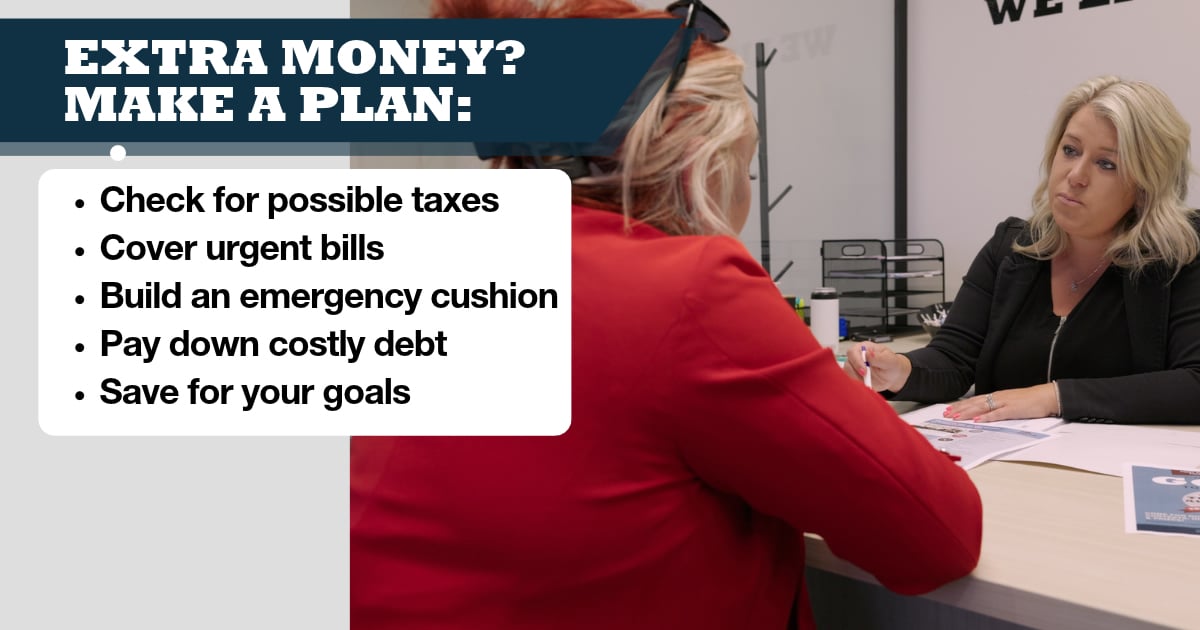
Whether the money comes from an inheritance, an insurance payout, or a work bonus, you can give yourself time to make a plan. Start by checking whether you'll owe taxes and covering expenses that can't wait. Then look at your emergency savings, high-interest debt, and goals before deciding how to divide what's left. You don't have to put every dollar toward the same priority.
And there's no single amount that counts as a windfall. For one household, $3,000 could mean catching up on bills and finally starting an emergency fund. For another, $300,000 could open the door to longer-term plans. What matters is what the money could do for your life, not how it compares with someone else's.
You don't need every answer today. A clear look at where you stand can help you choose your next step.
It can be tempting to clear a debt or finally make a purchase you've been putting off. Before committing a large portion of the money, take a look at what else it needs to cover. A little planning can help you meet today's needs without leaving yourself short for next month's bills or an unexpected repair.
A few things are worth checking first:
Keep it in an accessible account while you decide what to do. A savings account can give you a place to set the money apart from your everyday spending, without committing it to a purchase or investment before you're ready. Keeping it separate can also make it easier to see how much you have available as you work through your priorities.
Tax rules can leave you wondering how much of the money is yours to use. Bonuses are generally taxable, while the rules for inheritances and insurance payouts depend on the details. You don't have to sort through those questions alone. A qualified tax professional can help you understand whether you'll owe taxes and how much to set aside, so you can plan around the money you actually have available.
If you've been putting off a utility bill or a car repair because money was tight, this can be a chance to catch up. Start with the expenses that keep your household safe and your day-to-day life running, then give yourself room to think through what comes next.
Start with a simple snapshot: what comes in each month, what goes toward rent, groceries, and other bills, what you owe, and what you've saved. You don't need a perfect spreadsheet. Putting those numbers side by side can help you see where the extra money could make the biggest difference, whether that's easing a monthly payment or building a cushion for the next unexpected expense.
If pulling those numbers together feels like a lot, you don't have to start from scratch. My Money is a free tool for members in First Alliance Credit Union online banking and our mobile app. It lets you bring accounts together in one place, see where your money is going, build a budget, and track your savings goals.
Start small: review your spending, then choose one goal you'd like this extra money to support. When you're ready, sign in to online banking or the mobile app and open My Money. There's no separate login or enrollment required.
Paying down debt can feel like a fresh start. Before putting most of your windfall toward a balance, though, check what you'd have left for an unexpected expense. Keeping some money in savings can help you avoid reaching for a credit card the next time your car needs a repair.
A common starting goal is three to six months of essential expenses: rent or mortgage payments, utilities, groceries, insurance, and minimum debt payments. That isn't a rule every household has to follow. The cushion that makes sense for you depends on how steady your income is, who relies on it, and what your household needs each month.
If your savings are limited, setting aside part of your windfall can give you a starting point while leaving room to pay down high-interest debt. If you already have enough saved to handle a setback, you may be able to put more toward debt or another goal.
A savings account can keep your emergency money separate from everyday spending while leaving it accessible when you need it. You can also save for known expenses, such as a planned home repair or an upcoming medical bill. Just account for those separately, so the same dollars aren't doing double duty in your plan.
When you're making payments on several balances, it can be hard to know which one deserves the extra money. Start by listing what you owe, the interest rate, and the minimum monthly payment for each debt. Keeping up with required payments while putting extra money toward the highest-interest balance can help reduce what you pay in interest over time.
A credit card balance is often a place to start. If interest keeps adding to what you owe, regular payments may not bring the balance down as quickly as you'd hoped. Using part of your windfall to reduce that balance can cut future interest charges. Paying it off completely can also remove a monthly payment, leaving more room for savings or other needs.
That doesn't mean every debt needs to disappear today. A lower-interest mortgage or student loan may fit comfortably into your monthly budget while you focus on more expensive balances. Compare the interest costs with your need to keep savings available, and check for any early-payoff penalties before making a large payment.
As you work through your plan, First Alliance Credit Union's free Credit Score Monitoring tool can help you stay informed about your credit. It's available through online banking and our mobile app. Use it as an educational resource alongside your account statements, not as a guide to which debt to pay first or a promise that your score will change.

If you're pulled between catching up today and planning for tomorrow, you don't have to choose just one. Dividing the money between a few priorities may give you breathing room now while helping you work toward something you want later. The right mix depends on what you've saved, what you owe, the interest you're paying, and the expenses you can see coming.
Whether you're deciding what to do with an inheritance, a bonus, or another unexpected payment, here's a starting point you can adjust to fit your life:
For example, imagine you receive $20,000. One possible way to divide it is:
Those numbers are an illustration, not a formula to follow or an estimate of what you'll owe in taxes. Your emergency savings might need more attention, or you may have little debt and a goal you've been saving toward for years. It's okay for your plan to look different.
Start with the pressure points in your own budget. If a high-interest credit card is taking a bite out of every paycheck and you have little saved for surprises, those may deserve attention before investing or making a large purchase. Paying down debt matters, but keeping some money accessible matters, too. A car repair shouldn't have to send you straight back to the card you just paid down.
Once you've covered urgent bills, set aside an emergency cushion, and gotten high-interest debt under control, you may be ready to think about investing. You don't need to rush into choosing an investment. First, consider what this money is for and when you'll need it.
Before investing, think about your timeline and financial goals:
For goals within the next few years: If you're saving for a home down payment or replacement car, keeping that money in an accessible savings account may make more sense. Investments can lose value, and a market drop could leave you short when you're ready to make the purchase.
For larger savings goals: A Money Market Savings Account is another option to explore. Compare minimum balance requirements, fees, and how you can access your money before choosing an account. Our post, Where Should You Keep a Large Sum of Money?, takes a closer look at the account options so you can weigh what fits.
For long-term goals: If you're saving for retirement or a child's future education, investing may have a place in your plan. Think about how long you can leave the money invested, how a loss would affect your household, and whether you might need those dollars for something else. More time doesn't guarantee growth or prevent losses.
You don't have to sort through those questions alone. A qualified investment professional can help you weigh the risks, understand the trade-offs, and explore options that fit your goals and what your household needs.
Taking care of your finances can include making room for something you enjoy. Once you've accounted for your other priorities, you may be able to put part of your windfall toward a family trip, a home project, or something you've been looking forward to.
Start by choosing a spending amount that leaves your money for bills, savings, and debt payments intact. Setting that limit before you shop gives you a clear boundary, so you can enjoy the purchase without borrowing from another goal.
Then look beyond the price tag. A new vehicle means paying for insurance, maintenance, and fuel. Depending on the project, a home improvement could add to your utility bills or upkeep. The purchase might be a one-time expense, but those costs will still need a place in your monthly budget.
Ask yourself whether your regular income can cover the added costs while leaving room for everyday bills and savings. If it can, the purchase may fit your plan. If it would leave things tight, waiting or choosing a less expensive option can help you enjoy some of the money without creating a new source of stress.
You can, but a checking account may not be the best place for money you don't plan to spend right away. Consider a savings account or money market account where your money can earn interest while remaining accessible. Check the account's fees, minimum balance requirements, and withdrawal rules before choosing one.
It depends on your mortgage interest rate, remaining balance, and other financial priorities. Paying off your mortgage could reduce your monthly expenses, but using all your inheritance this way might leave you with little cash for emergencies or other goals. Compare the benefits before making a decision.
Try not to rush into major purchases, lend out large amounts without thinking through the consequences, or make investment decisions you don't fully understand. give yourself time to review your finances and decide how the money can best support your needs.
An inheritance isn't generally treated as taxable income at the federal level, but certain inherited assets, income earned from those assets, or distributions from retirement accounts may have tax consequences. State laws can also differ. A qualified tax professional can help you understand what applies to your situation.
There's no set waiting period, but giving yourself a few weeks to review your finances and consider your options can help. If there are urgent bills or tax deadlines, address those first. Otherwise, there's no need to make major decisions simply because the money is available.
Having more money to work with doesn't mean every decision feels easy. You can start with one priority: catch up on a bill, add to your emergency savings, or reduce a credit card balance. Then consider what you'd like the rest to do for you, including something to enjoy if your budget allows.
If you're unsure where to begin, open My Money in First Alliance Credit Union online banking or our mobile app. Seeing your accounts and spending together can help you spot where a little extra money could ease a monthly strain or move a savings goal forward.
And if you'd like someone to talk it through with, we're here to listen. Bring your questions to our team at First Alliance Credit Union, and we'll help you explore savings options and everyday financial priorities, so you can choose a next step that fits your household. No pressure to have it all figured out before you reach out.
Saving money is tough. In fact, as humans, we're wired to take care of our needs now, and worry about later...well, later. Putting resources away for...

What are high yield savings accounts? How do you go about opening one? Read and find out!
Learn what is a savings account, their benefits, and how to choose the best one for your financial needs. Discover how to open your savings account...